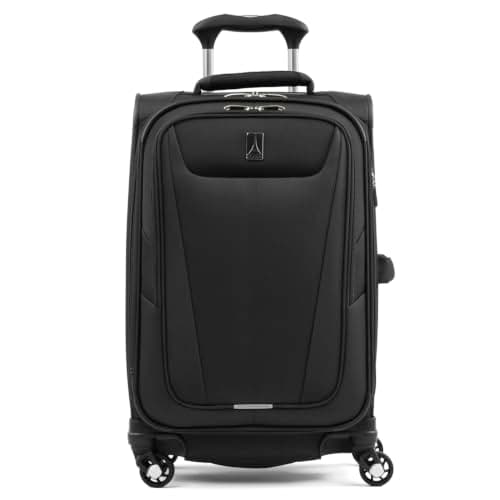
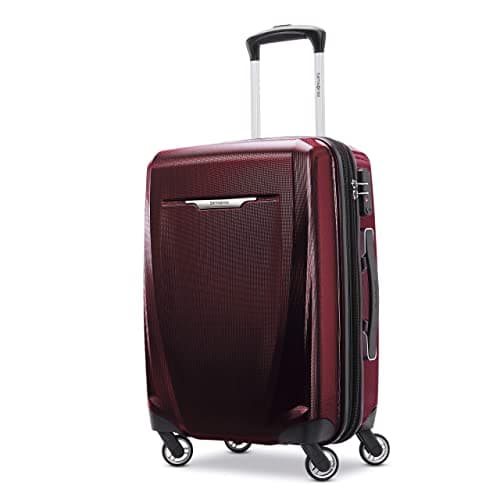
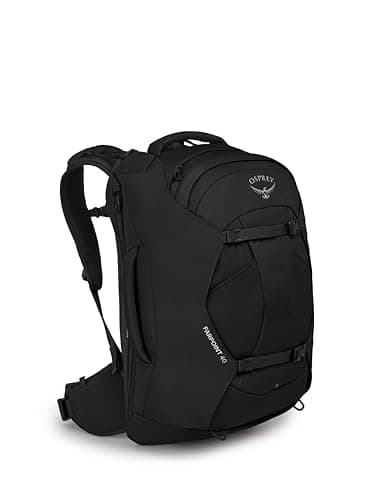
Picture the walk from the transport to the bed, and the answer appears. Smooth terminal, taxi, hotel lobby, lift: wheels, every time. Metro stairs, cobbled old town, gravel, a fourth-floor walk-up: straps. The bag is not a personality; it's a response to terrain, and most of the internet argument about this ignores that.
What wheels are genuinely better at
Carrying weight you don't feel. This is the big one. A rolling bag transfers the load to the floor. A backpack transfers it to your spine. On a smooth surface a wheeled bag can be substantially heavier and still feel easier, which is why business travelers converge on them.
Staying organized while open. A hardside suitcase opens flat into two halves and stays put on a hotel luggage rack. A backpack wants to slump.
Protecting things. A rigid shell keeps a laptop, a camera or a bottle of something intact. No soft pack does that.
Your back. Worth stating plainly: for anyone with back, shoulder or knee problems, wheels aren't a preference, they're the correct answer.
What straps are genuinely better at
Stairs. Metro systems, older European buildings and train platforms are full of them, and a wheeled bag on stairs becomes dead weight carried badly, by a handle never designed for it.
Bad ground. Cobbles, gravel, sand, broken pavement. Small suitcase wheels are the first thing to fail on any of them, and wheel failure is how most suitcases die.
Crowds and speed. Hands free through a busy station, up onto a bus, into a tuk-tuk. A backpack is simply faster to move with in chaos.
Fitting the size limit. A soft pack squeezes into an overhead bin or a budget-airline sizer where a rigid shell will not. Our carry-on size rules guide covers how much those limits vary.
The hybrid that people forget
A travel backpack that opens like a suitcase — a full clamshell rather than a top-loading hiking bag — gets most of the organizational benefit of a case with the mobility of a pack. This is the design that made one-bag travel mainstream, and it's why our travel backpack roundup is almost entirely panel-loaders. If you've dismissed backpacks because you pictured a top-loading hiking bag, that's the thing to look at again.
The other hybrid — wheeled bags with backpack straps — we're less enthusiastic about. They usually carry badly as a pack and roll indifferently, and you pay weight for both systems. Some people love them; most end up using one mode and resenting the other's weight.
The honest trade nobody mentions: weight allowance
A wheeled carry-on's own weight comes out of the same allowance as everything in it. On airlines that weigh cabin baggage — and more do every year — several pounds of shell and wheels is several pounds of clothes you can't bring. A soft pack is usually lighter empty, which quietly buys back capacity. That's a real, measurable advantage that rarely appears in this comparison. We go into it in the Travelpro Maxlite 5 review, where empty weight is the whole argument.
Who should buy which
Buy wheels if: the travel is airport-to-hotel, the trips are business, the load is heavy, there's fragile gear, or there's any back or shoulder issue.
Buy a pack if: the itinerary has multiple stops, the destinations have stairs and cobbles, they use public transport, they fly budget carriers with tight sizers, or they're traveling for months rather than days.
Buy both, eventually. Most people who travel a lot end up with one of each and choose per trip. If you're buying a gift and they already own a suitcase they like, the pack is the more useful addition — and vice versa.
A note on gifting either
Backpacks have to fit a torso, which makes them a risky surprise — the sizing problem is real and we cover it in the Osprey Farpoint 40 review. Suitcases don't have that problem, but frequent travelers have strong opinions about their bag and a replacement they didn't choose often goes unused. If either risk applies, buy what goes inside instead: packing cubes, a tracker, a luggage scale.
Decide in five questions
1. What's the ground like?
Smooth floors and lifts: wheels. Stairs, cobbles and gravel: straps. This one question settles most cases.
2. How many stops?
One destination and back suits a suitcase. Six stops in three weeks strongly favors a pack you can move with quickly.
3. Is anything fragile?
Cameras, bottles, anything breakable argue for a rigid shell regardless of the terrain.
4. Any back or shoulder problems?
If yes, wheels. This overrides every other consideration on the list.
5. Do they fly budget carriers?
Tight sizers and cabin weight limits both favor a lighter, squeezable soft bag.