There is already a laundry bag in the hotel wardrobe, and it is free. That is the honest starting point for this whole category, and it is why most of the bags sold in it are a waste of money. A bag you pay for has to do something the free one cannot, and there are only three such things: it can breathe, so a week of worn clothes does not turn the suitcase sour. It can seal, so a wet swimsuit stays wet only inside the bag. Or it can compress, so the clothes that came home unfolded still fit. Those three verbs are three physically different products, and the listings market them interchangeably. Work out which one the recipient needs and this becomes a two-minute decision.
Breathe, seal, or compress
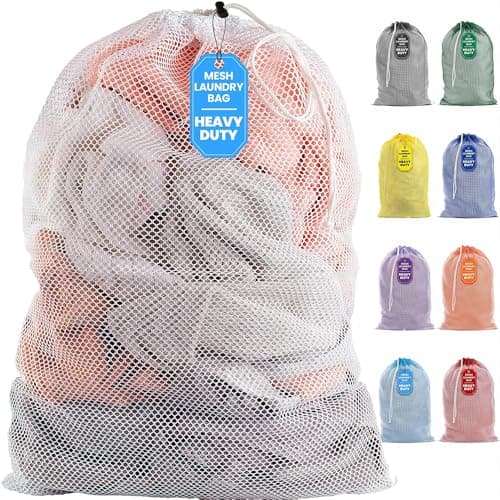
Breathe — open mesh. The cheapest design and, for a lot of travelers, the right one. Mesh does not contain a smell; it prevents one, which is a genuinely different thing. The sour note that comes out of a suitcase on day six is damp fabric with no airflow, and the fix is air, not a tighter seal. Mesh also has a practical advantage nobody mentions in the listings: the whole bag goes into the washing machine with the clothes still inside, which turns a laundromat visit into lifting one object rather than handling somebody else’s dryer.
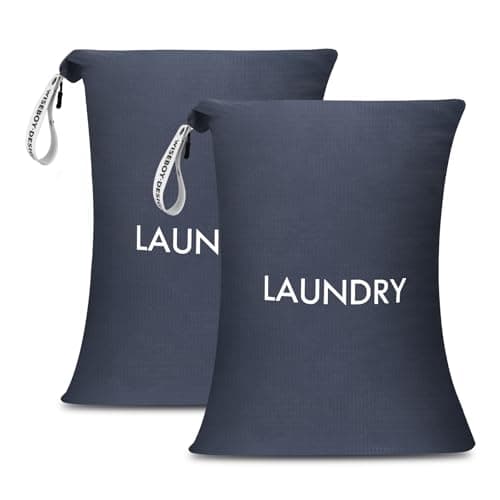
Seal — zippered and water-resistant. The design for wet things. A swimsuit, a rained-on shirt, gym kit after a hotel gym. A zip closes completely where a drawstring never does, and water-resistant nylon keeps the damp on one side of it. The trade is real and worth saying out loud: a sealed bag of damp clothes gets worse over time, not better. This is a same-day tool — wet in at the pool, out at the room — and not a place to leave a towel for three days.
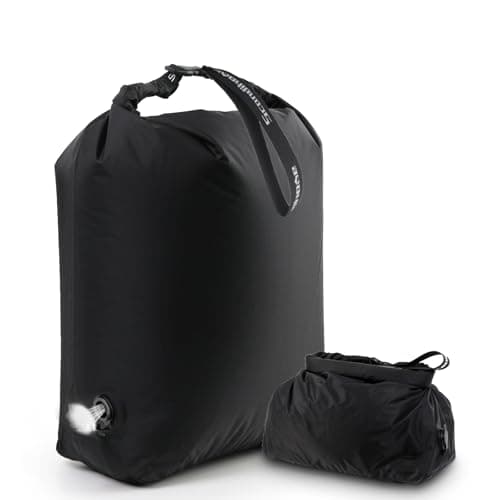
Compress — vacuum or roll-down. The design that solves the problem people actually hit, which has nothing to do with smell. A suitcase packs out on the way home because worn clothes are unfolded: the neat stack that went out comes back as loose volume, and that is before the souvenirs. A compression bag squeezes the difference back out. Two honest caveats: it sets creases hard, so nothing in it should be worn again before washing, and it saves volume and not one gram. If the limit is weight rather than space, see our luggage scale roundup — a compression bag will not help you there at all.
How we picked
Four criteria, weighted for a gift buyer rather than a gear reviewer.
- Does it beat the free bag? The first and hardest test. Every pick here does one of the three jobs above. Anything that was simply a nicer-looking sack with a drawstring did not make the page, because the wardrobe already has one.
- Does the closure survive being full? A drawstring under the load of a week of clothes works loose. A zip does not. This matters more than fabric weight.
- Where does it live in the room? The bags that get used are the ones that hang. A bag that has to sit on the floor becomes a heap on the floor, which defeats the entire point of separating clean from dirty.
- Does it pack to nothing on the way out? It is empty for the outbound flight, so any bulk it has then is pure cost.
We compile published listing specifications and manufacturer descriptions. We have not washed anything, and where a listing does not publish a dimension — the zippered pick does not — the spec says so instead of carrying an estimate.
Why this is a better gift than it reads
A laundry bag is an unpromising present on paper. It works for the same reason the luggage scale does: it solves a small, specific, recurring annoyance that the recipient has definitely experienced and has never got around to fixing. Nobody buys themselves a laundry bag. Almost everybody has repacked a suitcase around a plastic hotel bag knotted at the top.
It shares that quality with the other unpromising-but-used category we rank, the travel first aid kit - both are things a traveler is glad to own and would never buy.
It is also the natural companion to the gift this site recommends more than any other. Packing cubes organize the clean clothes going out; the laundry bag handles what they become. A cube set plus a laundry bag is a complete, coherent present at a reasonable price, and it is the pairing we would suggest if you are building one gift rather than buying one object.
The limit, stated plainly: on its own, a five-dollar mesh sack is not a present. Either spend up to the Eagle Creek, which is built like luggage and reads like a real object, or make the cheap one part of something bigger.
The mistake almost everyone makes
Buying a sealed bag and using it as the general laundry bag. It is the most common error in this category and it produces exactly the outcome the buyer was trying to avoid.
Here is the mechanism. Worn clothes carry moisture — sweat, humidity, a damp towel edge. In an open mesh bag that moisture evaporates and nothing happens. Zipped inside a water-resistant bag it has nowhere to go, so it sits against fabric at room temperature for days, which is precisely the condition that produces the smell and, on a long enough trip, mildew. The sealed bag is the right tool for the swimsuit you will deal with tonight and the wrong tool for the week’s shirts.
If you only buy one bag, buy mesh. If you can buy two, buy mesh for the laundry and a small sealed one for wet things — which is why two of our five picks are two-packs, and why the right answer for a lot of recipients is one of each rather than one of the best.
Which one for which recipient
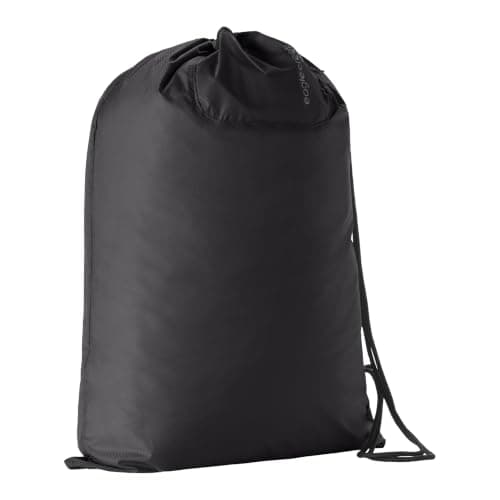
You want one good object that reads as a gift. The Eagle Creek Portable Laundry Sack. Built to last, packable, recycled fabrics, and a front pocket with a key clip — the detail that makes it useful in a hostel laundry room rather than just in a suitcase. Same brand as the premium pick in our cubes roundup, so a matched gift looks deliberate.
Beach, pool or gym. The WiseBoy zippered two-pack. Water-resistant nylon and a zip that actually closes, twice over, so wet and dry can be separated at the same time. Use it same-day.
Long trips, or they do laundry mid-trip. The Handy Laundry mesh XL. It is the cheapest thing on this page and genuinely the correct answer for the main laundry job: it breathes, and the whole bag goes in the machine. Put it in a bundle rather than a gift bag.
They always come home overweight on space. The BBCREAT compression bag. Pump-free, so nothing extra to pack, and waterproof as well — it covers both the volume problem and the wet problem, at the cost of creasing everything inside it.
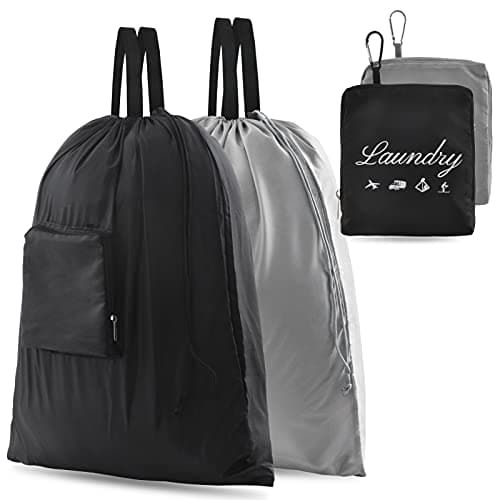
Long stays, where the bag needs somewhere to live. The JHX two-pack. Handles and an aluminum carabiner so it clips to a wardrobe rail, and a published 24 by 21 inch size rather than a guess.
For the wider packing system these fit into, our how to pack a carry-on guide covers the order things go in, and keeping clothes from wrinkling explains why the compression pick is the wrong tool for anything you plan to wear again.
Pick the verb, then the bag
Breathe, seal or compress. Decide which problem the recipient actually has and the five picks sort themselves in about ten seconds. If you genuinely do not know, buy mesh: it is the cheapest and it is the right answer to the most common version of the problem.
Size: bigger than you think, for one reason
Dirty clothes occupy more space than the same clothes did clean, because nothing is folded any more. A bag sized to the neat stack that went out will not close on the week that comes back. Our mesh pick publishes 24 by 36 inches and the JHX pair publishes 24 by 21 — both comfortably oversized for one person, which is correct. Where a listing publishes no dimensions at all, treat capacity as unknown.
A zip, or a drawstring?
A zip if anything in there will ever be damp or smell; a drawstring otherwise. Drawstrings are easier to load one-handed and they work loose under weight. Zips seal completely, which is a benefit and a liability depending entirely on whether the contents are wet.
Make sure it can hang
The single best predictor of whether this gift gets used past the first trip. A bag with a handle, a loop or a carabiner hangs on a wardrobe rail or a door hook and becomes the place dirty clothes go. A bag without one sits on the floor, and a bag on the floor is a pile with extra steps.
What a laundry bag does not do
It does not wash anything, it does not deodorize anything, and sealing it tighter does not help — the smell is a moisture problem, so the answer is air or a wash, never a better seal. It also saves no weight, compression bags included. If the real problem is a bag that keeps coming home over the limit, the fix is a luggage scale and leaving a margin, not a cleverer sack.