The bottle that wins at a desk usually loses on a trip. A travel bottle has to pass through airport security empty, refill on the far side, and then take up as little of a packed bag as possible for the rest of the day. A rigid 32 oz steel bottle does the first two and fails the third. Deciding which of those three jobs matters most is the whole buying decision, and it is why we rank a collapsible bottle above the famous one.
The security rule that shapes the whole category
You cannot take water through a US checkpoint, but you can take an empty bottle and fill it at a fountain airside — that is the standard behavior the TSA liquids rule allows, and it is the reason a travel bottle exists at all. Our TSA liquids rules guide covers the wider 3-1-1 picture; for bottles the practical version is short: it must be visibly, completely empty, and a bottle with a reservoir or a hidden channel that still holds water is the one that gets pulled aside.
The second consequence is the one people forget. After security the bottle is full for an hour and empty for the rest of the day. A rigid bottle occupies exactly as much bag as it did full. A collapsible one does not, and on a carry-on-only trip that difference is the difference between carrying a bottle and abandoning it.
The three types, and who each one is for
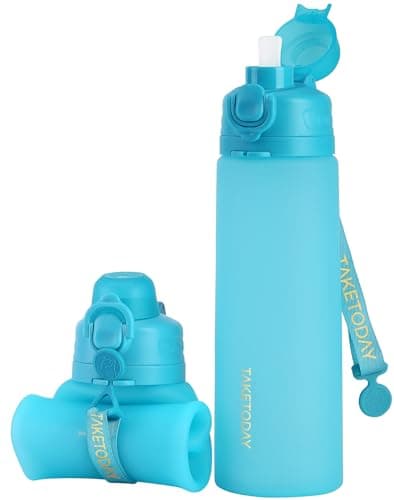
Collapsible silicone. Full-size when it is needed, flat when it is not. The best answer for flying, one-bag travel and anyone who resents paying airport prices for water. The trade-off is honest: no insulation, so water goes lukewarm on a hot day, and silicone picks up a faint taste if it is packed away damp.
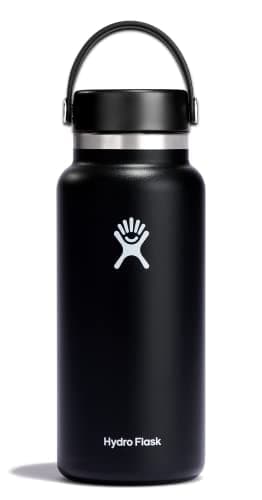
Insulated stainless steel. Cold water for roughly a full day, a wide mouth that takes ice and is easy to clean properly, and a shell that survives being dropped on a trailhead. It is also heavy and bulky, and it stays that way when empty. This is a road trip and day-hike bottle far more than it is a flying bottle.
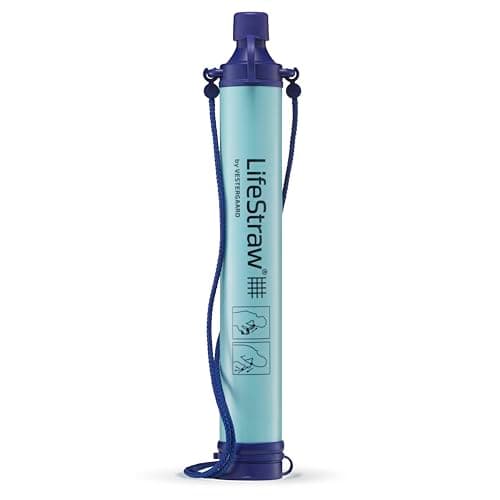
Filters. A straw-type filter removes bacteria and parasites so stream and tap water of uncertain quality becomes drinkable. It weighs almost nothing and needs no batteries or chemicals. It also does not remove viruses or heavy metals, and you drink directly through it rather than filling a bottle — a distinction that matters a lot when you are choosing between the two categories rather than buying both.
Why the collapsible ranks first
Because it is the bottle that actually gets carried. The 21 oz collapsible rolls down flat once it is empty, which means it is never the item someone leaves in a hotel room to free up space. It goes through the checkpoint flat and empty with nothing to argue about, and it refills at the fountain on the other side.
The economics are blunt. Bottled water bought airside is priced against a captive audience, and a traveler who flies even a few times a year clears the cost of this bottle almost immediately. It is one of the few gifts on this site that pays for itself in a measurable way, which is why it also appears on our travel gifts under $25 list.
Skip it if they want cold water all day. It is not insulated, and no collapsible bottle is.
When the steel bottle is the right answer instead
Buy the insulated 32 oz bottle for the traveler whose day is spent outside rather than in transit — road trips, trailheads, festival days, long hot afternoons in a rental car. Roughly a day of genuinely cold water is a real quality-of-life difference in that setting, and the wide mouth means ice goes in and a brush gets in to clean it out.
Be honest about the cost, though. Full, it is heavy. Empty, it still takes the same space in the bag. For someone flying carry-on-only it is the wrong tool, and we would rather say that than let a well-loved brand win a category it does not suit. It is a natural fit on our gifts for road trippers and gifts for hikers lists.
When a filter is essential and when it is theater
A filter earns its place when the water supply is genuinely uncertain: backcountry hiking, remote camping, and emergency kits where the tap may not be running. In those situations it is one of the highest-value objects a person can carry for its weight, which is why it anchors our adventure traveler gifts list.
It is close to pointless for a city trip where the tap water is treated. Buying one for someone whose travel is hotels and airports is buying a prop, and the gift lands as a comment on where they go rather than a useful object. If in doubt, the collapsible bottle is the gift and the filter is the add-on for a specific trip.
What we left out, and why
Glass bottles. Excellent taste, wrong material for a bag that gets thrown into an overhead bin.
Cartridge filter bottles. The bottle is cheap and the cartridges are not. A gift with a subscription attached is a gift with a catch, and most owners stop replacing the filter long before they stop using the bottle.
40 oz insulated tumblers. Superb at a desk, absurd in a carry-on. They are wide enough to defeat most bottle pockets and heavy enough to matter at the check-in scale.
Smart bottles with hydration reminders. A bottle with a battery and an app is a bottle with two more ways to fail. The multi-function trap is the same one we describe on our travel gadgets roundup.
Which size to buy
For flying, around 20 oz is the sweet spot: enough to matter on a medium-haul flight, small enough to fit the seat pocket and the side pocket of a personal item. For a car or a trail day, 32 oz stops the constant refilling. Above that you are carrying weight for its own sake — two pounds of water is two pounds of water however good the bottle is.
One thing an insulated bottle does that a collapsible one cannot: hold hot water. For a traveler who wants coffee somewhere without a kettle, that bottle filled at a coffee shop is the practical alternative to carrying a travel coffee maker, and the two make a better bundle together than either does alone.
As a gift, a bottle is a modest present on its own and an excellent component of a bundle. Paired with packing cubes or a luggage scale it makes a coherent gift rather than a small one; we set out that logic on how much to spend on a travel gift.
How to choose a travel water bottle
1. Decide whether it flies or drives
Flying favors packability, so collapsible wins. Driving and hiking favor insulation and toughness, so steel wins. Almost every other feature is downstream of this one answer.
2. Check it can be seen to be empty
Straws, reservoirs and hidden channels that trap water are the ones that cause a bag check. A simple internal shape clears a checkpoint faster.
3. Insist on a wide mouth if it is insulated
Ice goes in, a cleaning brush goes in, and it dries properly. Narrow insulated bottles get funky and stay that way.
4. Only buy a filter for genuinely uncertain water
Backcountry and emergency kits, yes. City breaks with treated tap water, no — it is weight and money doing nothing.
5. Avoid anything that needs consumables
Replaceable cartridges turn a gift into a running cost the recipient did not sign up for, and most people simply stop replacing them.