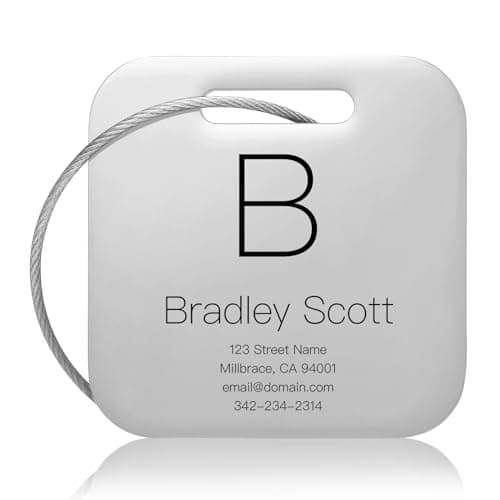
Buy engraved stainless steel. The KCULE tags are the pick because the failure mode of every other kind of luggage tag is the same — the tag survives and the information on it does not. Paper dissolves. Printed card fades. A plastic window cracks and the slip inside falls out. Steel with the details cut into the metal is still readable after a hundred trips, and it costs about ten dollars.
A tag does two jobs and only does one of them well
This is the distinction almost every listing in the category blurs, and it is the whole reason the third pick on this page is not a tag at all.
Job one: identification. Making the bag obviously theirs, so it is spotted on a carousel of forty identical black suitcases and so nobody else walks off with it. A tag is genuinely good at this, and a bright or distinctive one is better at it than an expensive discreet one.
Job two: recovery. Getting the bag back when it has gone somewhere you are not. A tag contributes almost nothing here, because it only works if a human finds the bag, reads the tag and chooses to act. The airline's own barcoded tag — the one stuck on at the counter — is what the system actually tracks, and the moment that strip is torn off, your leather tag is the only thing left saying whose bag it is. That is the case for having one. It is not a case for expecting it to work.
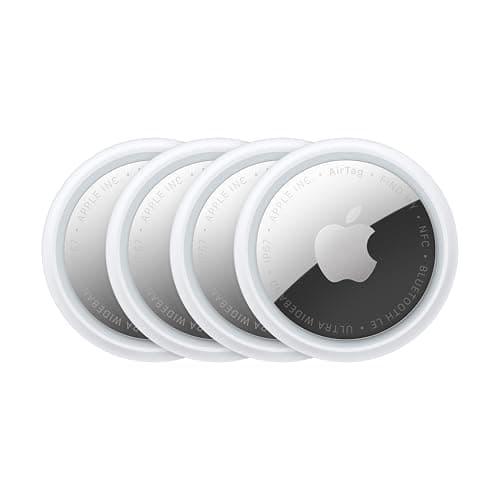
The thing that does job two is a tracker inside the bag, which tells you where it is rather than waiting for a stranger. That is why the AirTag is ranked here alongside two tags, and the full field of trackers is on best luggage trackers.
Why engraved steel, specifically
Three properties, in order of how much they matter.
The information is the material. Engraving removes metal. There is no ink to fade, no paper to soak, no insert to fall out. Everything else in this category stores the details in something softer than the tag itself, which is the design flaw.
It survives the belt. A checked bag is dragged, stacked, dropped and run through a conveyor with metal edges. Leather scuffs through, plastic snaps at the loop, and the loop is where tags die — which is why a steel cable loop is worth more than the tag it holds.
It is cheap enough to buy in multiples. Tags get torn off. A multi-pack means the spare is already in the drawer rather than ordered the week after it was needed.
The three picks, side by side
| | Material | How the details are stored | Privacy | Does it help you find the bag? |
|---|
| KCULE steel tags | Stainless steel, steel cable loop | Engraved into the metal — permanent | No — details are visible | No. A finder has to read it. |
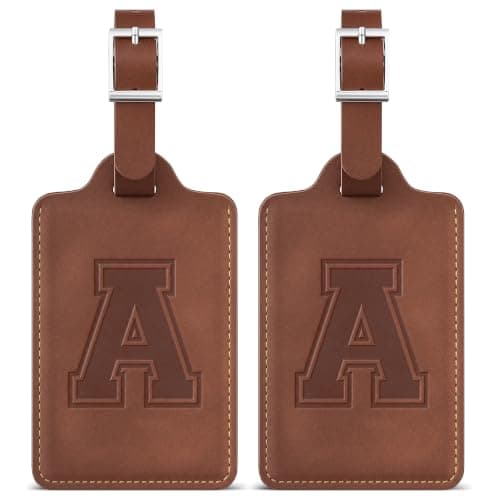
| Toughergun leather tags | PU leather, extended strap | Info card behind a flap | Yes — address flap | No. Identification only. |
| Apple AirTag (4-pack) | Plastic and steel, no strap included | Nothing printed — it reports position | n/a | Yes — via Apple's Find My network |
Each line is taken from the current retail listing. Note the AirTag row's last column: it is the only one of the three that answers “where is my bag” rather than “whose bag is this”. Note also that it ships without any way to attach it — a holder or a loop is a separate purchase, and the honest version of this recommendation is that the AirTag goes inside the bag anyway.
What to put on the tag — and what not to
A tag is read by strangers in public. Four rules.
- Name and an email address or phone number. That is all. Those are what a finder needs and they are enough.
- Leave the home address off the outside. A tag at an airport announces that the house is empty. Put the full address on a card inside the bag instead, where it is only read by whoever opens it to identify it.
- Use a mobile number, not a landline. The people most likely to call are calling while you are traveling.
- Add the destination hotel for the outbound leg. On a paper slip inside, not engraved. It is the single most useful thing a baggage office can have.
The Toughergun tags are the pick for anyone who cares about that first concern: the details sit behind a flap, so the tag can be read when somebody deliberately looks and not from across a lounge. We go further into bag-security habits in how to keep valuables safe while traveling.
The thing that actually gets a bag back
Put a tag outside and a tracker inside. Neither replaces the other, and between them they cover both jobs: the tag makes the bag identifiable to a human, the tracker makes it locatable by you.
Two further habits that matter more than any product on this page. Tear the old airline barcode strips off before every trip — a bag carrying three conflicting barcodes is a bag the system can route wrongly. And photograph the packed bag and the airline receipt at the counter, because the claim process asks for a description and a photograph settles it instantly. The full routine is in how to not lose your luggage, and our Apple AirTag review covers the tracker on its own, including what it does and does not do in a cargo hold.
Buying tags as a gift
Luggage tags are one of the best small travel gifts there is, for a reason that has nothing to do with the tag: they are personalised without being presumptuous. An engraved name is thoughtful; it is not a guess about taste, size or what somebody already owns.
Two practical notes. Engraving means you need the spelling exactly right and the order cannot be fixed later, so do not improvise a nickname. And a two-pack is the right quantity — one for the suitcase, one for the carry-on — which is also what makes a pair of tags feel like a present rather than a part. For the slightly larger version of the same idea, see personalized travel gifts, and for tags as part of a bundle, stocking stuffers for travelers, birthday gifts for travelers and gifts for world travelers.
How to choose a luggage tag
Buy for the loop, not the tag
Tags are lost at the attachment point. A steel cable beats a leather strap, which beats the plastic loop that ships with most tags.
Permanent details or changeable ones
Engraving lasts forever and cannot be edited — ideal for a name, wrong for a phone number that changes. A card behind a flap is the opposite trade.
Pick visible or discreet deliberately
A bright tag does the identification job better. A privacy flap does the “a stranger should not read my address” job better. Decide which one you are buying.
Buy more than one
One per bag plus a spare. At this price a multi-pack costs less than reordering, and a bag without a tag is the bag that travels untagged for a year.
Put a card inside as well
Name, phone, email and the destination hotel, on paper, inside the bag. Free, and the thing baggage offices actually use.
What to spend
$10 to $20 for a pair is the whole sensible range, and a premium tag buys looks rather than function. Every price here is live and date-stamped; where we have no verified live price we show none rather than a stale number.