Buy memory foam unless packed size is genuinely the constraint. Foam holds its shape under the weight of a head, which is the entire job of a travel pillow. An inflatable pillow holds its shape under air pressure, which behaves differently — it compresses, then pushes back, and the result is a pillow that moves when you do. For most travelers that's the deciding difference.
What memory foam actually does
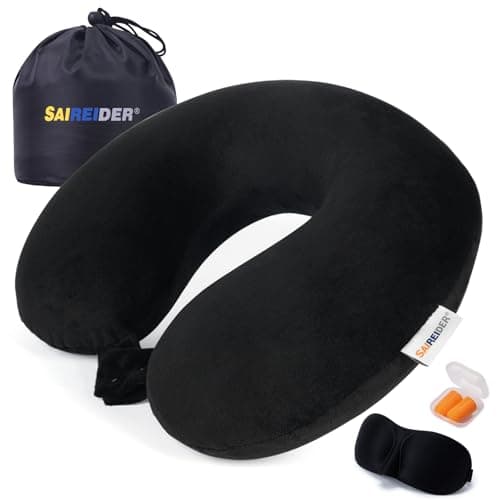
Foam is a solid that deforms slowly under load and stays deformed while the load is there. Against a neck that means it molds to the shape and then holds — it doesn't bounce back and push the head away.
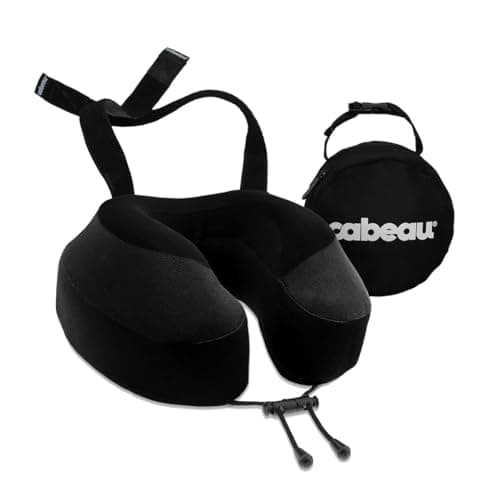
The practical consequence is that a firm foam pillow resists the head-nod: the slow fall forward or backward that wakes someone every twenty minutes on a flight. That's the failure mode that makes people conclude travel pillows don't work, and it's the specific thing good foam prevents. The Cabeau Evolution S3 is the clearest example, because its raised rear panel attacks the backwards version of the nod directly.
What foam costs you: bulk and weight. Even a compressible foam pillow in a stuff sack is a real object in a bag, and the ones that pack down do so by being squeezed into a bag they then have to recover from. For a carry-on-only traveler, that's not a small objection.
What inflatable actually does
An inflatable pillow deflates to the size of a folded handkerchief and weighs almost nothing. On packability it wins outright, and it's not close.
The support behaves differently. Air under load compresses and pushes back with increasing force, so an inflatable pillow inflated hard is firm but unyielding, and inflated soft is comfortable but bottoms out. The sweet spot exists and it's narrow, and most people never find it — which is why inflatable pillows have a reputation for being uncomfortable.
They also make noise. Vinyl and TPU squeak against a headrest and a jacket, which is a small thing that matters at 3am. And they can develop slow leaks, which turns a pillow into a thing you re-inflate twice a flight.
Where inflatable genuinely wins: backpacking and one-bag travel where every cubic inch is contested, multi-modal trips with buses and trains where the pillow is used for an hour at a time, and as a backup kept permanently in a daypack. Our gifts for minimalist travelers page makes the general version of this argument.
The third option most people end up with
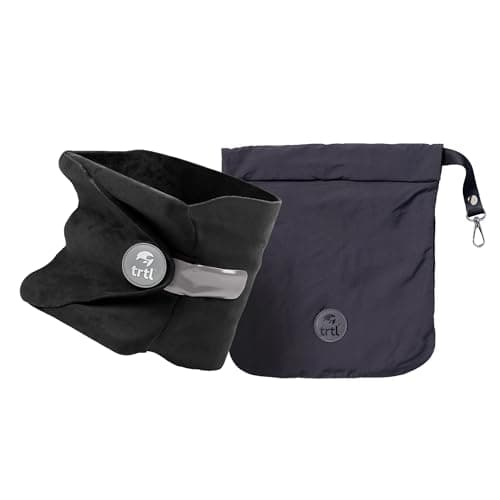
Wrap-style pillows aren't in either category and they resolve the trade better than either. A wrap uses a hidden internal support inside a scarf of fabric — it's not filled with foam and it isn't inflated. It rolls up far smaller than a horseshoe pillow and it supports the head sideways, which is the direction both foam and inflatable horseshoes handle worst.
The catch is that it supports one side at a time, so the sleeper commits to a lean. For someone who sleeps facing straight forward it does very little. But for a side-leaner in a window seat it's better than either alternative and packs like the inflatable, which is why it's become the default recommendation for carry-on-only travelers.
Match the pillow to how they sleep
The single most useful thing to know before buying, and the reason so many travel pillows fail. Heads fall in three directions and each wants a different product:
- Backwards into the headrest. Wants a firm foam pillow with a raised rear panel. This is the most common and the best served.
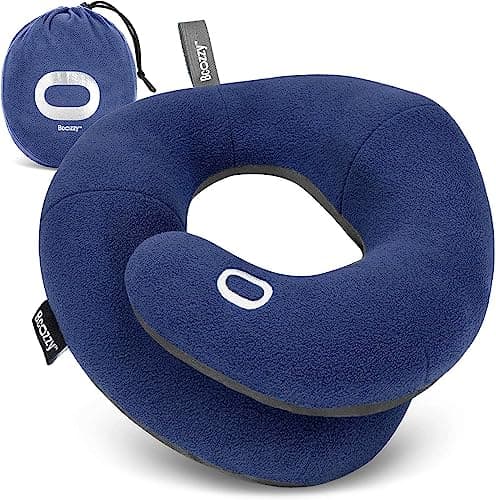
- Forwards onto the chest. Wants an overlapping-end design that props the chin. Standard horseshoes do nothing here, foam or otherwise.
- Sideways onto a shoulder. Wants a wrap, or a horseshoe with genuinely firm side lobes. Our side sleeper guide covers this case in full.
If you don't know which they are — which is the usual situation when buying a gift — a firm structured foam pillow has the highest hit rate, because it's decent in every direction rather than excellent in one.
Microbead, and why it isn't a third contender
Microbead pillows — the squishy ones sold at airport kiosks — deserve a mention because they're what a lot of people already own. They're pleasant to hold and they provide almost no support: the beads flow away from pressure, so the head sinks straight through. They pack medium and support poorly, which is the worst combination of the trade-offs.
If the person you're buying for has one and complains that travel pillows don't work, this is likely why, and almost any foam or wrap pillow will change their mind. The full travel pillow roundup ranks the field.
The verdict
Buy foam for long-haul flights, for anyone who checks a bag or has room to spare, and for any gift where you don't know how the recipient sleeps.
Buy inflatable only when packed size is the binding constraint — backpacking, one-bag travel, or a permanent daypack backup.
Buy a wrap for a confirmed side-leaner who travels carry-on only. It's the best answer to the trade-off, for the narrow group it fits.