Buy the notebook cheap enough that you will write badly in it. That is the whole category. The most common failure here is not a notebook falling apart — it is a nice notebook staying blank because every entry feels like it should be worth the paper. A thin memo book you finish in one trip beats a beautiful one you protect for a year.
The four things that actually differ
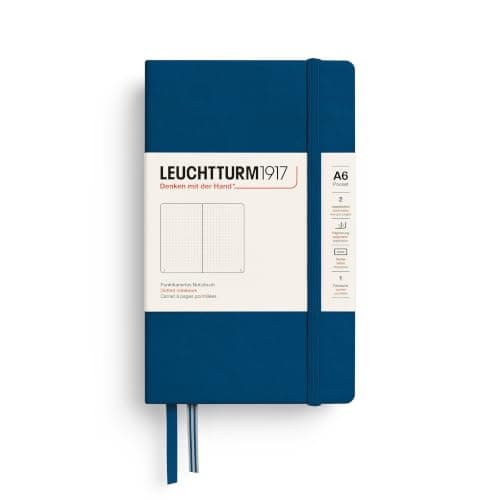
1. Size, measured against a real pocket. The de facto travel standard is roughly 3.5 by 5.5 inches, which fits a back pocket and a jacket pocket without folding. A6 — about 4.1 by 5.8 inches — is the other common size and is a jacket-or-bag notebook rather than a jeans one. Anything bigger is a bag notebook whatever the listing calls it, and at that point the full-size journal roundup is the more useful page.
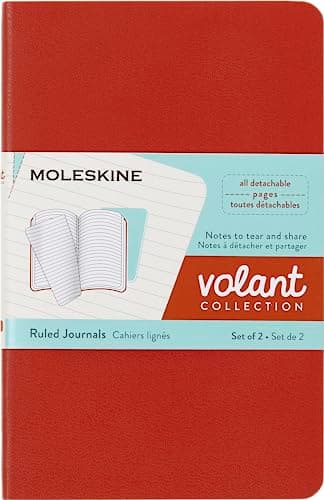
2. Binding, which decides how it behaves in one hand. Saddle-stitched books — two staples through a folded spine — are thin, flexible and bend to a pocket. Top-spiral books flip one-handed and lie completely flat, which matters when the other hand is holding a rail or a camera. Sewn hardcovers open flat too but need a surface. Each is right for a different way of standing up while writing.
3. Paper, which decides which pen works. Thin memo paper feathers and shows through with wet ink; heavier hardcover paper takes a fountain pen. Coated weatherproof paper takes rain but needs a pressurized pen or a pencil to write on when wet. There is no best-in-general paper here, only paper matched to a pen — which is why we rank pens on a separate page and would rather you bought the pair.
4. Whether it keeps anything besides writing. A back pocket, an elastic band and numbered pages are the difference between a notebook and a trip archive. Tickets, cards and receipts end up somewhere; a notebook with a pocket is where they end up in order.
Weatherproof paper, and who it is actually for
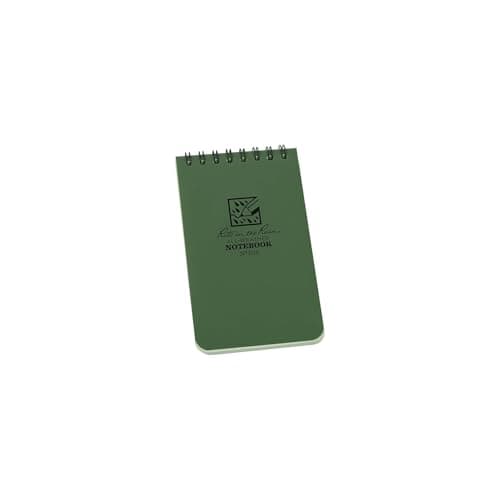
Rite in the Rain's paper is treated so that water beads off rather than soaking in, and a written page survives being rained on. That is a genuine capability that ordinary paper cannot match at any price. The honest caveat is the other half of the system: on a wet page a normal pen skips or tears, so weatherproof paper effectively requires a pressurized all-weather pen or a pencil. Buy it as a pair or not at all.
It is also not a pleasant journaling paper — the coating is waxy under a nib, and it is field kit, not a keepsake. If the trips involve boats, trailheads, motorbikes or monsoon season, it is the only right answer here. If they involve airports and hotels, it is money spent on a scenario that will not arrive, and any of the other three is a better notebook.
One book per trip, or one book per year?
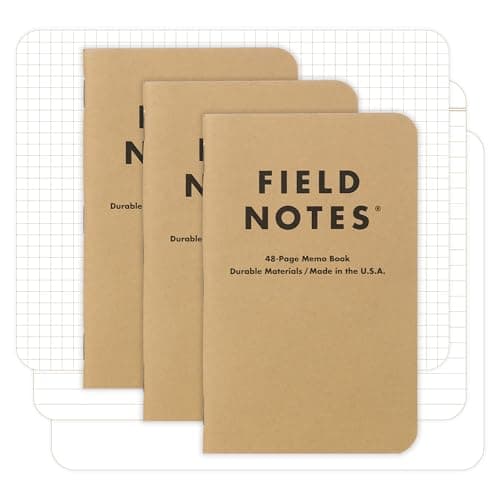
These are two different products and buying the wrong one is the usual mistake. One book per trip means thin, cheap and disposable-feeling: a 48-page memo book is finished by the flight home and goes on a shelf as a complete object. It encourages writing precisely because nothing is at stake. One book per year means a hardcover with numbered pages and an index, which is the only way a pile of entries stays findable later, and it means committing to a habit before it exists.
For a gift, the per-trip version is the safer buy and the per-year version is the better one if you already know they write. A hardcover given to someone who does not journal is a handsome object with four used pages, and we would rather you knew that before buying — the same reasoning as our guide for the traveler who has everything.
Where notebooks beat a phone, and where they do not
A phone is better at almost everything a notebook does: it is searchable, backed up, and always with you. Two things it is worse at. It dies, and it interrupts. A pocket notebook works at a border with no signal, at altitude with no power, and at the exact moment when unlocking a phone would pull you into notifications instead of into the thing you wanted to write down.
That is the honest case for paper on a trip, and it is why a notebook and a pen sit near the top of our travel EDC list alongside a power bank rather than instead of one. It is not nostalgia; it is redundancy.
How we ranked these
Scored against our published rubric from published specifications, manufacturer documentation and aggregated owner feedback. We do not run a lab and we do not claim measurements we have not taken. Pocketability and the likelihood of the book actually being written in carry the most weight under usefulness — a notebook that stays blank scores badly here no matter how well it is made. Value is scored per book rather than per pack, which is why a three-pack outranks a single hardcover on that axis.
Two of the names here also sell a full-size hardcover, and the choice between them is the most common question in this aisle — settled in LEUCHTTURM1917 vs Moleskine, which compares the pocket editions as well as the A5 books.
How to choose a pocket notebook for travel
1. Which pocket does it have to fit?
Jeans back pocket means saddle-stitched and roughly 3.5 by 5.5 inches — a hardcover will not bend and will be left at the hotel. Jacket or bag means A6 and a hard cover are both comfortable.
2. One trip, or one year?
Per-trip is thin, cheap and finishable. Per-year needs numbered pages and an index or it becomes an unsearchable pile. Buying a per-year book for a per-trip habit is the most common mistake in this category.
3. What are they writing with?
Fountain or heavy gel ink needs the heavier paper of a hardcover. A fine hybrid ballpoint is happy anywhere. Weatherproof paper needs a pressurized pen. Buy the pen and the paper as a system.
4. Does it need to survive weather?
Genuinely wet conditions mean coated weatherproof paper and nothing else will do. Ordinary rain-in-a-bag is solved far more cheaply by a plastic sleeve and a normal notebook.
5. Does it need to hold tickets and cards?
Then it needs a back pocket and an elastic. Without them, everything loose ends up in the bottom of a bag, and the notebook is only recording half of the trip.
What you should spend
Memo three-packs are the cheapest way in and, per book, the cheapest thing on this page. Weatherproof singles and soft-cover two-packs sit just above them. Numbered hardcovers are the top of this range and are worth it only once the writing habit is real. Every button here shows a live price, and where we have no verified price we show none rather than a stale number.