Pack a travel backpack in five zones: soft and light at the bottom, the heaviest items against the spine at roughly mid-back height, medium weight around them, the day's essentials in the top and lid, and anything needed at security in an outside pocket. That order comes from the one fact that separates a backpack from a suitcase: a backpack is carried on a body, so where the weight sits matters as much as how much of it there is. A bag packed with the heavy things low and far from the back pulls the shoulders backward and feels twice its actual weight by the second flight of stairs.
Why a backpack is packed in the opposite order to a suitcase
A rolling suitcase lies flat and the weight rests on wheels, so you pack it in layers and the only real question is what you want on top. We go through that method in how to pack a carry-on. A backpack stands upright against a spine. Weight held close to the body and near its center of mass is weight the hips can carry; the same weight held low and away from the back becomes a lever trying to tip the wearer over, and the shoulders end up fighting it.
Everything that follows is downstream of that. It is also why a 40-liter travel pack with a real harness — a hip belt that transfers load to the hips and a suspended back panel — is a different object from a 40-liter duffel with straps, and why the travel backpack roundup ranks on harness before it ranks on volume.
The five zones, bottom to top
Zone 1, the bottom: soft, bulky, not needed until bedtime. Sleepwear, a packing cube of underwear and socks, a silk liner if they use one. This zone is also the pack's crumple space — it stops hard edges pressing into the lower back.
Zone 2, against the spine at mid-height: the heavy things. Shoes (in a bag, soles facing out), a laptop in its padded sleeve, a toiletry bag, a power bank, a camera body. The rule is simple: if it is dense, it goes as close to the back panel as the pack will allow and as close to shoulder-blade height as the shape permits.
Zone 3, the outer wall and the gaps: medium weight. Clothing cubes, a fleece, a towel. These brace the heavy core so it cannot migrate during a day of walking, which is the thing that turns a well-packed bag into a badly packed one halfway through a trip.
Zone 4, the top and the lid: today. Rain shell, headphones, a snack, the water bottle if there is no side pocket, the book. Anything you expect to want without taking the bag off your back belongs here or in a hip-belt pocket.
Zone 5, the outside pockets: documents and security. Passport, boarding pass, the liquids bag, the laptop if the pack has an external laptop sleeve. The test of this zone is whether the traveler can clear a security lane without opening the main compartment. If they cannot, the packing failed before they left the house.
Panel-loader or top-loader changes the method
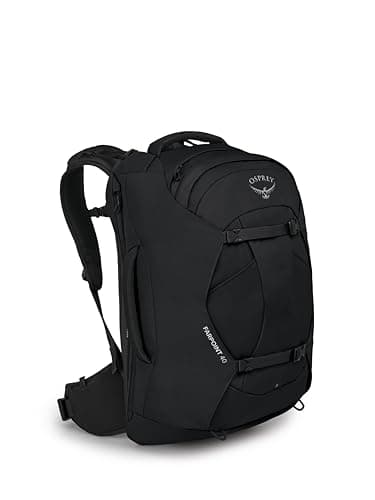
Most good travel packs — the Osprey Farpoint 40 among them — open like a suitcase, with a zip around three sides. That is a panel-loader, and it lets you pack in those zones visually, laid flat on a bed, and then stand the bag up. Hiking packs that open from the top are loaded in the literal order above: first in, last out.
One honest warning about panel-loaders, and it is the Farpoint's own stated weakness: one large main compartment means it can turn into a rummage. The zones are what prevent that, and they only hold if the contents are in containers rather than loose.
Cubes do more in a backpack than in a suitcase
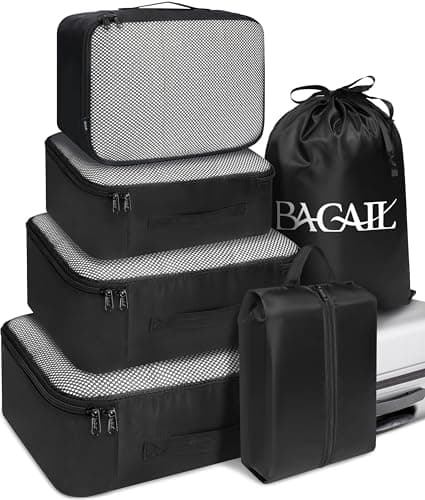
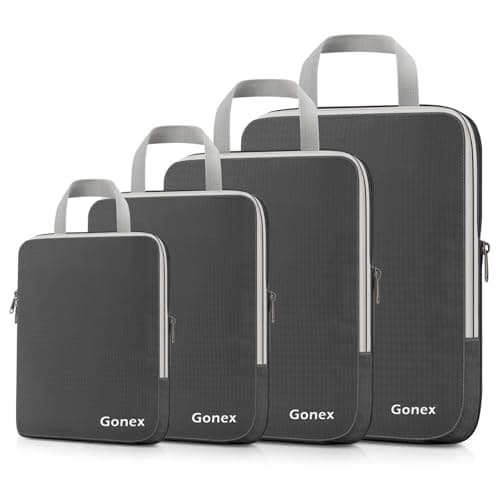
In a suitcase, packing cubes buy order. In a backpack they buy structure, which is worth more. A pack has no internal shelf and no rigid walls, so loose clothing slumps into one shapeless mass and the carefully placed heavy items sink toward the bottom. Four or five cubes turn the inside of the bag into stackable blocks that hold their positions.
Whether they should be plain cubes or compression cubes is the one genuine decision. If the pack is full and the trip is carry-on-only, compression is the right tool — the second zip squeezes air out of the bulky layers and buys real volume. If the pack has room, plain cubes are less fuss and the clothes come out less creased. We work through that trade in BAGAIL vs Veken and cubes vs compression bags, and the count question in how many do you need.
The second-bag problem
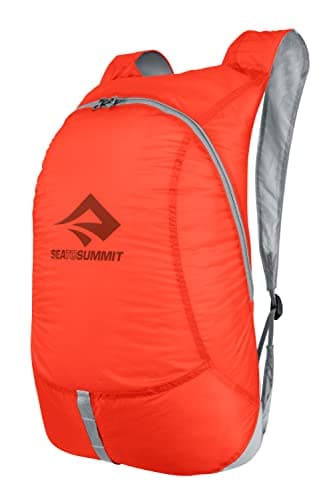
A travel backpack is a terrible day bag. It is too big for a museum, too obviously a tourist, and carrying 40 liters around a city because you need a water bottle and a jacket is nobody's idea of a good afternoon. The fix is a packable daypack that stuffs into its own pocket and weighs almost nothing — it goes in zone 1 and comes out on arrival.
It is also, incidentally, the cheapest useful gift for anyone who travels with a backpack, and the whole category is ranked on the packable daypack roundup. For the flight itself, a day bag that fits under the seat is a different purchase again — see personal item bags.
The things that go wrong
Packing to the volume rather than to the weight. A 40L pack full of books is a bag nobody can carry. Pack it, then carry it up two flights of stairs at home. That test is free and it is the only one that matters.
Liquids buried in the middle. The TSA liquids rule means the bag has to come out and be opened if the quart-sized bag is not reachable. In a panel-loader that means unpacking on a metal table. Put it in an outside pocket and the whole lane takes thirty seconds — see the TSA liquids guide for what has to be in that bag.
Straps left loose. Compression straps on the outside of the pack are not decoration; cinching them pulls the load toward the back panel, which is the entire point of the zone-2 rule. A pack with slack straps carries like a bag packed wrong even when it was packed right.
Nothing in the hip-belt pockets. Phone, lip balm, boarding pass. If the traveler has to take the bag off to reach their phone, they will carry it in their hand instead and then leave it on a train.
For what should be in the bag rather than how it is arranged, the one-bag travel packing list is the companion to this page, and backpack vs carry-on suitcase is the page to read if the bag has not been bought yet.
Quick answers
Where do the heavy things go in a backpack?
Against the back panel, around shoulder-blade height. Close to the body and near its center of mass is the load the hips can carry; low and far out is the load the shoulders fight.
What goes in the bottom?
Soft, bulky things you will not want until the end of the day. It doubles as padding against the lower back.
Should you use packing cubes in a backpack?
Yes — more so than in a suitcase. A pack has no shelf, so cubes supply the structure the bag does not have and stop the heavy items sinking.
How do you pack a backpack for a flight?
Same five zones, with one addition: liquids and laptop in an outside pocket so security does not mean unpacking. Check the airline's sizer rules first — see carry-on size rules.
Roll or fold?
Roll the soft things that live in cubes, fold the things that must look pressed, and keep tailoring out of compression entirely — the reasoning is in how to pack a suit in a carry-on.
What to spend
The method is free. The three things that make it work — cubes, a packable second bag and a pack with a real harness — span a very wide price range, and the cubes are the cheapest and highest-impact of them. Every price here is live and date-stamped.