Start shifting bedtime two or three days before the flight — an hour or two later if you are flying west, an hour or two earlier if you are flying east — then switch to destination time the moment you land and get outside in daylight. That is the core of the official guidance, and it is free. Jet lag is a mismatch between the body's daily rhythm and the clock at the destination, and the CDC describes it as a temporary sleep problem that usually shows up after crossing more than three time zones. It cannot be prevented outright — the NHS says so plainly — but it can be shortened, and most of what shortens it is behavior rather than purchases.
Why east is harder than west
This is the part most advice skips, and it explains why the same traveler sails through one direction and struggles with the other. Flying west means staying up later than your body wants, which is something most people can do on request. Flying east means going to sleep earlier than your body wants, which is something almost nobody can do on request.
So the pre-trip adjustment runs in opposite directions. The CDC's advice is straightforward: traveling west, go to bed an hour or two later than usual in the days before you fly; traveling east, go to bed an hour or two earlier. A US traveler heading to Europe is flying east — the hard direction — which is exactly why "how to beat jet lag going to Europe" is the version of this question people search most. Shift earlier before you go, and land already part-way there.
Two more pieces of CDC guidance belong in the planning stage, not the packing stage. If the trip has something that matters in it — a wedding, a presentation, a race — arrive at least two days before it. And if you are crossing more than about three hours, plan to adopt the destination's sleep and waking routine from arrival rather than easing into it.
Daylight is the tool that actually resets the clock
If you only do one thing on arrival, do this one. The NHS's after-arrival advice is to change your sleep schedule to the new time zone as quickly as possible, set an alarm so you do not oversleep in the morning, and go outside during the day, because natural light helps the body clock adjust. The CDC makes the same point from the other side: staying in well-lit areas during the day at the destination helps.
What that means in practice is that a morning walk is a more powerful intervention than anything in your bag. A hotel gym with no windows is not. Nor is a dark room and a four-hour nap, which both sources specifically warn against — the NHS says do not sleep during the day, only at night.
On the flight: sleep when it is night where you are going
The NHS's in-flight list is short and worth following exactly: drink plenty of water, keep active by stretching and walking around the cabin, try to sleep if it is night time at your destination, and use an eye mask and earplugs if they help you sleep. The thing not to do is drink too much caffeine or alcohol — both sources flag alcohol specifically, the CDC on the grounds that it disrupts sleep.
"Sleep if it is night at your destination" is the instruction that does the work, and it is the one people get wrong. Sleeping through a daytime leg because the cabin lights are off and there is nothing else to do is how a traveler lands at 7am having slept at the wrong end of the clock. Set the watch to destination time at the gate and treat the flight as part of that day.
If sleeping on a plane is the problem rather than jet lag itself, that has its own guide: how to sleep on a plane works through the four things that wake people up, in the order they do it.
On medication, we defer
We are a gift site, not a medical one, so here is the honest summary and no more. The NHS says medicines are not usually needed, that jet lag often improves on its own within a few days, and that melatonin tablets are not recommended on the NHS for jet lag because there is not enough evidence they work. The CDC suggests talking to a doctor about medicine or sleep aids if jet lag is a recurring struggle, and taking anything only as directed. Those are the two positions; the decision is between a traveler and their clinician, and we are not going to put a dose on a page.
Short trips are the exception to everything above
If the whole trip is two or three days, the NHS suggests you may be better off not changing your eating and sleeping times at all, so you do not have to change them back on return. This is the quiet piece of advice that saves business travelers the most misery, and it reframes the kit as well: for a 48-hour trip, do not buy things to help with adjusting — buy things that help someone function on their home clock in a bright, noisy, unfamiliar room. Our business trip packing list is written for exactly that trip.
One other thing a long flight does to a body sits outside jet lag entirely, and the published guidance on it has a clear hour threshold: do you need compression socks on a flight.
What to look for in the kit that helps
Nothing in a bag will reset a body clock. What gear does is remove the obstacles to sleeping and waking at the right times, and there are only three of them worth spending money on.
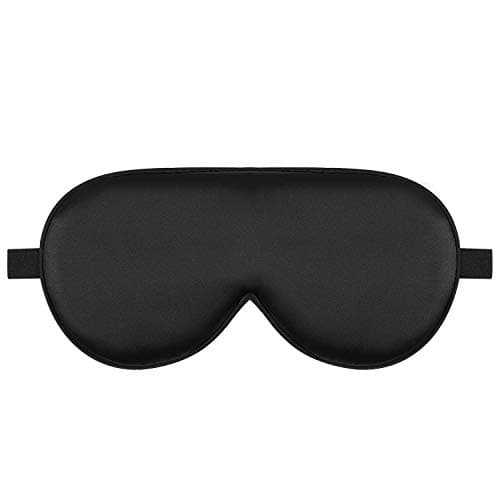
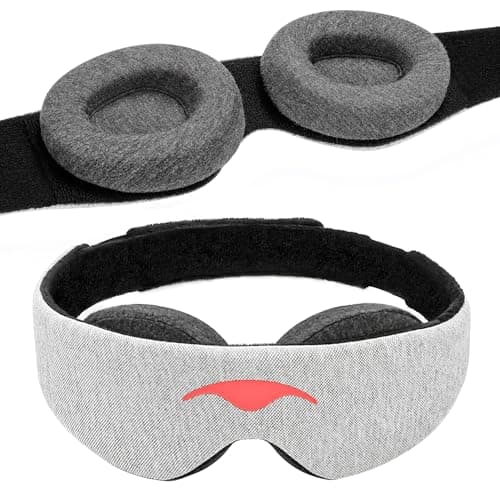
Darkness that works at the wrong time of day. The hard part of jet lag is sleeping while the sun is up somewhere — a late afternoon arrival, a 5am light leak through hotel curtains. A flat mask rests on the lids and leaks light at the bridge of the nose; a cupped mask seals on the orbital bone and holds the fabric off the eyes. If the recipient is light-sensitive, that difference decides whether the mask gets used at all.
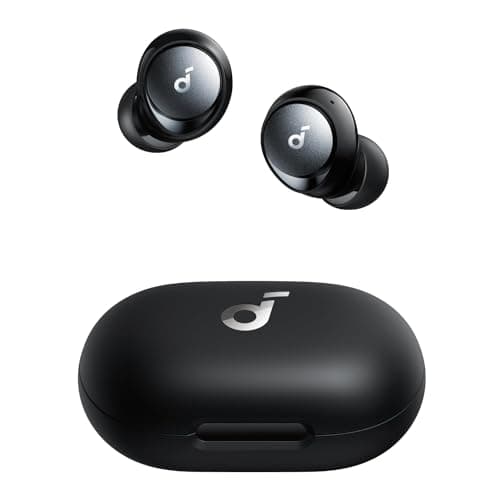
Control over noise, not just less of it. An unfamiliar hotel corridor at 2am local time is the classic jet-lag wake-up. Earplugs are the cheapest answer and the NHS names them. Noise-canceling earbuds do more, because they also work in the cabin and on the morning walk that is supposed to be fixing the body clock. Over-ears do more again, and are no use lying on your side — the full comparison is in headphones vs earbuds for flying.
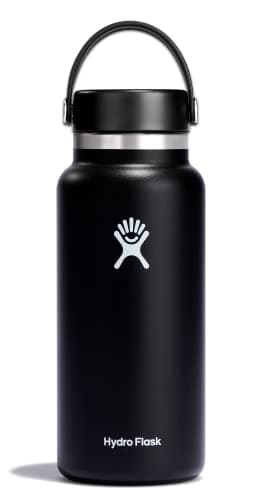
Water you will actually drink."Drink plenty of water" is the first line of the NHS in-flight list, and the reason people do not is that it means asking a cabin crew member six times. A bottle filled past security removes the friction. Insulated steel stays cold all day and is heavy; collapsible is lighter and less pleasant to drink from. Either beats the 200ml cup.
What we would not buy: anything sold as a jet-lag cure. Light therapy glasses, patches, pills marketed at travelers, and apps with proprietary schedules all sit somewhere between unproven and expensively ordinary, and neither source we are working from endorses any of them. Daylight is free and it is the thing that works.
A plan you can follow
Three days before
Shift bedtime toward the destination: later for a westbound flight, earlier for an eastbound one. Thirty to sixty minutes a night is enough to matter and realistic enough to actually do.
At the gate
Change every clock to destination time, including the one on your wrist, and decide then whether this flight contains a night or not. That one decision drives everything you do on board.
In the air
Water, movement, and sleep only if it is night where you are going. Mask and earplugs if they help. Go easy on caffeine and alcohol — both sources single alcohol out.
The first day there
Get outside in daylight, eat on local time, set an alarm, and do not nap. If you must lie down, keep it short and early rather than long and late.
If the trip is 48 hours
Consider staying on home time deliberately. Adjusting twice for a two-day trip is the worst of both worlds.
What to spend
The effective interventions are free; the kit is there to remove obstacles. A good mask and a way to control noise are the two purchases that change outcomes, and both exist at sensible prices. Every button here shows a live price with the date it was checked.