One-bag travel is a clothing decision wearing a luggage costume. The bag matters, but the reason most people fail at carry-on-only is that they pack for the trip they imagine rather than the week they will actually have. This list is the gear that makes the discipline easier — and a plain statement of the rule that does most of the work: pack for four days and do laundry once, no matter how long the trip is.
The core six
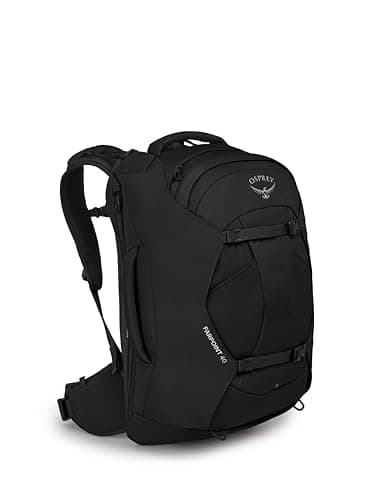
1. A 40-liter bag that opens flat. Forty liters is the one-bag standard because it is the largest volume that reliably fits a carry-on sizer. What separates a travel pack from a hiking pack is the opening: a clamshell that unzips like a suitcase means you can see and reach everything, where a top-loader means unpacking three layers to reach the bottom one. Stowable straps matter too — a harness that hides away is what stops the bag being refused at a gate or shredded on a belt.
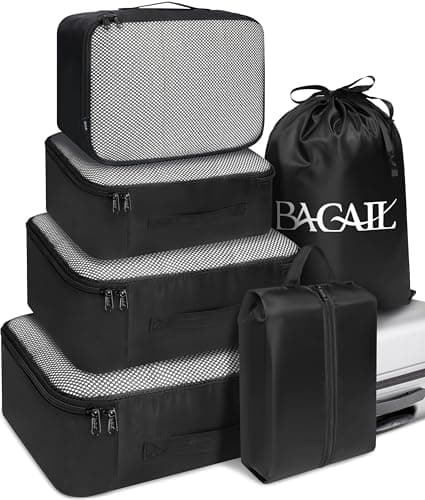
2. Packing cubes, used as a limit rather than as organizers. Most people treat cubes as tidiness. Their real function on a one-bag trip is that a cube is a hard boundary: shirts get one cube, and if they do not fit in it they do not come. That converts an open-ended packing decision into a closed one, which is the entire trick.
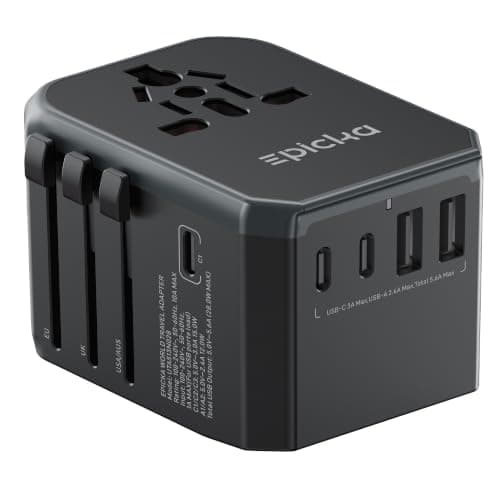
3. One universal adapter. One adapter with the common plug shapes and USB ports replaces a bag of regional adapters and the chargers for everything you own. Read the input line on your chargers before you go: anything marked 100-240V needs only a plug adapter, which covers essentially every phone, laptop and camera charger. Our adapter versus voltage converter guide explains the one case where that is not enough.
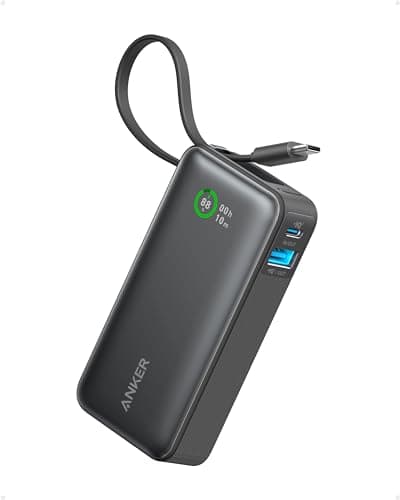
4. A pocket power bank. Not the biggest one you can find. On a one-bag trip the constraint is what you will carry in a jacket pocket all day, and a 5,000 to 10,000mAh bank with a built-in connector is the size that actually gets taken out of the room. A large bank stays at the hotel and charges nothing.
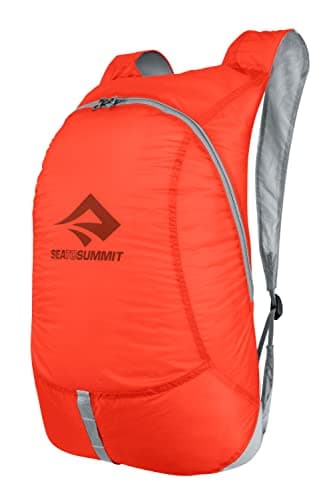
5. A day bag that packs into nothing. The 40-liter bag is a transport bag, not a day bag. An ultralight sack that folds into its own pocket weighs a few ounces and turns a one-bag trip into a two-bag day without adding a second piece of luggage. This is the single most under-bought item on this list.
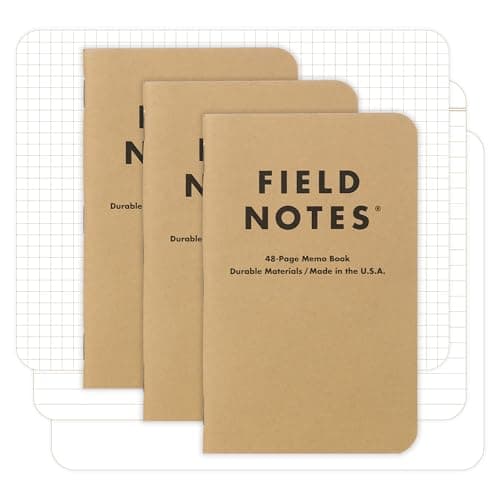
6. Something to write on that is not a phone. A pocket notebook works at a border with no signal, on a plane with no power, and at the moment when unlocking a phone would pull you into notifications. It weighs nothing and it is the piece of this list most likely to still be with you in ten years — see our pocket notebook roundup for the paper and the pen roundup for what to write with.
The clothing rule, stated plainly
Pack four days of clothing for any trip longer than four days, and plan one laundry stop. Beyond that the math stops working: a seven-day pack and a fourteen-day pack are the same pack, and the only thing that changes is how often you wash. Almost every one-bag failure traces back to refusing this rule and trying to carry ten days of shirts.
Two practical consequences. Choose fabrics that dry overnight in a hotel bathroom, which in practice means merino and synthetics rather than cotton. And decide the shoes first: shoes set the floor on volume, and the honest limit for one bag is one pair worn and at most one packed.
What earns a place, and what does not
The test for anything going in is whether it solves a problem you will definitely have, rather than one you can imagine. A universal adapter passes. A travel iron does not. A packable day bag passes. A second "nice" jacket does not.
Things that repeatedly fail the test: full-size toiletries when the destination sells the same products, multi-tool gadgets that do four jobs badly, cables for devices you are not bringing, and a second bag "just in case" that guarantees you will fill it. We keep a longer version of this argument in travel gifts to avoid, which is the same list from the other direction.
Will 40 liters actually fit in the overhead?
Usually, with a caveat worth knowing. Most US carriers print a 22 x 14 x 9-inch cabin allowance, and a soft 40-liter travel pack is inside that when packed moderately and outside it when stuffed. Soft bags compress into a sizer, which is why these get carried on daily without incident — but "usually" is doing work in that sentence on a full flight with a strict gate agent, and budget carriers in Europe enforce smaller boxes more aggressively. Our carry-on size rules guide covers where the lines really are.
One bag versus a carry-on suitcase
A backpack wins on stairs, cobbles, gravel, small cars and anywhere with no elevator. A wheeled carry-on wins on smooth airport floors, protects fragile contents better and keeps its shape without help. If the trip is airport to hotel on paved surfaces and the back is a consideration, wheels are genuinely the easier answer and we would rather say so — the full comparison is in travel backpack versus carry-on suitcase.
How the picks below were chosen
Scored against our published rubric from published specifications, manufacturer documentation and aggregated owner feedback. We do not run a lab and we do not claim measurements we have not taken. On this page usefulness is weighted toward items that remove a second purchase — a day bag that means no extra luggage, an adapter that replaces four. Every price shown is live; where we have no verified price, the button says so rather than printing a stale number.
This list is what goes in the bag. Where each thing sits once it is in there is a separate question, and it decides whether the bag is pleasant to carry: how to pack a travel backpack covers the five zones, the heavy-against-the-spine rule and the compression straps most people leave slack.