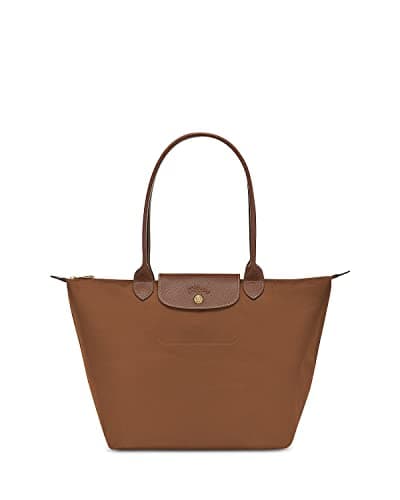
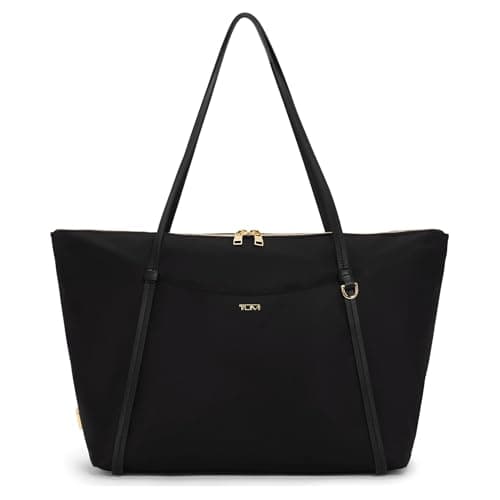
Check for a trolley sleeve before you look at anything else. That's the fabric band on the back panel that slides over a rolling suitcase handle. Without it, a full tote slides off the handle every time the case tips, and the owner ends up carrying it through the entire terminal. It's the one feature that separates a travel tote from a beautiful bag that happens to be near an airport, and most designer totes do not have it.
The two features that decide this category
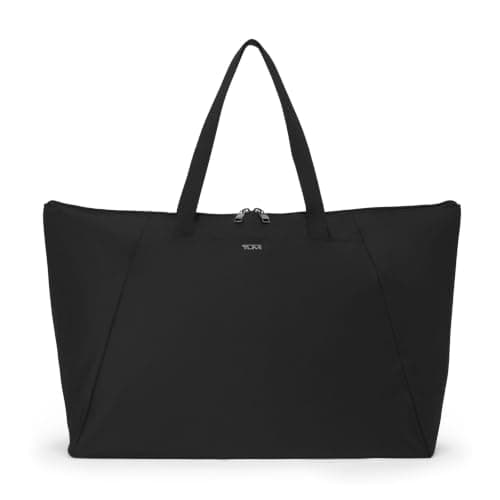
1. The trolley sleeve. Described above, and worth repeating because it's the thing buyers discover they needed on the walk to gate 47. The TUMI Voyageur Q has one. So does most of TUMI's Voyageur line. Longchamp's Le Pliage famously does not — which is a real limitation on a bag people buy specifically for travel.
2. A closure that actually closes. Open-top totes are lovely and they are a gift to anyone standing behind you on a crowded metro. A full zip is best; a snap flap is a compromise; nothing at all is a decision you should make deliberately rather than by accident. If the recipient's travel is European city breaks, this moves from "nice" to "the reason to pick one bag over another."
Everything else in the marketing — the leather trim, the lining color, the hardware finish — is real craftsmanship and is not what makes a tote work in an airport. Judge on those two first, then choose the one that looks right.
Nylon or leather?
The premium travel tote market splits cleanly, and the split maps onto two different kinds of traveler.
Nylon totes — the TUMI Voyageur, the Longchamp Le Pliage — are light, weather-tolerant, and often packable. Empty weight matters more than people expect: on airlines that weigh cabin baggage, the bag's own kilo comes out of the same allowance as the things in it. A nylon tote also survives being put on the floor of a train, which a leather one does under protest.
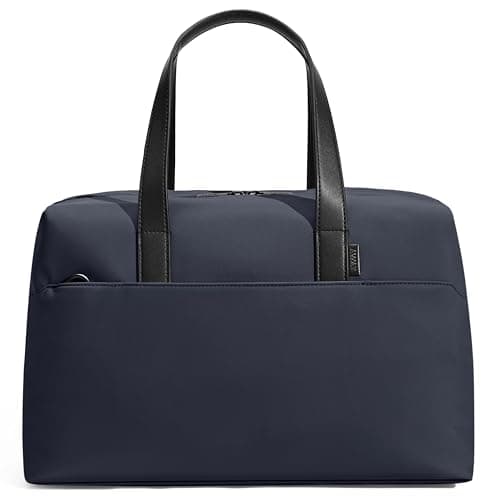
Structured carryalls — Away's Everywhere Bag — are the overnight-bag answer. They hold considerably more than a flat tote, they have internal organization so a laptop isn't loose against a hairbrush, and they zip shut. They're the right shape for the one-night trip that doesn't justify a suitcase.
There is a third category worth naming: the packable second tote. The TUMI Just In Case folds into its own pouch and lives flat in a suitcase until it's needed, which is the fix for the traveler who always comes home with more than they left with. It's not a primary bag. It's insurance, and it's one of the more thoughtful small gifts on the site — see our gifts for frequent flyers for the rest of that logic.
The anti-theft argument
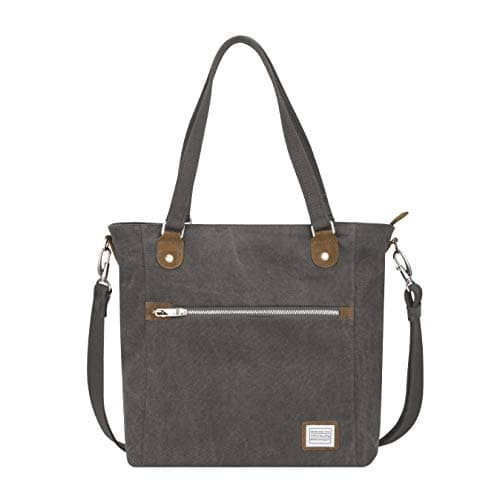
We've included a Travelon anti-theft tote in a luxury roundup on purpose, and it's worth explaining why rather than leaving it looking like an odd one out.
If the person you're buying for is going to Barcelona, Rome, Paris or Naples, the realistic risk to their bag is not that it looks insufficiently expensive. It's that an open-top tote on a shoulder in a crowd is the easiest target in the street. Locking zips, a slash-resistant body and a locking strap address that directly, and they cost a fraction of the designer options. If security is the actual problem, buying the prettier bag is buying the wrong thing.
We'd rather rank it fifth and say plainly what it's for than leave it off the page because it doesn't fit the word "luxury." For the same reason, anyone whose worry is documents rather than the bag itself should look at our travel wallet roundup, where RFID-blocking and slim jacket-pocket profiles do more work than the tote ever will.
Capacity, honestly
Tote capacity is chronically over-claimed, because a tote has no structure and its "capacity" depends on how much you're prepared to make it bulge. A useful rule for gift buying: a large flat tote reliably takes a 15-inch laptop, a book, a water bottle, a scarf and a small toiletry bag, and that's about it. Anything more and you're into carryall or weekender territory, which is a different bag with a different shape.
If the recipient is going to try to fit a weekend into it, buy them the carryall. If they want a personal item that slides under a seat and carries a working day, buy the flat tote. Trying to make one bag do both is how people end up disliking an expensive gift.
How we ranked these
Scored against our published rubric from published specifications, manufacturer documentation and aggregated owner feedback — no lab, no claimed testing. Trolley sleeve and closure carry the most weight in the usefulness score, because those are the features that decide whether a beautiful bag is also a good travel bag. That is why a nylon tote outranks an icon, and why a $60 security bag makes the list at all.
If the brief is specifically the bag that goes under the seat and flies free rather than a tote that has to look expensive, that is a different shortlist: best personal item bags ranks on published dimensions, trolley sleeves and whether the laptop comes out without unpacking.
How to choose a luxury travel tote
1. Does it have a trolley sleeve?
If they travel with a rolling suitcase, this is not optional. Without it the tote lives on a shoulder for the whole journey, which is exactly what the suitcase was supposed to prevent.
2. Does it close?
Zip, snap or nothing. Decide deliberately. For crowded cities and public transport, a zip is the difference between a bag and an opportunity.
3. Flat tote or carryall?
A flat tote is a personal item for a working day. A carryall is an overnight bag. Buy for the trip they actually take, not the one the product photo implies.
4. How much does the empty bag weigh?
On carriers that weigh cabin baggage, the bag's own weight counts. A light nylon tote can be worth an extra kilo of packing over a structured leather one.
5. Where does it get put down?
Train floors, café floors, security trays. Nylon and neoprene forgive that. Leather remembers it. This one question resolves most of the material debate.