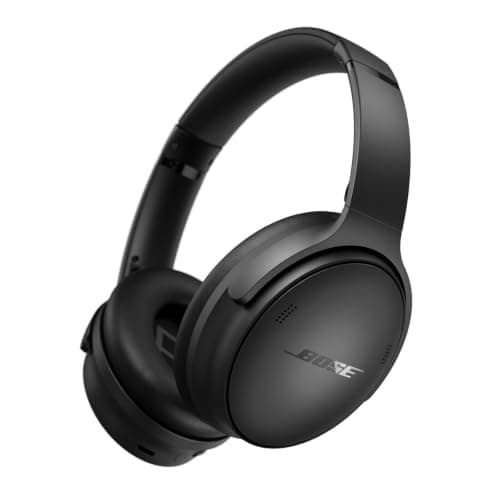
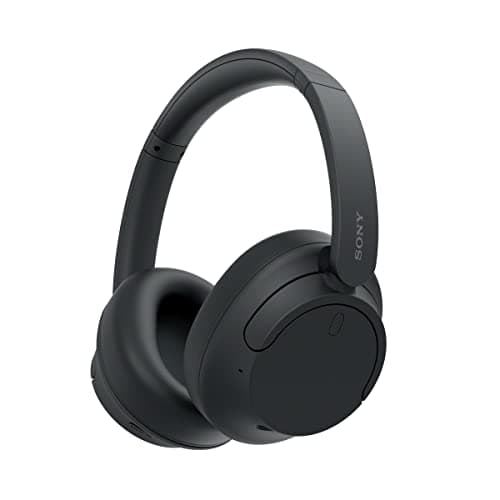
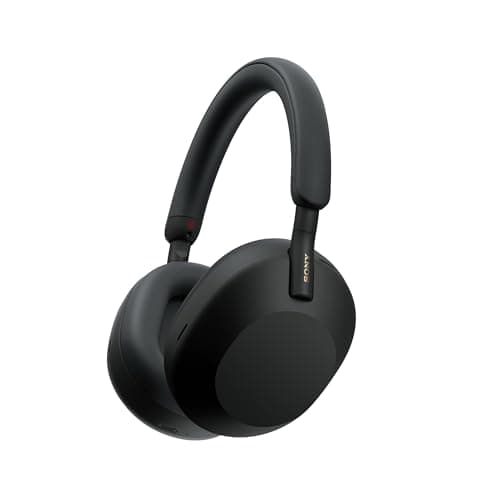
Sony if you want the most capable pair; Bose if you want the one you forget you're wearing. That's the honest summary. Both cancel noise superbly and both are excellent flight headphones — this isn't a good-versus-bad comparison, it's a preferences comparison, and anyone telling you one is clearly better is flattening a real trade-off.
Where they genuinely differ
Comfort over many hours. This is Bose's traditional strength and it still holds. Lower clamping force and generous earcup padding make a long-haul less punishing, and it matters most to people who wear glasses — the arms of a frame pressed into the side of the head for eight hours is a specific, under-discussed misery. If the recipient wears glasses for whole flights, this alone can decide it.
Features and control. Sony's app, EQ options and adaptive behavior are more capable, and there are simply more settings to tune. For someone who enjoys that, it's a genuine advantage. For someone who wants to press a button and have quiet happen, it's noise.
Cancellation. Close enough that we won't pretend to split them. Both flatten engine drone to something like distant weather. Neither erases a crying baby, because active cancellation works on continuous low-frequency sound and struggles with sudden high-frequency sound — that's physics, not a brand difference.
Call quality. Both are strong; Sony's microphone array is generally the more capable in wind and background noise. If they take meetings from airports, this is worth weighting.
The question that actually decides it
How long are the flights? Under about four hours, comfort differences barely register and the more capable pair wins. Over about eight, the pair that disappears on the head wins, and features you configured once stop mattering.
The secondary question is glasses. It converts an abstract comfort preference into a concrete one, and it's the single most useful thing to find out before spending at this level.
The case for buying neither
Both of these sit at the top of the market, and the value tier has improved sharply. A good sub-$100 over-ear now delivers real cancellation, multipoint pairing and long battery life. What it gives up is the last stretch of silence, microphone polish and premium materials — real differences, but smaller than the price gap.
Our honest position: if they fly long-haul monthly, buy a flagship. If they fly four times a year, buy the value tier and spend the difference on two more gifts. We rank all three tiers against each other in the noise-canceling headphone roundup, and travel gifts under $100 shows what else that money buys.
Two practical notes for either pair
Bag space. Over-ear cases are roughly the size of a small melon and neither of these is an exception. For a traveler who walks onto a plane with a single tote, noise-canceling earbuds cancel almost as well in a case that fits a coin pocket — and a pair left at home cancels nothing.
Seat-back screens. Many aircraft still use a wired socket for in-flight entertainment, so wireless headphones need a small Bluetooth transmitter or a cable. Newer aircraft increasingly pair directly. Worth checking if they watch seat-back films rather than downloads.
The bottom line
Buy Sony for the traveler who likes to tune things, takes a lot of calls, and flies medium-haul. Buy Bose for the traveler doing regular eight-hour-plus flights, especially if they wear glasses. Buy neither if they fly a handful of times a year — the value tier is genuinely good enough now, and that's a more useful piece of advice than picking a winner between two excellent pairs.
For the longer read on the Sony specifically, see our Sony WH-1000XM5 review.
Decide in four questions
1. How long are the flights?
Under four hours, take the more capable pair. Over eight, take the more comfortable one — features stop mattering when your head hurts.
2. Do they wear glasses?
If they wear frames for the whole flight, lower clamping force stops being a preference and becomes the deciding factor.
3. Do they take calls?
Frequent calls from airports and hotel rooms favor the stronger microphone array and reliable multipoint pairing.
4. Do they want to tune, or just press play?
A deep app is a feature to one person and friction to another. Buy for the person, not the spec sheet.