The LEUCHTTURM1917 A5 is the alternative to buy, and it is for the traveler who actually writes rather than the one who intends to — numbered pages, a blank index at the front, lay-flat binding and a gusset pocket, in the same hardcover-and-elastic format people already know. The budget pick is the Rite in the Rain 3 x 5, which is both the cheapest notebook on this page and the only one that survives being rained on. Every price below is read live from our price layer and carries an as-of date in the table.
What the Moleskine Classic is genuinely good at
Worth saying properly, because most “alternatives” pages open by running down the original and that is both unfair and unhelpful.
The Moleskine Classic is a hardcover notebook with an elastic closure, a ribbon marker and an expandable inner pocket, and its three real strengths are not about paper at all:
- It is recognizable. It reads as a travel journal on sight, which is exactly why it is such a reliable gift — the recipient understands what it is for without being told. Nothing else in this category has that.
- The expandable back pocket is made for keepsakes. Tickets, stubs, boarding passes, a pressed flower. For a travel journal specifically, that pocket is a feature, not a detail.
- It is everywhere. Airport bookshops, stationers, museum gift shops. If a journal runs out mid-trip you can replace it with the identical object in most cities in the world, which matters more than it sounds to somebody keeping a continuous record.
That is a real product with real advantages, and for a lot of buyers it remains the right answer — it is a pick on our travel journal roundup for those reasons. This page exists because there are four specific situations where something else is clearly better, and each of them has a clean answer.
The four reasons people look for an alternative
These are the reasons, in the order the search tail puts them.
- Ink. The most common reason by a distance, and the one the autocomplete tail names directly. A fountain pen, a heavy roller or a brush marker can feather and ghost through thinner paper, and anybody who uses one has usually discovered this the expensive way. The fix is a notebook with heavier paper.
- Price. The second-most-searched reason. A hardcover notebook is a meaningful purchase, and for somebody who fills one every trip, cheaper-per-book changes the habit.
- Structure. Numbered pages and an index sound like stationery pedantry until you have a journal with six months of entries in it and no way to find the bit about the guesthouse in Kyoto. Then they are the whole value.
- Weather. Any paper notebook dies in rain, on a boat, or on a motorbike. There is exactly one category of answer to this and it is a specialist one.
How we chose
Four criteria, weighted for a traveler and a gift buyer rather than a stationery collector.
- Does it beat the Classic on a stated strength? Every pick here has to win on something nameable — ink handling, price per book, structure, or weatherproofing. A notebook that is merely different does not make the page.
- Does it survive a bag? A journal lives loose in a daypack with keys and a water bottle. Hardcover or a stitched spine, not a wire coil that bends.
- Is the format honest about its job? A pocket memo book and a desk journal are not competing products. We rank both and say which is which.
- Does the maker publish the specifications? Page count, size, paper treatment, binding. Where a figure is not published, we do not supply one.
We compile published listing specifications and manufacturer documentation, score each pick against our published rubric, and read prices from the live price layer. We have not run a pen test across these papers and we publish no measurements of our own — where we say one paper handles ink better than another, that is a judgment from the makers’ published descriptions and aggregated owner reports, not a lab result.
Which alternative for which reason
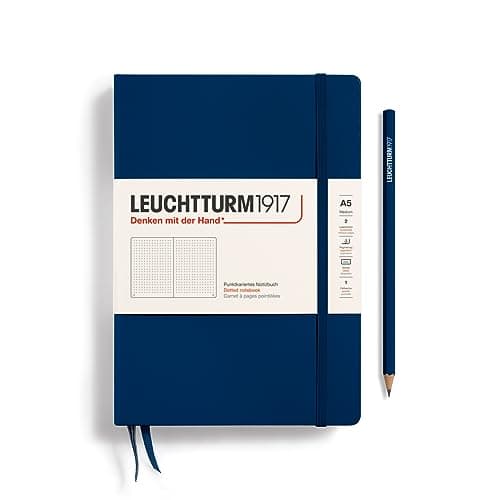
The direct upgrade, and the answer for a fountain pen user. The LEUCHTTURM1917 A5. It is deliberately the same format as the Classic — hardcover, elastic band, back pocket — so nothing familiar is lost, and then it adds the three things the Classic does not have: numbered pages, a blank index at the front, and lay-flat binding so the book stays open on a cafe table without being held. For a journal that will be referred back to, the index alone justifies the swap. We put the two side by side in LEUCHTTURM1917 vs Moleskine.
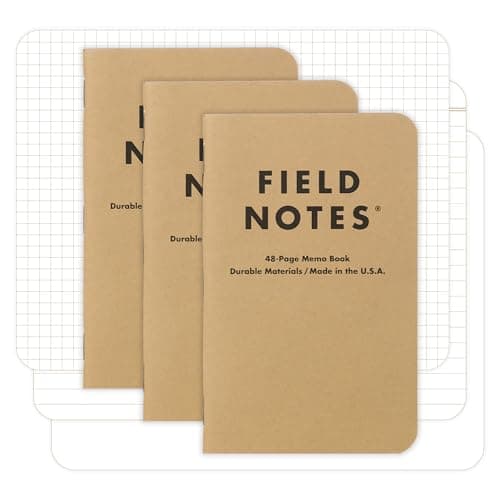
The cheaper answer, and the better habit. Field Notes Original Kraft, three to a pack. The shift here is conceptual rather than material: instead of one book that has to last a year, you carry a 48-page memo book sized 3.5 by 5.5 inches, fill it on one trip, and shelve it. A pack of three is one trip each for three trips, and the per-book price is a fraction of a hardcover. It is also the format that actually gets carried, because it fits a back pocket. The pack mixes graph, ruled and plain, which is how people discover which they prefer.
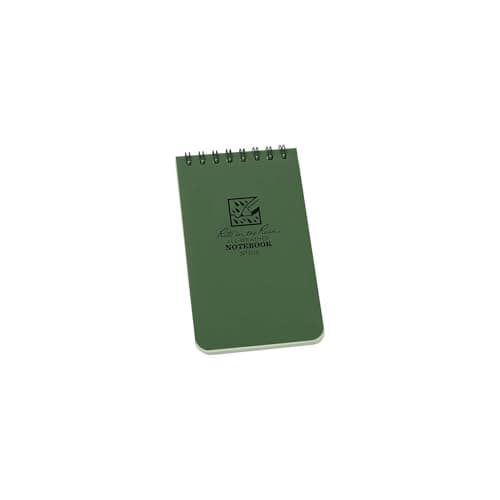
Rain, boats, motorbikes and hiking. The Rite in the Rain 3 x 5 — our budget pick, and the only genuinely weatherproof notebook here. Its paper is treated to shed water, which means the thing that destroys every other notebook on this page simply does not apply. The top spiral suits a standing writer holding it in one hand. Note the one real constraint: weatherproof paper wants a pressurized or pencil-type writer, which is exactly why we rank its matching weatherproof clicker pen alongside it — and why which pen you carry on a plane is a question worth two minutes.
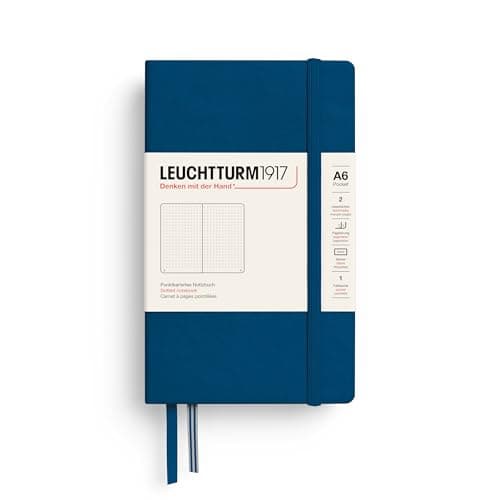
One notebook that survives a year of trips in a jacket pocket. The LEUCHTTURM1917 Pocket A6. Same structural advantages as the A5 — 187 numbered pages, blank index pages, hardcover with an elastic — in a format that goes in a coat rather than a bag. This is the pick for somebody who wants the structure but will not carry an A5, and it is the best gift on this page for a person who travels light. More formats in our pocket notebooks roundup.
When to just buy the Moleskine
Three cases, and they are not small ones.
It is a gift and you do not know their habits. The Classic is the recognizable object. A recipient who has never kept a journal understands a Moleskine instantly and may not understand why numbered pages matter. Legibility as a gift is a real property.
They already keep a shelf of them. Somebody with four years of identical spines on a shelf is not looking for a better notebook; they are keeping a series. Breaking the series is a worse gift than the better notebook.
The keepsake pocket is the point.If the journal’s job is holding tickets and stubs as much as writing, the expandable inner pocket is doing real work. Several alternatives have a pocket; the Classic built its identity around it.
Buying a notebook as a travel gift
Notebooks are the easiest travel gift to get slightly wrong, because the decision looks aesthetic and is actually mechanical. Three questions settle it, and none of them is about the cover.
What do they write with? If the answer is a fountain pen or a heavy marker, buy the heavier paper and stop thinking about anything else. If the answer is a ballpoint, almost any of these works and you can buy on format instead.
Will it be referred back to, or filled and shelved? Referred back to means numbered pages and an index. Filled and shelved means a cheaper book per trip, and a pack of three is a better present than one expensive one.
Where will it live? A bag takes an A5. A jacket takes an A6. A back pocket takes a memo book. A notebook in the wrong size is a notebook left at home, which is the only real failure in this category.
And the bundle, because a notebook alone is a thin gift and a notebook with the right pen is a complete one: pick the paper first, then the pen to match it. Our pens for travel journaling roundup pairs them, and how to start a travel journal is the page to send somebody who has been given one and does not know where to begin. For the wider list, gifts for journal lovers is the one.
Pick the paper for the pen, not the cover for the shelf
A fountain pen, a heavy roller or a brush marker can feather and ghost on thinner paper. If the recipient uses one, heavier paper is the whole decision and everything else is preference.
Numbered pages and an index are for journals you re-read
They sound like pedantry and become indispensable the moment a journal holds six months of entries. If the book will be filled and shelved instead, skip them and spend the money on more books.
Buy the size that matches where it lives
A5 for a bag, A6 for a jacket pocket, a memo book for a back pocket. The only real failure in this category is a notebook too big to be carried, because an uncarried notebook is an empty one.
One book per trip is a better habit than one book per year
A three-pack of memo books means each trip gets its own volume, finished and shelved. It is cheaper per book, it is lighter to carry, and a finished book is far more satisfying than a half-filled one.
If weather is a factor, nothing else will do
Rain, boats and open-cockpit travel destroy ordinary paper. Weatherproof paper is the only answer, and it needs a pressurized or pencil-type writer to work with — buy the pen at the same time.
Hardcover or stitched, never a bare wire coil
A journal lives loose in a bag with keys and a bottle. A hardcover or a stitched spine survives that; an exposed wire coil bends and then catches on everything it meets.