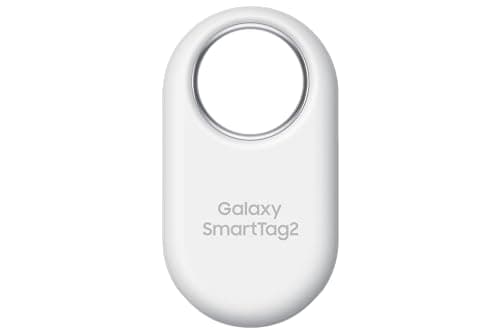
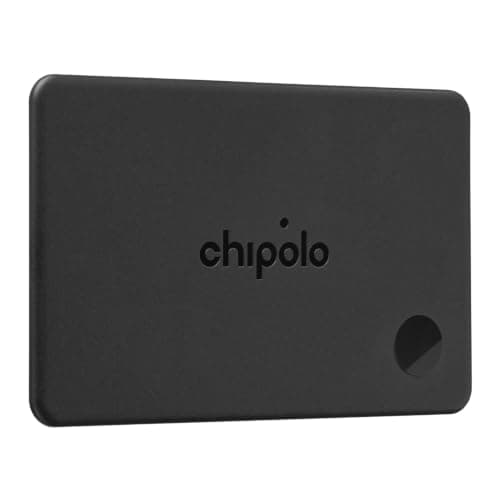
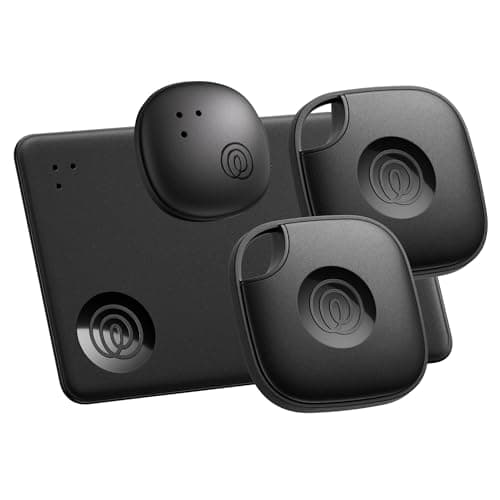
The Tile by Life360 tracker is the alternative to buy if you do not know what phone the owner has, or the household has both iPhones and Android phones — it is the one here that works on either. The budget pick is the Samsung Galaxy SmartTag2, which is both the cheapest tracker on this page and the clearly correct answer for anybody inside Samsung’s ecosystem. If what needs finding is a wallet or a passport holder rather than a suitcase, the Chipolo Card is the pick, because it is the only one shaped to fit one. Every price below is read live from our price layer and carries an as-of date.
What the AirTag is actually good at
Start here, because you cannot sensibly replace something without knowing what it does well — and in this case what it does well is not the object.
Apple’s own description of the mechanism is the important part: an AirTag “sends out a secure Bluetooth signal that can be detected by nearby devices in the Find My network,” and those devices relay the location to iCloud. The tag itself is a Bluetooth beacon and a speaker. The capability is the enormous installed base of Apple devices in the world, any one of which can report your bag’s position as it walks past. That is a genuinely hard thing for a competitor to replicate and it is the right reason the AirTag is the default recommendation in our luggage tracker roundup.
Three other things Apple publishes are worth knowing before you shop for an alternative, because they set the bar:
- Precision Finding over Ultra Wideband.Apple states that with “built-in Ultra Wideband technology, you’ll see the exact distance and direction to head in.” This is the feature that turns “somewhere in this room” into an arrow, and it needs supporting hardware at both ends.
- A user-replaceable CR2032 battery.Apple says it “works for more than a year on a standard battery” that you replace when your iPhone alerts you. A coin cell you can swap in a kitchen drawer is a real advantage over a sealed unit.
- IP67 water resistance— Apple’s stated rating is “maximum depth of 1 meter up to 30 minutes” under IEC standard 60529.
And the single fact that creates this page: Apple’s published tech specs list setup as requiring an “iPhone with iOS 26.0 or later” or an iPad with iPadOS 26.0 or later, plus an Apple Account, and describe setup as “a one-tap setup” that “instantly connects your AirTag with your iPhone or iPad.” If there is no Apple device in the picture, the thing that makes an AirTag good is not available to you — not because of any flaw in the product, but because the product is one half of a pair.
So the real question is: which network is their phone in?
Every tracker on the market is a cheap Bluetooth beacon. What you are buying is a crowd: the population of phones that will anonymously report your tag when they pass it. There are effectively three crowds, and your phone already belongs to one of them.
- Apple’s Find My network. Enormous. Reachable by AirTags and by third-party tags built for it.
- Samsung’s SmartThings Find network.Large wherever Galaxy phones are common, which is most of the world. Reachable by Samsung’s own tags.
- Google’s Find Hub network, and Tile’s own. Android-wide, plus Tile’s long-established community of app users on both platforms.
That is why this page is ranked by network rather than by features. A tag with a louder speaker in the wrong network is worse than a plain tag in the right one. We compare the three head-to-head on capability in AirTag vs Tile vs SmartTag; this page answers the narrower question the search actually asks, which is what to buy instead.
How we chose
Four criteria, in this order.
- Does it work with the phone the owner already has? Disqualifying if not. No feature compensates.
- Does it fit the thing being tracked? A keyring puck does not go in a wallet, and a card does not clip to a dog collar. Shape is not a detail here, it is most of the decision.
- Is the battery replaceable or rechargeable? Either is fine. A sealed, non-replaceable, non-rechargeable tag is a tag with an expiry date.
- Does the listing publish the network and the rating? We rank published specifications — IP rating, battery type, which finding network — over marketing language.
We compile published listing specifications, manufacturer documentation and Apple’s own published AirTag page, and score each pick against our published rubric. We have not tested network coverage in any city and we publish no measurements of our own — a finding-network comparison from a gift site would be invented.
Which alternative for which owner
Mixed households, gifts, and anyone whose phone you do not know. The Tile by Life360 tracker. It is the only pick here that runs on both iOS and Android, which makes it the only honest answer when you are buying for somebody else — a tracker locked to the wrong platform is an unopenable gift. It has a loud ring, water resistance, and Tile’s long-running community find network behind it. If you take one thing from this page as a gift buyer, it is this pick.
Samsung Galaxy owners.The Galaxy SmartTag2 — our budget pick, and the cheapest tracker on the page by a wide margin. For somebody inside Samsung’s ecosystem this is the direct equivalent of an AirTag: Samsung’s own SmartThings Find network, a published IP67 water resistance rating, long battery life, and a Compass view that gives direction rather than just proximity. The caveat is the same one in reverse: it needs a Samsung Galaxy phone, so do not buy it for a household you have not checked.
A wallet, a passport holder or a travel document folio. The Chipolo Card. Credit-card thin, which is the entire point — it goes into the slot a card goes into rather than needing a pocket of its own, and it is rechargeable rather than disposable. It works with Apple or Google’s finding networks, so it is the flexible pick as well as the thin one. This is the tracker for the loss that actually happens most often on a trip, which is a wallet left on a table — see our anti-theft travel accessories page for why we rank that above theft, and our travel wallet roundup for what to put it in.
When the answer is not an alternative at all
Three cases, stated plainly, because an alternatives page that pretends there is always a substitute is not being useful.
The owner has an iPhone and wants the best tracker. Then buy the AirTag. There is no argument to make here: it is cheap, the network is the largest, the battery is a coin cell, and Apple publishes Precision Finding over Ultra Wideband. Our AirTag review sets out the case, and nothing on this page beats it for an iPhone household.
The need is a pet rather than a bag. A Bluetooth tag is not a pet tracker. It reports where the tag was last seen by a passing phone, which works in a city and fails completely in open country. A pet that roams needs a GPS collar with its own cellular connection, which is a different product at a different price.
The need is a checked suitcase and nothing else. Then the tracker is only half the answer. Airlines lose and mishandle bags far more often than anybody steals them, and knowing where a bag is only helps if you also know how to use that information — our how to not lose your luggage guide covers the part the hardware does not.
As a gift
Trackers are among the best travel gifts on this site, for a specific reason: the recipient does not know they want one until the first time a bag goes missing, and after that they will not travel without it. They are also small, cheap and unisex, which makes them unusually easy to give.
The one mistake to avoid is platform lock-in. If you are buying for somebody else and you have not actually seen their phone, buy the cross-platform tracker rather than the one that happens to be on offer — a tracker that cannot be set up is worse than no gift. And buy more than one if the budget allows: a tag in the suitcase and a card in the wallet covers the two losses that happen, rather than one of them. More in gifts for frequent flyers and travel gifts under $50.
Buy the network, not the tag
Every tracker is a Bluetooth beacon. What differs is the population of phones that will quietly report it. Match the tag to the network the owner’s phone already belongs to and everything else is a detail.
If you do not know their phone, buy cross-platform
A tracker locked to the wrong ecosystem cannot be set up at all, which makes it the one travel gift that can fail completely on arrival. Tile runs on both iOS and Android, which is why it is our pick for gift buyers.
Match the shape to the object
A puck for a suitcase or a keyring, a card for a wallet or a passport holder. A card-shaped tag in a bag is fine; a puck in a wallet is a bulge nobody keeps carrying.
Replaceable or rechargeable, never sealed
A coin cell you can swap or a battery you can recharge both give a tag years of life. A sealed, non-rechargeable tracker is a subscription paid in hardware.
Buy two, in two places
One in the checked bag and one in the wallet covers the two losses that genuinely happen. Tracking only the suitcase leaves the more common failure unaddressed.
Do not use a Bluetooth tag as a pet tracker
It reports where a passing phone last saw the tag, which works in a dense city and fails in open country. A roaming animal needs a GPS collar with its own cellular connection.