The Bellroy Transit Travel Pack Pro is the alternative to buy if what you wanted was the TUMI backpack — a carry-on-sized bag that expands from 30 to 38 litres, looks like something you can walk into a meeting with, and costs meaningfully less. The budget pick is the Travelpro Maxlite 5: the cheapest bag here, and the one that answers the carry-on half of the question at a fraction of the price. If the thing you actually wanted was the promise rather than the bag, skip to Briggs & Riley, whose published guarantee is the most explicit version of it anybody sells. Prices below are read live from our price layer with an as-of date.
First: what TUMI is actually known for
An alternatives page that opens by running down the original is not useful, and in this case it would also be wrong — we sell four TUMI bags on this site and recommend them on their merits. So, plainly: TUMI is bought for three distinct things, and the reason “what’s a TUMI alternative” is a hard question to answer in one line is that almost nobody wants all three at once.
- The material.TUMI’s flagship travel line is built in ballistic nylon — a dense, tightly woven synthetic that resists abrasion far better than the fabric on an ordinary bag. Its own Alpha Bravo listing names ballistic nylon construction, a padded laptop compartment and an add-a-bag sleeve as the headline specification. That is a real, physical claim, and it is why TUMI bags survive airports.
- The way it reads in a room. This is the one people are least likely to say out loud and most likely to be buying. A TUMI in a boardroom or an airline lounge is legible: the hardware, the proportions and the monogram are recognizable at ten feet. That is not a vanity point, it is a genuine product attribute, and it is the hardest of the three to replace.
- The service relationship.TUMI registers its bags through its Tracer program — the Alpha Bravo listing names TUMI Tracer registration directly — and the brand’s reputation rests partly on what happens after a bag is damaged rather than only on the bag.
Work out which of those three you are buying and the shortlist below sorts itself. If you want two of the three, the honest answer is often that you should buy the TUMI — we say more about that at the end.
The three reasons, and the three answers
You want the construction, not the logo — and you would rather spend less. This is by far the most common case, and the search tail agrees: the deepest suggestions under “tumi alternative” are backpacks, briefcases, laptop bags and carry-ons, which is to say people are shopping for the object rather than the brand. The modern technical-bag makers — Bellroy, Peak Design — build to a similar standard in weather-resistant synthetics, with better organization than TUMI typically offers, at roughly half the price. They do not look like TUMI, and for this buyer that is not a cost.
You want it to look expensive. Then the alternative is not a technical bag at all, it is leather. A full-grain leather weekender or a leather backpack reads as more considered than ballistic nylon in exactly the settings where the TUMI look matters, and full-grain leather ages into something nylon cannot. The trade is weight and weather: leather is heavier and does not like rain.
You want the promise.Then there is one answer, and it is Briggs & Riley — covered properly below, because its published guarantee is unusually specific and is the single most checkable fact on this page.
How we chose
Four criteria, applied in that order.
- Does it replace a stated TUMI strength? Every pick here has to beat or match TUMI on one nameable axis — construction, appearance, organization, service, or price for comparable build. A bag that is merely nice does not make the page.
- Is it the right shape? The search tail is explicit: backpacks, carry-ons, laptop bags, briefcase-adjacent bags. We rank across those shapes rather than six versions of one.
- Is the durability claim checkable?A published warranty or guarantee with stated terms outranks the word “premium” in a listing. Where a maker publishes its terms, we quote them; where it does not, we say nothing.
- Does it survive being carried daily? Trolley sleeve, laptop protection, a harness that works loaded. These are the details that decide whether an expensive bag is used or resented.
We compile published listing specifications, manufacturer documentation and published guarantee terms, and score each pick against our published rubric. We have not abrasion-tested any fabric and we publish no durability rating of our own. Prices come from the live price layer; nothing is typed in.
Which alternative for which buyer
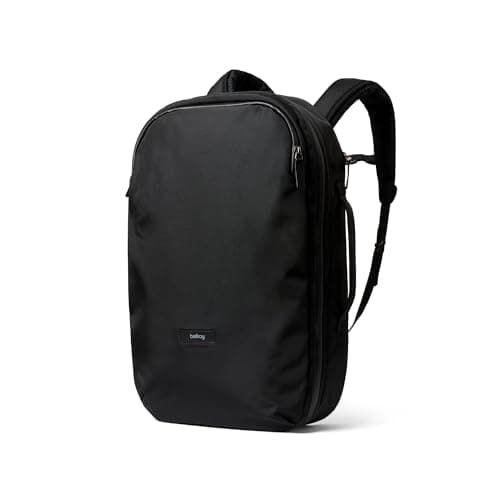
The TUMI backpack buyer — and our pick overall. The Bellroy Transit Travel Pack Pro. It expands from 30 to 38 litres, which is the single most useful feature on a carry-on backpack: compressed it is a personal item, expanded it is a week. Carry-on sized, a padded laptop compartment, water-resistant fabric, and a restrained look that passes in a meeting. Against the TUMI Voyageur backpacks it gives up the leather trim and the hardware language, and takes back a few hundred dollars and a better-organized interior. Honest cons: the expansion zipper is a wear point on any expandable bag, and the quiet styling that makes it work in an office is exactly what makes it invisible if the look was the point.
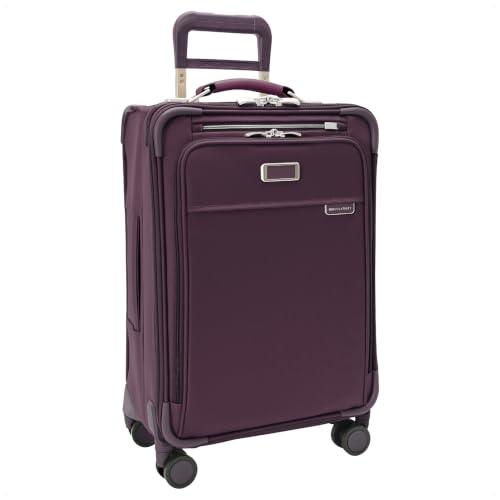
The buyer who wanted the promise.The Briggs & Riley Essential 22-inch. This is the pick where the evidence is published rather than implied. Briggs & Riley states that its guarantee will “cover the repair of all functional aspects of your Briggs & Riley bag for life,” and that it covers repairs even if you have since bought a newer model. It is explicit about airline damage too: if you want to hold the carrier responsible you should “file a claim with the carrier before leaving the airport,” and otherwise “we will be happy to repair your luggage at no charge.” The limits are published too, and we will state them rather than let the headline stand alone: cosmetic wear is not covered, neither is cleaning for odors or stains, nor replacing a lost or stolen bag, you pay to ship the bag in, and a repaired bag may not come back identical if parts or colors have been discontinued. Honest cons beyond that: it is the most expensive thing on this page by a wide margin, and its outside-in expansion means the bag is heavier empty than a comparable softside.
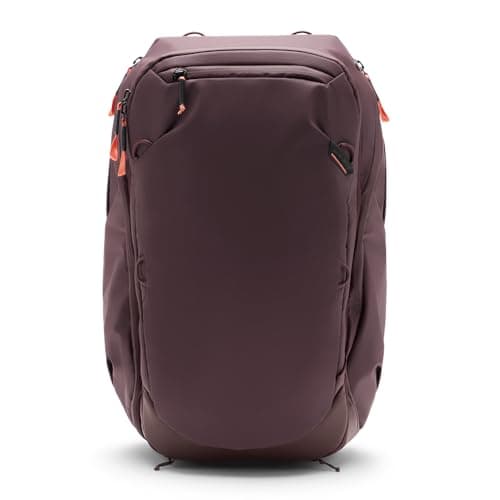
The buyer who carries a camera, or who hates digging through a bag. The Peak Design Travel Backpack 45L. Expands 35 to 45 litres, opens from the rear and the top as well as the front, weatherproof shell, dedicated laptop compartment. The rear access is the thing worth paying for: a bag you can open flat against your legs without putting the straps in the dirt changes how a travel day feels. Honest cons: at 45 litres expanded it is over the cabin limit on some carriers, so it needs to be packed down to fly, and the modular accessory system it is designed around is an additional expense the headline price does not include.
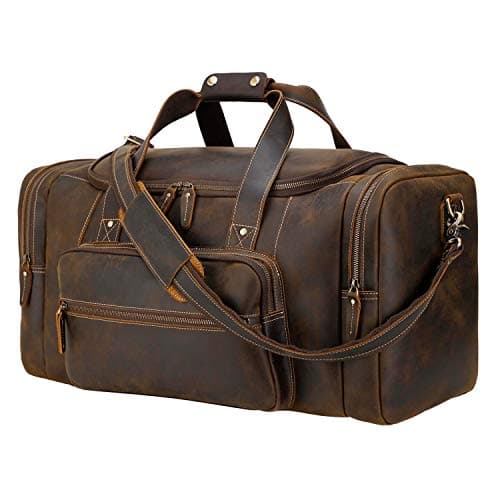
The buyer who wanted it to look expensive. The Polare 23-inch full-grain leather weekender. Full-grain cowhide, cotton lining, shoulder strap included, at a price that is a fraction of a leather bag from a luxury label. For short trips and for the particular job of walking into somewhere and being taken seriously, leather does what ballistic nylon does not. Honest cons: it is heavy before you put anything in it, it has no wheels and no trolley sleeve, and leather and rain are a permanent negotiation. This is a two-night bag, not a one-bag-travel bag — our luxury travel bags roundup places it against the rest of that shelf.
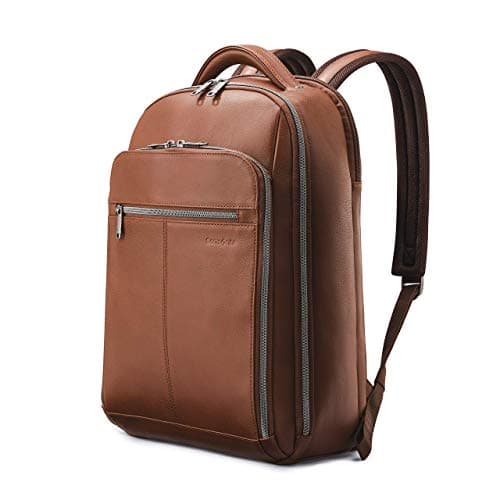
The milestone gift that has to look the part. The Samsonite Classic Leather Backpack. Leather exterior, padded laptop sleeve, trolley sleeve, and a classic satchel shape — the closest thing on this page to the TUMI Voyageur silhouette at well under half the money. It is the pick when somebody wants a leather bag for an office and a short flight rather than for a trip. Honest cons: leather over a laptop means weight, the shape is less capacious than it looks, and it is a commuting bag that travels rather than a travel bag that commutes.
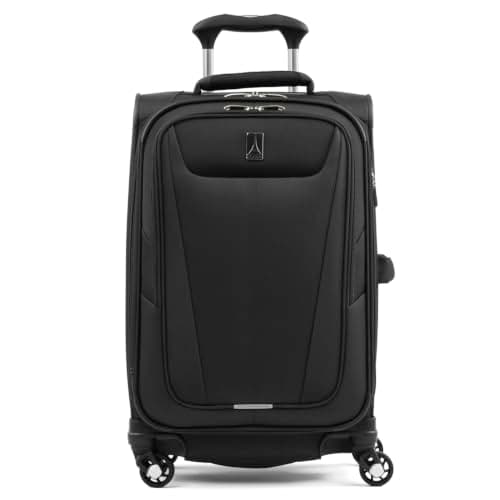
The carry-on buyer — and the cheapest way to answer this question. The Travelpro Maxlite 5 — our budget pick. Softside, expandable, four spinner wheels, under six pounds, and a lifetime limited warranty from a brand built around flight crews. If the TUMI you were pricing was a wheeled carry-on rather than a backpack, this is the honest answer: most of the useful engineering, almost none of the price. Honest cons: the fabric is ordinary where TUMI’s is ballistic nylon, it will scuff visibly, and “limited” in that warranty is doing real work — read the terms rather than the word. We put the two brands side by side in Travelpro vs Samsonite and against TUMI specifically in TUMI vs Samsonite.
When the answer is to buy the TUMI
Three cases, and they are real ones.
You want two of the three things. A bag that is built in ballistic nylon and reads as expensive and comes with a service relationship is a narrow intersection, and TUMI sits in it deliberately. Each alternative above is stronger than TUMI on one axis and gives something up on another. If you genuinely need two, the alternatives stop being cheaper versions and start being different products.
The look is the function. If the bag is for a client meeting, an interview, or a role where being read correctly matters, then recognizability is not vanity — it is the specification. No alternative on this page delivers it, and pretending otherwise would be the dishonest version of this article. Our luxury travel backpack roundup includes the TUMI Voyageur Celina for exactly this buyer.
It is a gift and you do not know their taste. A recognizable brand is legible to a recipient in a way a technical bag maker may not be. If the gift has to land in the moment it is opened, that counts. The TUMI Voyageur Q Tote and the packable Just In Case tote are the two we rank for that job.
Two things no bag on this page fixes
Weight you brought yourself. Every bag here is lighter than the stuff that goes in it. If the recurring problem is a bag that is too heavy at the gate, the fix is a luggage scale and packing cubes used as a volume limit, not a lighter shell.
A bag the airline loses. Construction quality has nothing to do with mishandled baggage, which is far more likely than damage. A tracker costs a rounding error against any bag on this page and addresses the outcome people actually experience — see also how to not lose your luggage.
One last note on money, since this is a page about spending less. The gap between the cheapest and the dearest pick here is around five hundred dollars, and all six are real answers to the same question. If you are buying for somebody else rather than yourself, the budget bands in travel gifts under $200 and luxury travel gifts are the faster way to narrow it.
Decide which of the three you are buying
Construction, appearance, or the service promise. Alternatives beat TUMI on one of the three and concede another. If you need two at once, the alternatives stop being substitutes.
Read the guarantee, not the adjective
“Lifetime” means different things to different makers. Published terms tell you what is covered, what is excluded, who pays shipping, and what happens with airline damage. A maker that publishes its exclusions is giving you more information than one that does not.
Match the shape to the trip, not to the brand
An expandable carry-on backpack, a wheeled softside carry-on and a leather weekender are three different products that people shop for under one brand name. Decide the shape first and the price drops on its own.
Expandable is the most useful feature in this class
A bag that compresses to a personal item and expands to a week does two jobs for one purchase. The cost is that the expansion zipper is the part most likely to fail, so it is worth checking what the warranty says about zippers specifically.
Leather buys appearance and costs you weight and weather
Full-grain leather ages better than any synthetic and is heavier before anything goes in it. For two nights and a meeting it is the right material; for a one-bag trip in unpredictable weather it is not.
Check the trolley sleeve if there is already a suitcase
A sleeve that slides over a suitcase handle is the difference between carrying two bags and wheeling one. Nearly every bag at this level has one; the leather weekenders are where it goes missing.