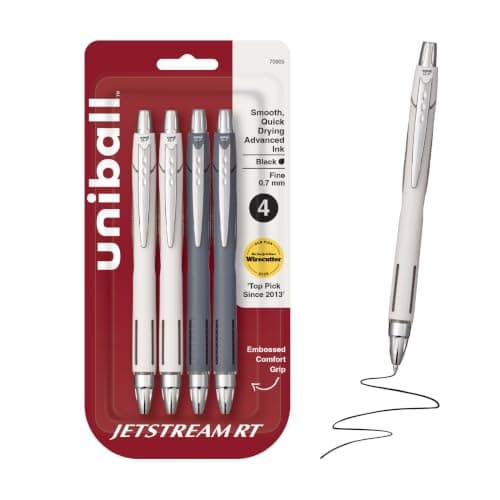
For most people the right travel journaling pen is a cheap hybrid-ink ballpoint, and the upgrade that actually matters is pigment ink rather than a nicer barrel. A journal written in ordinary dye-based ink is one spilled drink away from being unreadable. A journal written in pigment ink survives the drink. That is the decision this page is really about — everything else is comfort and looks.
The three questions, in the order that matters
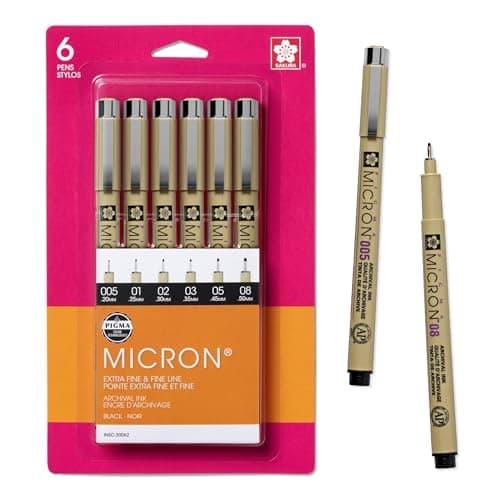
1. Will the ink survive water? Most pens use dye-based ink, which dissolves. Pigment ink — the kind in a Sakura Pigma Micron — sits on the fiber as solid particles and does not move once dry. If the journal is a keepsake rather than a scratchpad, this is the only spec on the page worth paying extra for. A rained-on backpack, a leaking water bottle or a drink on a tray table are all ordinary travel events, and dye ink loses to all three.
2. Will it leak at altitude?Cabin pressure drops as an aircraft climbs, and any air trapped inside a pen expands as it does. With a fountain pen that expanding air pushes liquid ink out through the nib. With a ballpoint — where the ink is a thick paste rather than a liquid — there is nothing for the expanding air to push. This is why the answer to almost every version of "which pen should I fly with" is simply "a ballpoint". We go through the physics, and the fountain-pen workaround, in do pens leak on planes.
3. Is it comfortable for a full page? This is the one that gets ignored and then decides whether the journal gets used. A standard ballpoint needs real pressure to lay ink down, and twenty minutes of that is genuinely tiring. Hybrid inks — Jetstream is the best-known — use a ballpoint mechanism with a thinner, faster-flowing ink, so the pen glides like a gel while keeping the pressure-immunity and quick drying of a ballpoint. For a travel journal specifically, that combination is close to ideal.
Ink types, honestly compared
Standard ballpoint. Thick paste ink. Immune to pressure, dries instantly, works on cheap paper, lasts for years in a drawer. Requires the most writing pressure and gives the least pleasant line. The right choice for forms, landing cards and a pen you expect to lose.
Hybrid ballpoint. Same mechanism, thinner ink. Nearly all the practical advantages of a ballpoint with much less drag. Not waterproof once dry, which is the trade you are accepting.
Gel. Water-based, smooth, vivid. It is also the ink most likely to smear under a hand and to bleed through thin notebook paper, and gel pens are the ones people most often report leaking in a bag. Fine at a desk, mediocre in a pocket.
Pigment fineliner. Archival, waterproof and fade resistant once dry. The right ink for a journal you intend to keep, and for anyone who sketches. The tips are fragile and it is the slowest ink here to dry on coated paper.
Fountain pen. The nicest writing experience by a wide margin, and the only category with a real leak risk in the air. Ours is not an anti-fountain-pen position — it is that a fountain pen wants to be packed full, carried nib-up, and paired with paper that does not feather, which is three conditions the other options do not impose.
Paper decides more than you think
A pen only behaves as well as the page under it. Thin memo-book paper feathers and shows through with any wet ink, which is why the same Jetstream can feel crisp in one notebook and blotchy in another. If you are buying a pen and a notebook together — which is the natural gift — match them: hybrid and pigment inks want the heavier paper in a hardcover book, while a standard ballpoint is happy on anything. Our pocket notebook roundup ranks the paper side of that pairing, and the travel journal roundup covers full-size books.
What about taking pens through security?
Pens are not restricted items. They go through a checkpoint in a bag or a pocket without special handling, including metal-bodied ones. The only travel-specific consideration is the pressure question above, and the practical habit that follows from it: carry pens clipped nib-up in a pocket rather than loose and horizontal in a bag, so that if anything does weep it weeps into the cap rather than onto a shirt.
Buying one as a gift
A pen is a small gift with an unusually high hit rate, because the recipient almost certainly writes something on a trip and almost certainly has not thought about which pen. Two rules make it land.
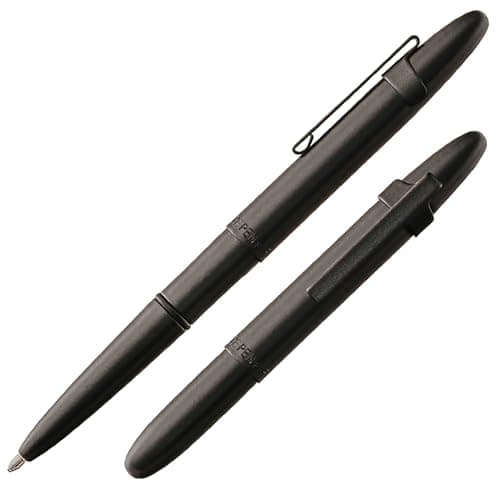
First, buy the object or buy the ink, and know which you are doing. The Fisher Bullet is the object — it arrives in a box, it has a story, and it is genuinely excellent in bad conditions. A four-pack of Jetstreams is the ink: better to write with, invisible as a present. Pairing the cheap one with a notebook usually beats giving the expensive one alone.
Second, do not buy a fountain pen for someone who has not asked for one. It is the most enjoyable pen to write with and the highest-maintenance thing on this page, and gifting one to a person who does not already want it produces a beautiful object in a drawer. The same logic runs through travel gifts to avoid.
How we ranked these
Scored against our published rubric from published specifications, manufacturer documentation and aggregated owner feedback. We do not run a lab and we do not claim measurements we have not taken. Writing comfort over a long entry and ink behavior when wet carry the most weight under usefulness, because those two decide whether the journal survives the trip. Value is scored per pen rather than per pack, which is why a multipack outscores a single premium pen and why the most expensive pen here does not win.
How to choose a pen for travel journaling
1. Is the journal a keepsake or a scratchpad?
Keepsake means pigment ink, full stop — it is the only ink here that survives water and time. Scratchpad means buy for comfort and price and stop worrying.
2. How long are the entries?
A few lines a day: any ballpoint is fine. A page or more: buy hybrid ink. The drag of a standard ballpoint is the reason people quietly stop journaling, and it costs almost nothing to fix.
3. What paper is it going into?
Thin memo paper wants a fine, dry-fast point. Heavier hardcover paper will take anything, including a fountain pen. Buying the pen without knowing the paper is how you end up with bleed-through.
4. Will it get wet or cold?
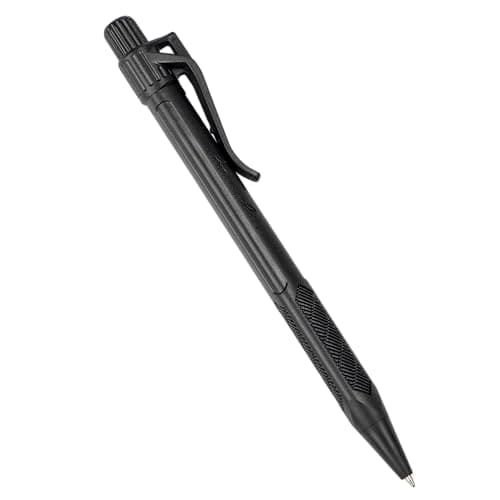
If the honest answer is yes, a pressurized cartridge — Fisher or Rite in the Rain — is the category that keeps working, and weatherproof paper is the other half of that system. If the answer is no, it is money spent on a scenario that will not happen.
5. Is it a gift or a tool?
Gifts want a box, a metal body and a story. Tools want to be cheap enough to leave one in each bag. Both are legitimate; buying the gift version for tool use is how a nice pen ends up lost in an airport.
What you should spend
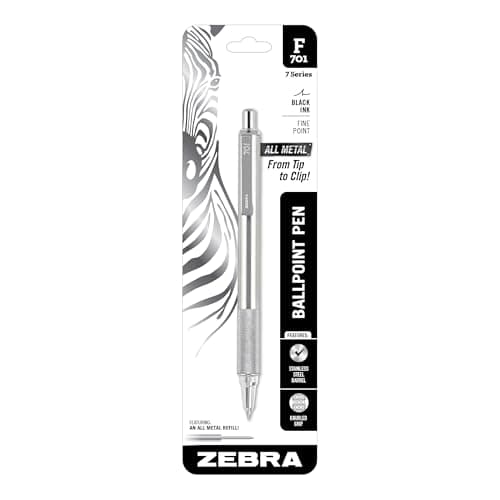
The functional answer to this entire category costs less than a sandwich, and we would rather say that plainly than talk you into a pen. Pigment sets and steel-bodied ballpoints sit a step above. Pressurized extreme-conditions pens are the top of the range here, and they are worth it for conditions or as a gift, not as leak insurance — an ordinary ballpoint already provides that. Every button on this page shows a live price, and where we have no verified price we say so rather than printing a number that has gone stale.