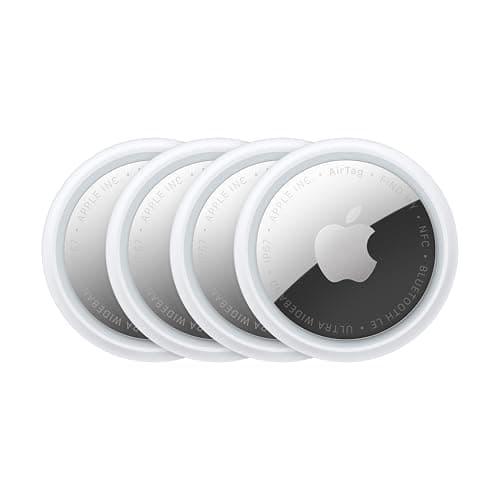
Put a tracker in the bag, put your name and number inside it as well as on the outside, and never check anything you cannot replace. Those three moves cover almost everything that can go wrong, and the first one is the single highest-value item: a tracker does not retrieve a bag, but it ends the argument about where the bag is — which is the part that used to take days. For an iPhone household, an AirTag is the one to buy, because nothing else has the size of Apple's finding network behind it.
The two problems people confuse
The airline mislays it. A bag misses a connection, goes on the wrong cart, or gets tagged to the wrong flight. You cannot prevent this from a seat in row 24. What you can do is prepare: carry a tracker, keep the essentials with you, keep the bag identifiable, and know what the airline owes you.
You leave it somewhere. A bag goes astray at a train station, in a rideshare boot, outside a hostel, on a luggage rack. This is preventable, and it is also where locks and anti-theft habits matter — which is a different page: see keeping valuables safe while traveling.
Most advice mashes the two together and ends up recommending a lock for a problem a lock cannot solve. Separate them and the shopping list gets short.
What a tracker actually does, and does not do
A Bluetooth tracker has no GPS and no cellular radio. It announces itself to nearby phones, and those phones report its location back to you. That is the whole mechanism, and it has one enormous consequence: a tracker is only as good as the density of compatible phones around it. In an airport, a baggage hall or a city, that density is high and the tracker works extremely well. In a rural warehouse at 2 am, it goes quiet until someone walks past.
Which network therefore decides which tracker. An AirTag leans entirely on Apple devices and is close to useless to an Android owner. A Samsung SmartTag2 is the mirror image. Cross-platform trackers exist and trade some network size for compatibility. Match the tracker to the phone in the owner's pocket, not to the review scores — we go through all four options on the luggage tracker roundup and the AirTag vs Tile vs SmartTag comparison.
What a tracker gives you in practice is leverage. Instead of "the system says your bag is in transit", you can say which terminal it is sitting in. Airline baggage staff respond very differently to a specific location, and that is most of the value.
Put your name inside the bag, not just on it
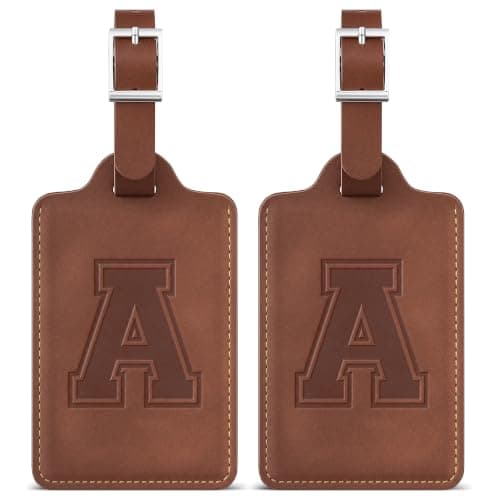
Outside tags get torn off by belts and carts — that is the single most common way an otherwise findable bag becomes anonymous. So: a tag on the outside, and a card with a name, phone number and email inside the main compartment, where nothing can rip it away. Add your destination address for the trip if there is one. A bag with contact details inside it gets returned; a bag without them goes to a warehouse. Which tag to put on the outside is its own small decision - engraved steel survives a belt, printed card does not - and we rank it on best luggage tags.
On the outside tag, the thing that matters is a covered address panel. Writing a home address on an open luggage tag tells a baggage hall full of strangers that the house is empty for two weeks, which is a real if unglamorous risk. Covered panels solve it for a couple of dollars.
The other half of the outside job is identifiability. A black suitcase on a carousel of black suitcases is also how bags get taken by mistake — someone grabs the wrong one in a hurry and neither party notices for an hour. A bright tag, a strap or a ribbon fixes that. It is the cheapest anti-loss measure there is, and it is why a decorative-looking tag earns its place next to a tracker.
What never goes in a checked bag
Medication, passports and travel documents, keys, jewellery, laptops and cameras, and one change of clothes. That list is not about theft primarily — it is about the bag arriving two days late in a city where you have a meeting. If losing it for 48 hours would ruin the trip, it travels with you.
Some of this is not optional. Power banks and spare lithium batteries must travel in carry-on baggage and are not permitted in checked bags at all — the FAA's PackSafe guidance is the authority, and our guide on taking a power bank on a plane covers the watt-hour thresholds. The simplest version of all of this is to avoid the hold entirely where the trip allows it, which is the argument in carry-on versus checked.
Where locks help, and where they are theatre
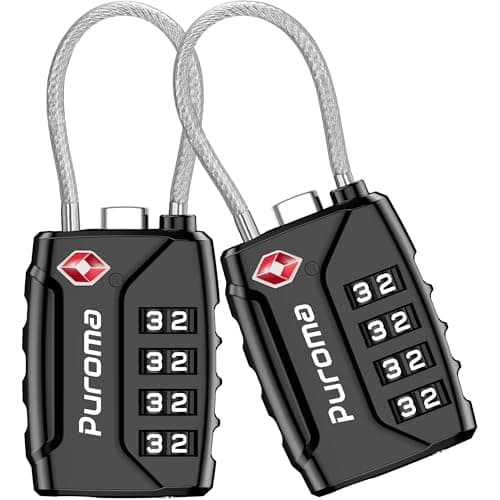
A TSA-accepted lock can be opened by screeners with a master key rather than cut off, which is the entire reason to buy that kind rather than a hardware-store padlock. That is genuinely useful: a cut lock leaves the bag open for the rest of its journey.
What a travel lock is not is security. A zipper on a soft bag can be defeated without touching the lock, and anyone who wants inside a suitcase will get inside it. A lock is a deterrent against the opportunist and an answer to the hostel locker, and we would rather say that plainly than sell it as protection. If the contents genuinely need protecting, they should not be in the hold.
The habits that matter more than any product
Book longer connections. Most mishandled bags are connection failures. A bag needs more time to change planes than a person does, and a tight legal connection is the highest-risk thing on an itinerary.
Check the tag at the counter. Look at the three-letter airport code printed on the tag before the bag goes down the belt. A mis-tagged bag is rare and catastrophic, and it is the one failure you can catch personally in two seconds.
Photograph the bag and its contents. One photo of the outside, one of the packed inside. It takes ten seconds and makes a claim enormously easier — and it is what you will wish you had when a form asks for a description and a value.
Report it before you leave the airport.File the mishandled-baggage report at the airport, keep the reference number, and keep receipts for anything you buy because the bag is missing. Airline obligations and liability limits are set under US Department of Transportation rules and change over time, so check the DOT's baggage page for the current position rather than trusting a number you read in a forum.
Remove old tags. An old destination sticker on a bag is a genuine source of mis-sorting. They are supposed to come off; they often do not.
If this is a gift
A four-pack of trackers is the single most-used travel gift we rank — one for the suitcase, one for the carry-on, one for keys, one spare. Add a pair of covered luggage tags and a two-pack of TSA-accepted locks and the whole anti-loss kit costs less than a mid-range suitcase, which is why it turns up on gifts for frequent flyers and gifts for families who travel rather than only in the gear aisle.
Choosing the pieces
1. The tracker: match the phone
iPhone household, buy AirTags. Samsung household, buy a SmartTag2. Mixed household or you do not know, buy a cross-platform tracker and accept a slightly smaller network.
2. How many?
One per bag that leaves your hands. A four-pack covers a suitcase, a carry-on, a day bag and a keyring, and costs much less per unit than singles.
3. The card tracker for documents
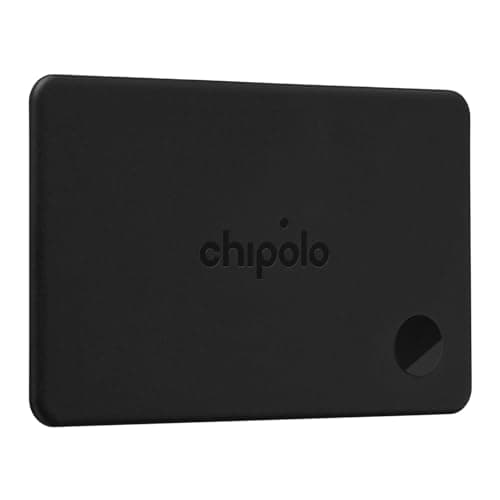
A card-shaped tracker is for a wallet or a passport holder, where a fob will not fit. It is the right tool for the thing that would actually ruin a trip.
4. Tags: covered panel, bright color
A covered address panel so a baggage hall cannot read a home address, and a color you can see from across a carousel.
5. Locks: TSA-accepted only
So screeners open rather than cut. A cable shackle threads through both suitcase zips and a hostel locker; a rigid shackle often does neither.
What you should spend
The tracker is the only item here worth real money; tags and locks are a few dollars each and should not be agonised over. Every button on this page shows a live price, and where we have no verified price we show none rather than a stale number.