Treat the flight as blocks of about two hours and give each one a different job — sleep, a film, reading, eating, walking, work — rather than planning to “watch things” for fourteen hours. Nobody can concentrate on one activity for that long, and the hours that feel endless are the unplanned ones. And download everything before you leave the house. The single most common mistake on a long-haul is assuming there will be usable Wi-Fi, which is a bet you lose on a lot of aircraft and over a lot of ocean.
Build the blocks around the meals
The cabin service schedule is fixed and it is the only structure the flight gives you, so use it. A typical long-haul runs: boarding, drinks, a meal, lights down for the long middle, then a second service and landing. That produces a natural plan.
- Boarding to the first meal. The worst time to try to sleep and the best time for a film, because the cabin is awake and noisy anyway.
- Immediately after the meal. Sleep. This is the window — the lights go down, the service stops, and it will not be this quiet again. Do not spend it starting a second film.
- The long middle. Reading, dozing, and the walks. This is where the two-hour blocks matter most and where an unplanned flight falls apart.
- The last three hours. Something light: a game, a podcast, admin, repacking. Concentration is gone by here and trying to read a difficult book is wasted effort.
If sleep is the goal for the middle block, the whole method is in how to sleep on a plane, and the arrival-side version is how to beat jet lag.
What to do when there is no Wi-Fi
Assume there is none. Everything below works at 38,000 feet with the phone in airplane mode, and every one of them has to be set up on the ground.
Download, the night before. Two films, a series, a podcast queue and an offline playlist. Streaming apps expire downloads, so check them the day you fly rather than the week before. Offline maps for the destination city belong on the same list — you will want them in the arrivals hall before you have a SIM.
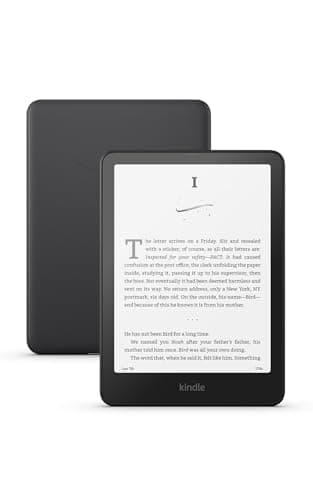
Read something long. A flight is the last reliable block of uninterrupted hours most people get, and it is wasted on a phone. The Kindle Paperwhite is the first pick here for the mundane reason that matters at hour nine: it is lit without lighting the cabin, it holds a charge across a whole trip rather than a leg, and it weighs less than one paperback while holding a hundred. Our Kindle Paperwhite review covers it properly.
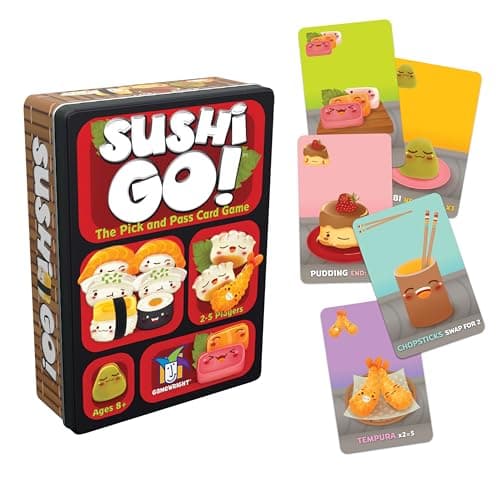
Play a card game. Genuinely — for anyone traveling with another person, a small card game is the best two hours on the flight and the one thing nobody packs. Sushi Go! is the pick because it fits a tray table, teaches in ninety seconds and plays in fifteen minutes, which is the right shape for a seat. The field is on best travel games.
Do the admin nobody does. Photos from the last trip, the inbox, the expenses, the plan for the week you land into. Offline, uninterrupted and genuinely the ideal conditions for it.
Write something. A flight is where a travel journal actually gets written, because there is nothing else happening — see how to start a travel journal.
The one block that is not optional
Getting up. Not as a wellness suggestion — as the measure the published guidance names first.
The CDC Yellow Book's page on travel-associated deep vein thrombosis lists the preventive measures for long-distance travelers as frequent ambulation, calf exercises, an aisle seat assignment and hydration. It also records that “for flights <4 hours, the risk of symptomatic VTE is negligible,” with more than four hours being the threshold most of the research uses, and that 75–99% of people who developed travel-associated clots already had at least one risk factor — a list that includes limited mobility, recent surgery, pregnancy, age over 40 and prior clots.
The practical version: build a walk into every second block. Stand up, go to the back, do calf raises while you wait for the lavatory, come back. Flex the ankles in the seat during the film. Drink water at every service and take a refillable bottle through security so you are not waiting for a cart. We are a gift site rather than a medical one, so anybody with a clotting history or any of those risk factors should be asking their clinician — and the sock question specifically is answered, with the thresholds, in do you need compression socks on a flight.
Set the seat up once, properly
Five minutes of setup at the start saves a lot of rummaging in a dark cabin with a sleeping neighbour.
Put what you need in the seat pocket before take-off. Headphones, reader, socks, eye mask, water, lip balm. The overhead bin is effectively closed for the parts of the flight when you most want something out of it.
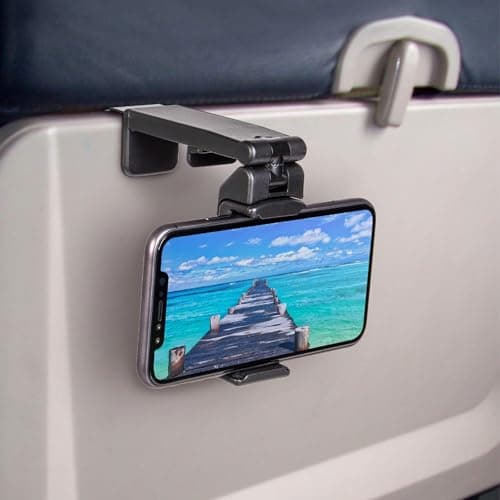
Get the screen off your lap. The Perilogics mount clamps a phone to the tray table or the seat back at eye level, which sounds trivial and is the difference between watching something and craning at it for three hours. It is also the cheapest item on this page by a wide margin.
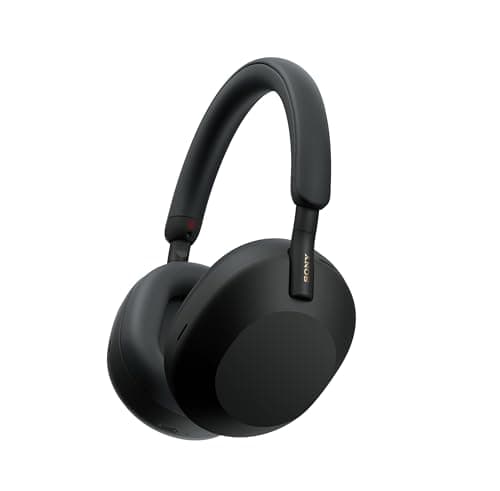
Deal with the noise properly. A long flight is hours of broadband cabin noise, and active noise cancelling does not just make it quieter — it makes the difference between a film being audible at a sane volume and not. The Sony WH-1000XM5 is the pick for a seat because over-ears stay comfortable for a full leg in a way in-ears often do not. The trade-off between the two formats is in headphones vs earbuds for flying, the premium in-ear case is in AirPods Pro vs Bose QuietComfort Ultra, and the ranked field is best noise canceling headphones.
Charge from the seat, not from the bin. Many long-haul seats have USB power and plenty do not, and the ones that do are often slow. A power bank in the seat pocket makes the question irrelevant — and it has to be in the cabin anyway, which is the subject of can you take a power bank on a plane.
Flying with children, in one paragraph
The same principle, shorter blocks. Plan in thirty-to-forty-minute units rather than two-hour ones, bring more small things rather than one big thing, and hold back a surprise for the last two hours, which are the hard ones. Everything needs to work offline and on a tray table. Our travel gifts for kids list and gifts for families cover the kit.
Buying the long-flight kit for somebody
This is one of the easiest gift briefs there is, because it is a defined problem with known answers and the recipient will use every item on a specific date. A reader, over-ear headphones and a card game is a complete long-haul present; a mount and a pair of socks is a stocking version of the same idea.
The full kit is ranked on best travel accessories for long flights, the clothing half is what to wear on a long flight, and for the nervous-flyer version of this question — where the point of the activity is distraction rather than entertainment — see gifts for nervous flyers.