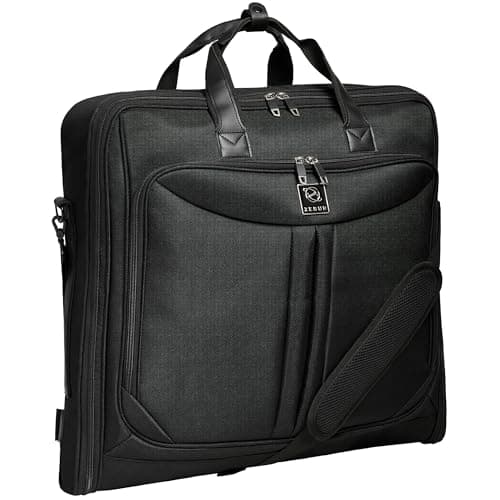
Use the shoulder-in-shoulder fold: turn one shoulder of the jacket inside out, nest the other shoulder into it, lay the folded jacket on top of everything else in the bag, and hang it up the moment you reach the room. For two suits or anything that has to arrive press-ready, a folding garment bag — the ZEGUR is the one we rank — is the better answer and still counts as a carry-on. A handheld steamer is the third piece, and it is the one that makes the difference between almost-fine and fine.
Why a jacket wrinkles, and where
A suit jacket is a structured garment: canvas or fusing in the chest, padding at the shoulders, a lining that is cut to move with all of it. Creases form where that structure is bent against itself — across the chest, at the elbows, and in a hard horizontal line wherever the jacket was folded flat. Soft, unstructured jackets crease far less, which is why a packable blazer survives a bag that would ruin a suit.
Fabric decides most of the rest. Wool has natural recovery: hang it in a humid bathroom and it relaxes. A wool-synthetic blend recovers less. Linen and cotton do not recover meaningfully at all — a linen suit arrives creased no matter what you do, and the honest advice is to accept that rather than fight it. Anything with a visible weave or a pressed crease wants the garment bag rather than the fold.
The shoulder-in-shoulder fold, step by step
- Lay the jacket face down and smooth it flat, with the sleeves straight down the sides.
- Take one shoulder and turn it inside out, so the lining of that shoulder is facing outward and the shoulder pad is enclosed.
- Bring the other shoulder across and nest it inside the inverted one. The two shoulders now sit one within the other, and the padding supports itself instead of being flattened.
- Fold the sleeves down the inside of the jacket so they lie flat against the lining.
- Lay the trousers out, fold them in half along their own crease, and lay the folded jacket on top of them.
- Fold the whole thing over once, and place it on top of everything else in the bag — never underneath.
Two details carry most of the benefit. Only fold once: every additional fold is another hard crease, and a jacket folded into quarters will need pressing whatever else you do. And put it in last, so nothing heavy compresses it. A suit at the bottom of a carry-on under a pair of shoes has been pressed for the whole flight.
Cubes help, but not the way people think
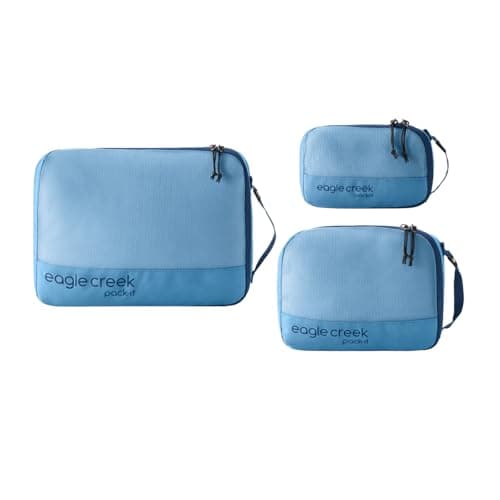
Packing cubes do not stop a jacket from wrinkling. What they do is keep the rest of the bag from shifting into it — a stable, compartmented bag means the suit lies where you put it instead of being kneaded for eight hours. Pack the shirts, socks and underwear in cubes, fill the bag with them, then lay the suit on top of a flat, firm surface.
What matters is which kind of cube. Compression cubes are the wrong tool anywhere near tailoring — their whole function is to squeeze air out, which is exactly what you do not want happening against a shoulder. Use plain, structured cubes; we lay out the difference in packing cubes vs compression bags, and the packing cube roundup ranks both kinds.
For shirts, a folding board — or a sheet of stiff card the width of the shirt — gives a consistent fold that keeps the collar square. Dry-cleaning plastic between layers genuinely does reduce friction creasing; it is also bulky and noisy, and a fair description is that it helps a little and costs nothing.
When to use a garment bag instead
Three cases. Two or more suits — stacking structured jackets in a suitcase multiplies the creasing. A pressed crease that has to survive — tuxedo trousers, anything with a sharp front line. No time on arrival — a flight that lands two hours before the event, where there is no window for a jacket to hang and recover.
A folding garment bag solves all three by carrying the suit on a hanger and then folding over once at the handle, which is also why it still works as carry-on luggage rather than something that has to be checked. The trade-off is real: it is an awkward shape to carry alongside a rolling bag, and it is only worth its space on trips that involve a dress code. For the business traveler who does this monthly it is the obvious buy, and it sits on our business trip packing list for that reason.
The hotel room, in order
Hang the jacket and trousers as the first thing you do, before unpacking anything else. Wool recovers on its own given a couple of hours on a proper hanger — a wide one, not the hotel's wire loop, which leaves a dent in the shoulder.
If creases remain, run the shower hot with the bathroom door shut and hang the suit outside the spray for fifteen minutes. Steam relaxes wool fibres and this costs nothing. It is slower and less precise than a steamer, and it does nothing for a crease that needs pressing in.
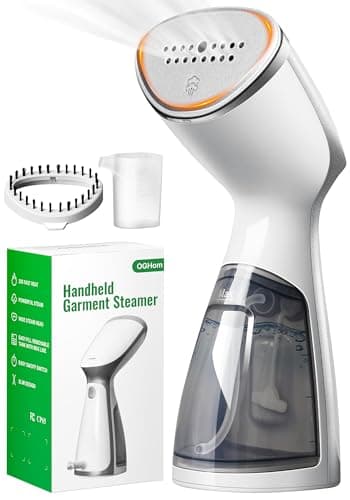
A handheld travel steamer is the reliable version of the same trick: ninety seconds on a hanging garment, no board, no hunting for a hotel iron that may not exist. Two honest limits — a small tank means refills on a full outfit, and steam relaxes creases rather than pressing sharp ones. For the shine and the sharp line a jacket needs before a wedding, that is a job for a hotel valet service or an iron with a press cloth. We rank the steamer among the travel gadgets that justify their space.
Through security
Travel steamers go in carry-on bags routinely; the thing to get right is the tank. Travel it empty — a filled water tank is a liquid, and the TSA liquids rule applies to it exactly as it does to a bottle of shampoo. Fill it at the hotel. Our TSA liquids guidecovers the 3-1-1 rule and where it bites; check the TSA's What Can I Bring? tool for any appliance you are unsure about rather than guessing at the gate.
The same physics applies to everything else in the case, and for shirts, trousers and linen the method is different from the one above - see how to keep clothes from wrinkling in a suitcase.
What not to do
Do not roll a suit jacket. Rolling works for knitwear and t-shirts and is actively bad for anything with shoulder structure.
Do not fold it more than once. Every extra fold is a crease you will have to remove.
Do not put it at the bottom of the bag. The single most common mistake, and the only one that is guaranteed to show.
Do not check it if the event is the same day. A suit in the hold is a suit that might arrive tomorrow — see how not to lose your luggage. The whole reason a folding garment bag exists is to keep the good jacket in the cabin.