Ordinary ballpoint pens do not leak on planes. Fountain pens can, and the cause is air trapped inside the pen expanding as cabin pressure drops during the climb. Rollerball and gel pens sit in between — more liquid than a ballpoint, less vulnerable than a fountain pen. If you want the problem to disappear entirely, carry a ballpoint; it is the cheapest fix in travel.
What actually happens in the cabin
An airliner cabin is pressurized, but not to sea level. As the aircraft climbs, cabin pressure falls to something equivalent to a moderate mountain altitude and stays there for the cruise. Any sealed pocket of air inside an object you are carrying is now at a higher pressure than the air around it, so it expands. This is the same effect that makes a sealed snack bag puff up on the tray table.
Inside a fountain pen there is almost always an air bubble — in the cartridge or converter, above the ink. When that bubble expands it has to go somewhere, and the only exit is through the feed and the nib. It pushes ink ahead of it. That is the leak: not a flaw in the pen, and not pressure "forcing" ink out from outside, but trapped air inside the pen growing and displacing the ink it sits on top of.
A ballpoint is immune to the same physics for one reason: its ink is a thick, sticky paste rather than a liquid. Expanding air cannot push a paste through a tiny ball socket the way it pushes thin liquid through a nib slit. Gel and rollerball inks are water-based and thinner, so they are more susceptible than a ballpoint and far less than a fountain pen — in practice the failure people report with gel pens is usually a pen stored nib-down in a warm bag rather than the flight itself.
Risk, by pen type
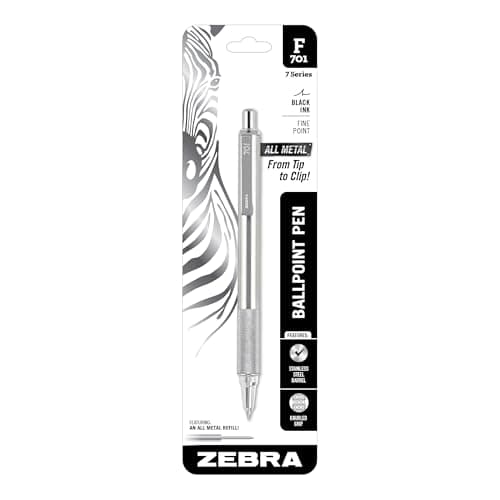
Ballpoint — effectively no risk. Paste ink, sealed cartridge, no meaningful exit path. This includes steel-bodied pens and cheap plastic clickers alike; the ink type is what matters, not the barrel.
Hybrid ballpoint — effectively no risk. Thinner ink than a standard ballpoint but still a paste in a ballpoint mechanism. This is the type we recommend most often for travel writing because it adds comfort without adding risk.
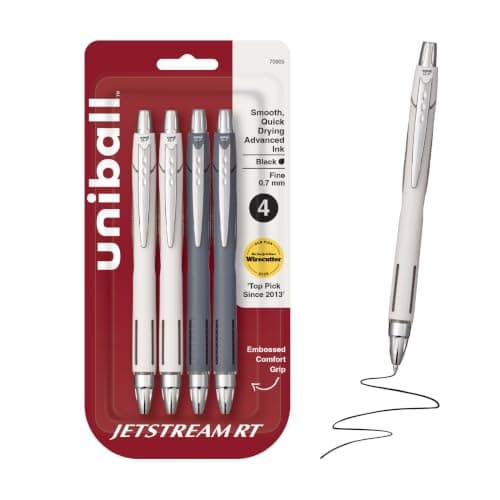
Gel and rollerball — low risk, some mess potential. Water-based ink, thin enough to weep if the pen is warm, uncapped or stored nib-down. Cap it and clip it upright and you will almost certainly be fine.
Fountain pen — real risk, entirely manageable. The only category where the physics genuinely works against you, and the only one that needs a technique rather than a shrug.
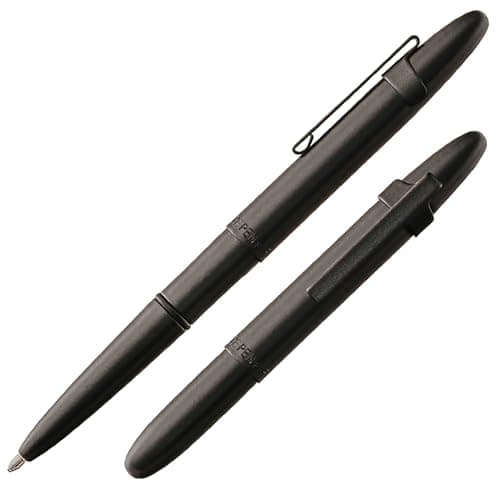
Pressurized cartridge pens — no risk, by design. A Fisher-style pen has a nitrogen-pressurized cartridge with a float separating gas from ink. It is engineered to push ink out under its own pressure at any angle, which also means ambient pressure changes are not driving anything.
How to fly with a fountain pen anyway
Three rules, in order of how much they matter.
1. Fly it full or fly it empty. A full pen has almost no air to expand. An empty, flushed pen has no ink to expel. A half-filled pen has plenty of both, which is the worst configuration. If you are packing the night before, top it up or flush it.
2. Carry it nib-up. Clipped in a shirt or jacket pocket, point upward. If anything moves, it moves toward the cap rather than out of it. Loose and horizontal in a bag is the arrangement that ruins a shirt.
3. Keep it on you, and open it carefully. A pen in the cabin experiences a slower, gentler pressure change than one in the hold, and body heat keeps it stable. When you do uncap it at cruise, do it pointing up and over the tray table rather than over your lap.
Are pens allowed through airport security?
Yes. Pens are not restricted items and require no special handling at a checkpoint, including metal-bodied and pressurized ones. They go in a bag or a pocket like any other everyday object. The pressure question above is a cabin issue, not a security one — nothing about a pen makes it a problem to bring through.
Ink refills and bottled ink are a different matter: a bottle of ink is a liquid and is subject to the same container-size and single-bag rules as everything else. Our TSA liquids guide covers where those lines actually fall.
So which pen should you actually carry?
For most travelers the honest answer is the boring one: a ballpoint, costing a few dollars, ends the entire question. Buy a hybrid-ink one if you write more than a line at a time — it is the same immunity with far less drag. Buy a pressurized pen if you write in the cold, in the wet, or at odd angles, or if the pen is a gift and needs to feel like one.
We would rather tell you that than sell you an expensive pen for a problem a cheap one already solves. If the writing itself is the point — a travel journal rather than landing cards — the choice changes, and the ranking that matters is on our best pens for travel journaling page, where ink behavior when wet does most of the deciding. Pair either with something from the pocket notebook roundup and you have a complete kit for under the price of a checked bag.
If the pen is going into a journal rather than a landing card, the next question is the habit rather than the hardware: how to start a travel journal sets out the five-line entry, and why the paper has to be matched to the ink you just chose.