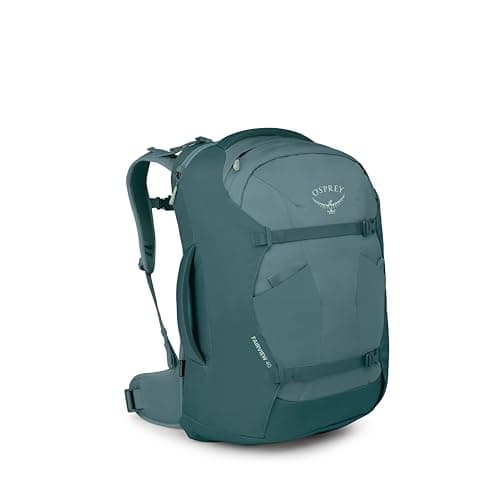
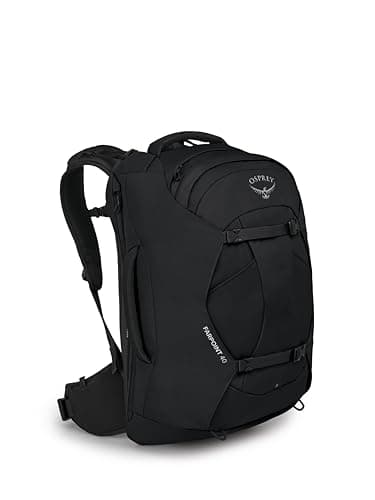
This is a fit decision wearing a gender label, and the label is the least useful part of it. Osprey sells the Farpoint as the men’s pack and the Fairview as the women’s, and the two are otherwise the same product: 40 liters, the same clamshell opening, the same stowaway harness, the same lockable zippers, the same All Mighty Guarantee. What changes is the suspension - the Fairview is built around a shorter torso with S-curved shoulder straps and a contoured hip belt, the Farpoint around a longer torso with straight-cut straps and belt. A short man is better served by a Fairview than by a Farpoint that rides two inches too low, and a tall woman is better served by a Farpoint. Measure the torso; ignore the box.
Side by side
| | Farpoint 40 | Fairview 40 |
|---|
| Capacity | 40 L | 40 L |
| Marketed as | Men’s travel pack | Women’s travel pack |
| Harness | Straight-cut shoulder straps, straight hip belt | S-curved shoulder straps, contoured hip belt |
| Torso range | The longer of the two | The shorter of the two |
| Stowaway harness | Yes | Yes |
| Lockable main zippers | Yes | Yes |
| Laptop sleeve | Not published consistently - see below | Not published consistently - see below |
| Detachable daypack | Sources disagree - check the listing | Sources disagree - check the listing |
| Warranty | Osprey All Mighty Guarantee | Osprey All Mighty Guarantee |
Two rows in that table read “not published consistently” and “sources disagree” on purpose. Osprey’s own site and REI both refused to serve this machine when we tried to read the manufacturer spec sheets, and the third-party reviews we could read do not agree with each other - so rather than print a number we cannot stand behind, we have said where the disagreement is and what to do about it. That is explained in full below.
The only difference that matters: torso length
A travel backpack transfers weight through the hip belt, and the hip belt only lands on the hips if the shoulder straps start at the right height. Get that wrong and the belt sits on the waist or the ribs, the shoulders take the whole load, and a pack that strangers on the internet describe as extremely comfortable feels terrible.
Osprey fits the Farpoint harness to a longer torso range and the Fairview to a shorter one, and the Fairview’s shoulder straps are S-curved rather than straight so they clear the chest, with a hip belt shaped for a higher, narrower waist. Those are the three changes. Everything else about the two packs is shared.
The practical instruction: measure from the bony bump at the base of the neck down to the level of the top of the hip bones, then compare that figure to the torso range printed on the specific pack and size you are looking at. Both models come in more than one size - the Fairview in an extra-small/small and a small/medium, for example - so size within the model matters as much as the choice between models. If the measurement lands in the overlap between the two ranges, either works and you should buy on which one is cheaper or in stock.
This is also why a gift here is risky in a way it is not for a duffel. A 40-liter pack is a fitted object. If you are buying for someone else and you cannot measure them, buy from a retailer with a return policy and say so when you hand it over.
The daypack question, honestly
This is the single most confused point about these two packs, and the confusion is real rather than our own.
Older Farpoint and Fairview 40 versions shipped with a zip-off daypack. Current reviews contradict each other: one carry-on gear site we read describes a “zip-off daypack lid” as included on both, while TravelFreak’s Fairview 40 review states flatly that “the Osprey Fairview 40 doesn’t have a zip-off daypack.” Osprey currently sells a Farpoint/Fairview Travel Daypack as a separate product, which is itself evidence that it is not always in the box, and the Amazon listing titles for the 40L packs do not mention a daypack either way.
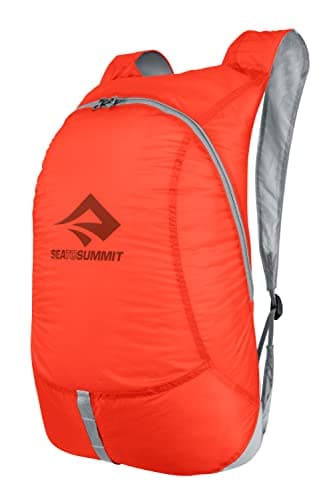
So the honest answer is procedural, not factual: do not assume a daypack is included. Read the specific listing you are buying from, and if a daypack matters, either buy the 55-liter version of the pack (which is the one in the line that bundles one) or add a packable daypack that stuffs into its own pocket - which is lighter than a zip-on lid anyway and can be left in the hotel. We have included one in the picks below for exactly that reason.
The laptop sleeve, and why we are not printing a number
Published figures disagree here too. One source we read puts the sleeve at up to 16 inches, another at up to 15 inches, and Osprey’s own page would not load for us. Fifteen versus sixteen inches is exactly the margin that decides whether a particular laptop fits, so an approximate number here is worse than none.
What to do instead: measure the laptop and check the listing for the specific pack in front of you. And note that on both packs the sleeve sits against the back panel inside the main compartment, which means reaching the laptop at a security lane involves opening the clamshell. If the recipient flies with a laptop weekly, that is a genuine argument for a pack with outside laptop access - the shortlist for which is on best personal item bags and best travel backpacks.
What they are both good at
Forty liters is the right number.It is enough for a week of clothes and small enough to clear the carry-on rules of major US and European carriers. The published depth of around 23 cm is over Ryanair’s 20 cm limit, which is the common exception worth knowing - the carrier rules in general are in carry-on size rules.
The clamshell opening. Both open flat like a suitcase rather than loading from the top, which is the feature that makes a travel backpack livable. It is also why they both benefit so much from packing cubes: a flat-opening pack with no internal shelves turns into a single rummageable cavity without them. The same pressure applies to accessories: at 40 liters every bulky item has to justify itself, which is why one-baggers tend to end up with a wrap-style neck support rather than a horseshoe — the reasoning is in our Trtl Pillow review.
The stowaway harness and lockable zippers. The straps and belt zip away behind a panel, which is what lets either pack be checked or gate-handed without straps catching in a conveyor. The main zippers take a small padlock - not security against a determined thief, but enough to stop an opportunist, which is the distinction we draw in how to keep valuables safe while traveling.
The warranty.Osprey’s All Mighty Guarantee covers repair or replacement for the life of the bag, which is the single strongest reason to buy either of these over a cheaper 40-liter pack. It is also what makes the price defensible on a gift: this is a bag somebody can still be using in fifteen years.
What neither of them is good at
One big compartment is one big compartment. Neither pack has much structured organization inside - that is the trade for a clamshell - so small items disappear unless they are in pouches. Neither has outside laptop access. Both are heavier than a frameless duffel of the same volume, because a real harness and frame sheet weigh something; published weights cluster around three and a half pounds. And neither has wheels, which is the right trade-off only for someone who actually walks with their bag. If the recipient wheels everything everywhere, the honest answer is in travel backpack vs carry-on suitcase.
If neither harness fits
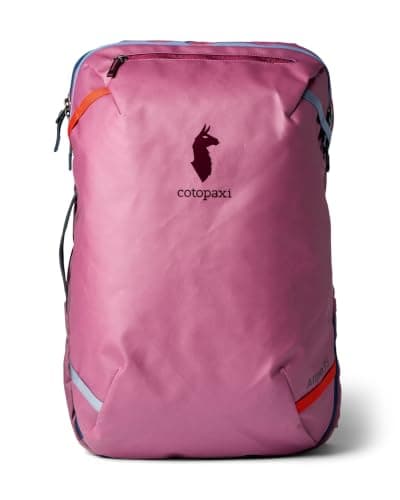
There is a third answer, and plenty of people land on it: a pack that is one-size with a simpler suspension. The Cotopaxi Allpa 35 is the usual alternative - five liters smaller, no men’s and women’s split, and much more internal structure, which suits a packer who hates rummaging more than they mind a slightly less sophisticated harness. The full comparison is in Cotopaxi Allpa 35 vs Osprey Farpoint 40, and it is below as the third pick here.
So which one?
Measure the torso. If it is in the Fairview’s range, buy the Fairview; if it is in the Farpoint’s, buy the Farpoint; if it is in both, buy whichever is cheaper on the day, because the bags are otherwise the same. If you cannot measure - which is the normal situation for a gift buyer - buy the one marketed for the recipient, keep the receipt, and tell them it can be swapped. That is not a cop-out; it is the only honest answer to a fit question asked from across a room.