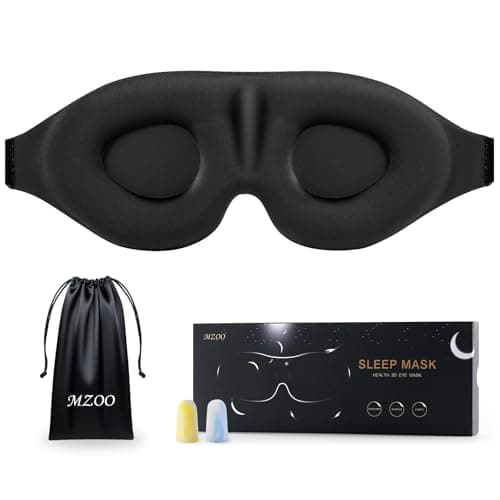
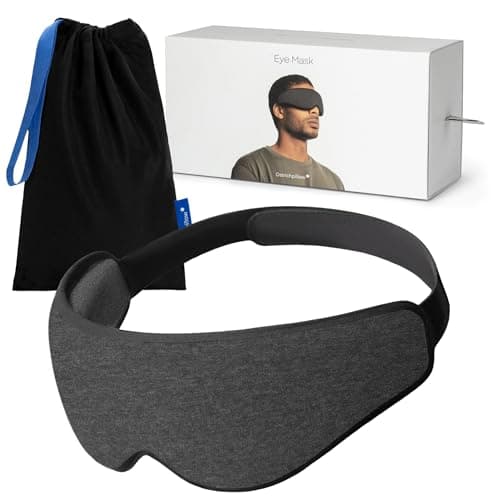
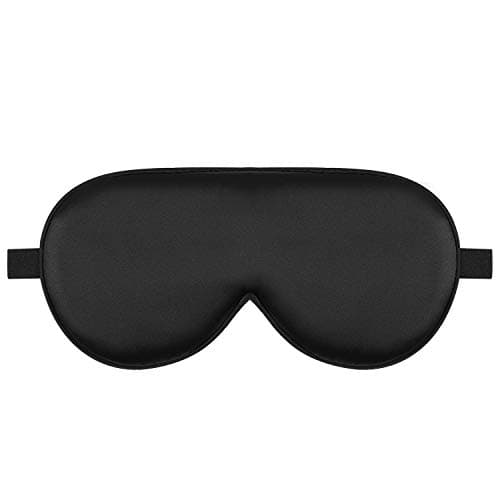
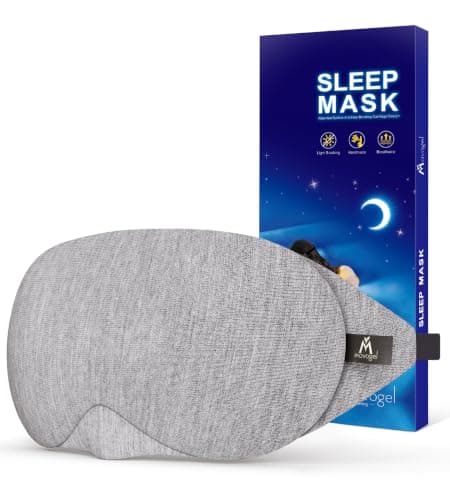
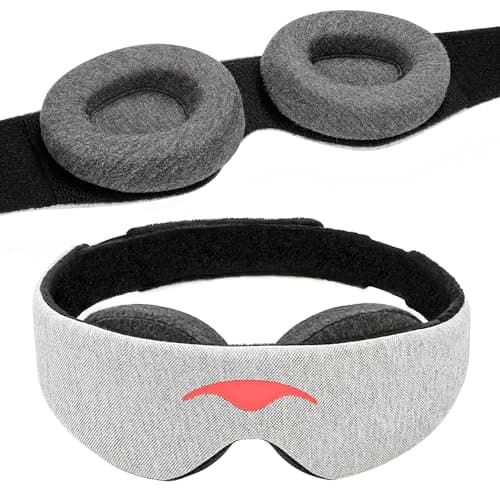
Buy a cupped mask if they actually sleep on planes. A flat mask sits on the eyelids, which stops light but also stops the eyes moving comfortably — and REM sleep involves a great deal of eye movement. A cupped mask holds the fabric away from the face entirely, so the wearer can blink inside total darkness. That is the single difference that decides whether a sleep mask gets packed on the second trip.
Cupped vs flat, in plain terms
Flat masks are a padded strip of fabric with an elastic strap. They're light, they fold into any pocket, they cost very little, and the good ones have a shaped nose bridge that kills the light leak that ruins the cheap ones. Their limitation is contact: the fabric rests on the eyelids and lashes, which some people never notice and others cannot tolerate for six hours.
Cupped masks have molded eye cavities that arch over the eye socket and seal against the cheekbone and brow. Nothing touches the eye. They achieve genuinely total blackout — the kind where the wearer can't tell whether the cabin lights are on — and they are the right answer for anyone taking overnight flights regularly. The trade is bulk: a cupped mask is three or four times the packed volume of a flat one, and several times the price.
For most gift buyers the honest guidance is: cupped if they take red-eyes or long-haul, flat if they nap on short flights and want something for the hotel room. Both are legitimate; buying the expensive one for somebody in the second group is money that would have been better spent on a neck pillow.
The strap is the part that fails
Almost every complaint about sleep masks that isn't about light is about the strap. Three things to look for, in order:
- Velcro versus buckle. Velcro is adjustable and it catches long hair, every single time. A buckle or a slider is noticeably better for anyone who doesn't have short hair, and it's the detail most reviews skip.
- Strap width. A thin elastic band digs in and leaves a mark; a wide flat band spreads the pressure. Twin thin straps, set apart, are the third design and they stay put best on a moving head.
- Where the buckle sits. A hard buckle at the back of the head is a problem for anyone leaning against a headrest. The better designs offset it to the side.
Side sleepers, and the pressure problem
Anyone who sleeps on their side in a bed — which is most people — will also lean onto their side in a seat, and a cupped mask pressed between a cheekbone and a window is uncomfortable in a way a flat mask isn't. This is the one situation where a flat silk mask beats a $45 blackout mask outright.
The same logic runs through our travel pillow guide for side sleepers: the gear that wins is the gear that suits the direction the head actually goes. If you know they sleep leaning against the window, buy silk and spend the difference on something else.
Silk, cotton and heat
Cabin temperature swings more than people remember — cold at boarding, warm at cruise, cold again before landing. Mask material decides how that feels on the face.
Mulberry silk is cooler against skin than polyester and doesn't hold moisture the same way, which is why it dominates the flat-mask category despite costing more than the synthetic alternatives. Cotton is breathable, softer to the touch and a little warmer. Synthetic foam masks block light best of the flat designs and are the warmest of the three.
For a gift, silk has the additional advantage of feeling like a considered purchase rather than an airline freebie, which matters when it's going in a stocking or as an add-on. Our stocking stuffers for travelers list leans on exactly that.
A mask is the second purchase in this category rather than the first; how to sleep on a plane sets out what to buy before it and what to buy after. If you have already decided on the cupped format and want the detail on the one everybody asks about, our Manta Sleep Mask review goes through the blackout claim, the side-sleeper question and when a cheaper mask is the better buy.
What a sleep mask can't fix
Noise. A mask handles light and nothing else, and on a plane the thing that actually wakes people is a service cart, a crying child or engine drone. A mask paired with earplugs or noise-canceling headphones is a complete sleep kit; a mask alone is half of one. If you're building a gift around helping someone sleep in transit, budget for both — and our long-flight accessories roundup assembles the whole set. For the hotel room at the other end, where the problem is a corridor rather than an engine, a travel white noise machine covers what a mask can't.
Temperature, either. Cabins run cold and a mask does nothing about that, which is why the third piece of a transit sleep kit is usually a travel blanket — and the ones worth carrying are the ones that pack down small enough to bring every time.
How we ranked these
Scored against our published rubric from published specifications, manufacturer documentation and aggregated owner feedback. We don't run a lab and we don't claim measurements we haven't taken. Blackout completeness and eye clearance carry the most weight in usefulness; strap design decides durability in practice more than fabric does. The value pick sits second rather than fourth because the gap between it and the leader is much smaller than the gap in price.
How to choose a travel sleep mask
1. Do they sleep, or do they rest?
Real sleeping on overnight flights means a cupped mask. Resting with eyes closed on a two-hour hop means a flat one, and the expensive mask would be wasted.
2. Which way does their head go?
Leaning on the window means a flat mask, because a cupped one gets pressed into the cheekbone. Upright or headrest sleepers can use either.
3. Long hair?
Then avoid velcro. A buckle or slider adjustment is worth more day to day than any material claim, and it's the detail most buyers only discover after the first flight.
4. Hot sleeper?
Silk over cotton, cotton over synthetic foam. Cabin temperature swings and a warm mask on a warm face is a reliable way to not sleep.
5. Is it the gift or an add-on?
A premium cupped mask can stand as a real gift on its own. A silk flat mask is a superb add-on to a bigger present and a genuinely good stocking stuffer, at a tenth of the price.