Answer one question first: one passport or several? A solo traveler wants something slim enough to live in an inside jacket pocket. A parent checking in a family of four wants a zip pouch that holds every document in one place. Those are opposite products, and buying the beautiful slim one for the parent is the commonest mistake in this category.
What a travel wallet is actually for
Not storage. Nearly everything it holds could live in a pocket. What it buys is a single known location for the four things you get asked for at speed: passport, boarding pass, one payment card, and whatever immigration form is currently in fashion. A traveler who knows where all four are moves through a checkpoint without the pat-down of their own jacket that everyone behind them is watching.
That framing decides what matters. Capacity beyond those four items is mostly a liability — a fat wallet is slower to search than a thin one, and every extra card in it is another thing to cancel if the wallet is lost. The good designs are deliberately restrained.
The slim-versus-organizer split
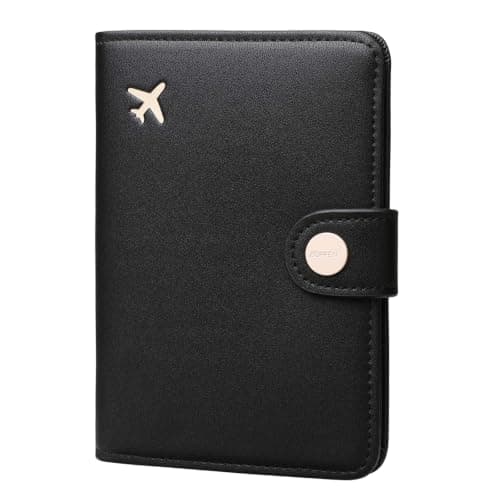
Slim wallets hold a passport, a few cards and folded notes, and fit an inside jacket pocket. That pocket is the point: it is the hardest place on a person for someone else to reach, and it's why the slim shape is the security answer as well as the tidy one. The trade-off is that boarding passes have to be folded and there's no room for a pen.
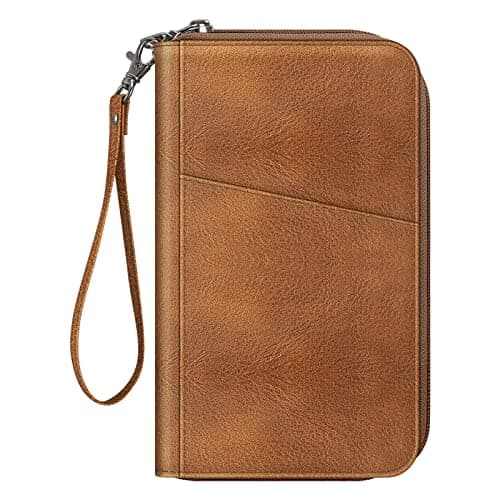
Organizer wallets are bigger, usually zip-closed, and have a slot shaped for everything — passport, boarding pass unfolded, SIM card, coins, pen. They're genuinely more convenient at a check-in desk and they do not fit an inside pocket, which means they live in a bag, which means the bag becomes the thing that must not be lost.
Most solo travelers are better served by slim. Most families are better served by an organizer. The honest exception is the traveler who dislikes losing time at a desk more than they fear a pickpocket — for them the organizer is right, and they should keep it in a bag that closes properly.
RFID blocking: what it does and doesn't do
Nearly every travel wallet advertises RFID blocking. Here's the honest version.
Contactless cards and biometric passports contain chips that respond to a radio reader. A blocking layer prevents that response. That much is real physics and it works. What's harder to substantiate is the threat: modern contactless payments are transaction-limited and tokenized, and documented cases of walk-by card cloning are far rarer than the marketing implies. Card fraud overwhelmingly happens through data breaches and skimmed magstripes, not through someone brushing past a jacket.
So treat RFID blocking as a free feature that comes with almost every wallet at this point, not as a reason to choose one. If security is the actual concern, the things that measurably help are a slim wallet in an inside pocket, a locking bag, and not carrying every card at once. That's the reasoning behind the anti-theft pick here — it's the whole-bag approach rather than a lining.
A wallet is one piece of a wider habit, and the habit does more work than the hardware — see how to keep valuables safe while traveling.
Leather, and whether it's worth it
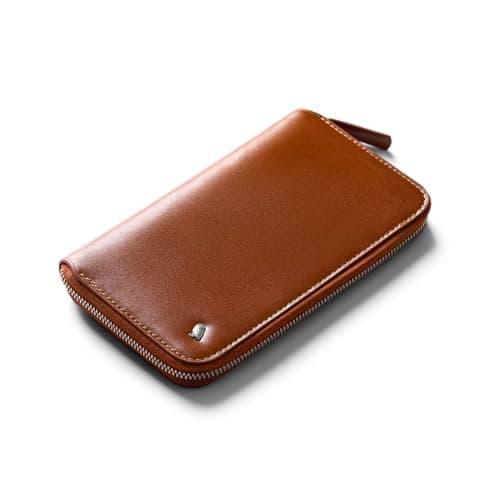
A leather travel wallet does the identical job to a $10 PU one. What it buys is a decade rather than a couple of years, a patina instead of a peel, and the fact that it presents as a gift when it's unwrapped. Those are real reasons — they're just not functional ones, and we'd rather say that than imply the expensive one organizes better.
For a milestone gift, the leather one is the right call. For an add-on to a bigger present, the cheap organizer is genuinely excellent and nobody should feel odd about it — it's one of the best-selling travel products on Amazon for a reason. Our guide to how much to spend on a travel gift works through where each lands by relationship.
The personalization angle
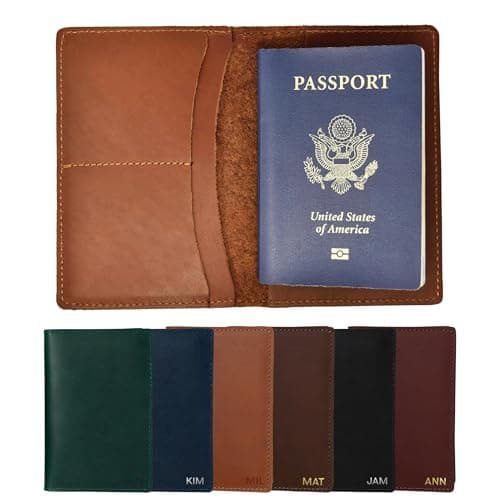
Passport holders are one of the few travel products where engraving or embossing genuinely improves the object rather than decorating it. A name on a passport cover makes it identifiable in a shared bag, and it's the rare personalized gift that doesn't become embarrassing. It's also the cheapest way to make a small gift feel deliberate.
Two cautions. Initials age better than full names, and a name plus a location dates badly if they move. And personalized items generally can't be returned, so sizing and color matter more than usual. We cover the whole category in personalized travel gifts.
How we ranked these
Scored against our published rubric from published specifications and aggregated owner feedback — compiled, not lab-tested, and we say so on every page. The usefulness score weights pocketability and how fast the four core documents come out; durability weights the stitching and the closure, which is where cheap wallets fail first. The ranking deliberately puts a very inexpensive organizer second, because for what most people actually need it is close to unbeatable.
How to choose a travel wallet
1. One passport or several?
This is the whole decision. Solo travelers want slim; families want a zip organizer that holds four or five passports. Everything else follows from it.
2. Will it fit an inside jacket pocket?
If yes, that's where it should live, and that placement does more for security than any lining. If no, it lives in a bag — so the bag needs to close.
3. Do they need a boarding pass unfolded?
Some people mind folding a paper pass and some don't. It's the main practical difference between a slim wallet and an organizer, and it's worth knowing before you buy.
4. Gift or replacement?
Leather presents as a present and lasts a decade. PU does the same job for a tenth of the price and lasts a couple of years. Both are correct answers to different questions.
5. Personalized?
Initials over full names, and remember it can't be returned. A monogram turns a cheap passport cover into a considered gift better than almost anything else at the price.