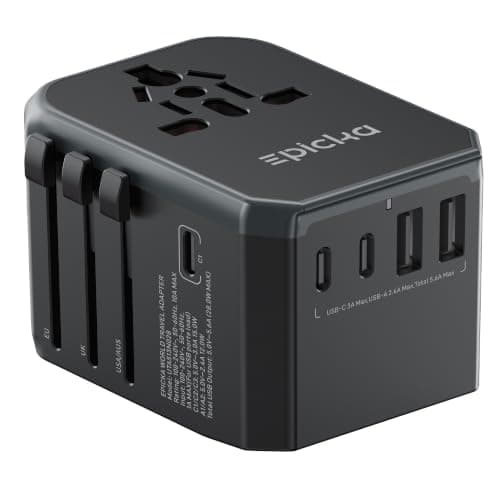
Buy the adapter, and buy the right one. Most of Europe uses the two-round-pin Type C/F socket, but the UK and Ireland use a completely different three-pin plug, and a multi-country itinerary therefore needs more than one shape. A universal adapter with slide-out pins covers all of them in a single object, which is why it's the first thing on this page and the thing most first-time Europe travelers get wrong.
Power: the two mistakes
Assuming one plug covers the continent. A trip that includes London and Paris needs two plug shapes. So does Dublin and Amsterdam. A universal block handles it; a single-region adapter doesn't, and the discovery happens at 11pm in a hotel room.
Assuming an adapter protects appliances. Continental Europe and the UK run at roughly 220–240 volts against the US's 110–120. Dual-voltage devices — anything labeled 100–240V, which covers phone chargers, laptops, tablets and cameras — are fine. Single-voltage heating tools, which includes a lot of hair dryers and straighteners, are not, and an adapter won't save them. Our adapter vs converter guide covers this properly, and the short version is: buy a cheap dual-voltage one at the destination rather than carrying a converter. For which adapter specifically - and which continental plug shapes a single Europlug already covers - see best travel adapter for Europe.
Pickpocketing, handled proportionately
Pickpocketing in major European tourist cities is a genuine and well-documented nuisance, concentrated in specific places — crowded metro carriages, station concourses, the immediate surroundings of major attractions. It's a nuisance rather than a danger, and the gear that helps is specific and unglamorous.
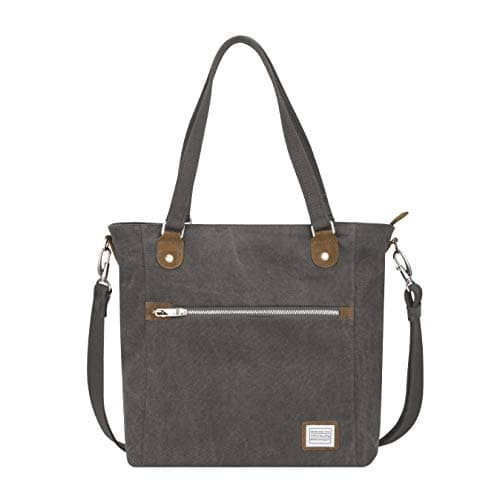
What works: a bag that zips or locks rather than an open-top tote, a slim wallet carried in an inside jacket pocket, and not carrying every card at once. Locking zips and a slash-resistant body address the actual method used, which is why an anti-theft bag is a legitimately good Europe gift even though it looks utilitarian. Our travel tote roundup ranks the security option honestly against the prettier ones.
What doesn't: money belts worn under clothing, because they're awkward to access in public and people stop using them within days. And RFID-blocking, which is real physics addressing a threat that's much rarer than the marketing implies — treat it as a free feature rather than the reason to choose a product. More on that in our travel wallet roundup.
Budget airlines and the sizer at the gate
The thing that most surprises visitors doing a multi-city European trip: intra-Europe budget carriers enforce cabin baggage dimensions far more strictly than transatlantic airlines, with physical sizers at the gate and fees charged on the spot. Personal-item allowances on the cheapest fares are genuinely small.
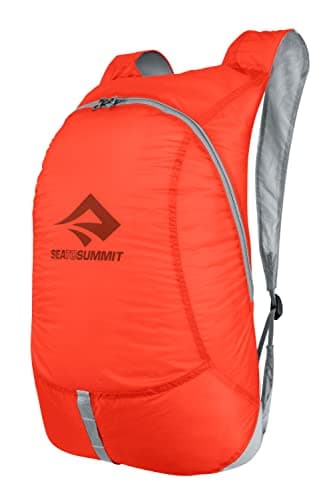
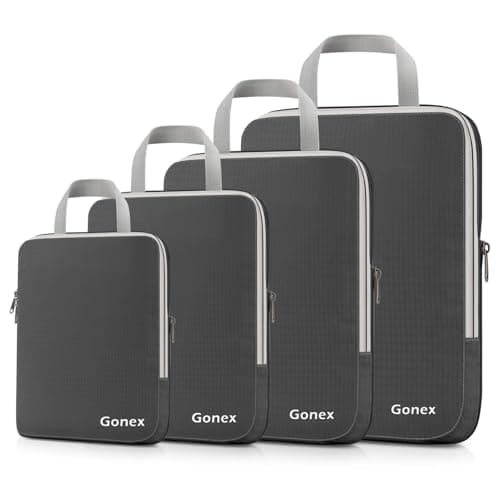
That makes two gifts unusually valuable. Compression packing cubes, which reduce the volume the same clothes occupy — the difference between fitting the sizer and paying at the gate. And a packable daypack, which collapses into nothing when a bag has to be measured and becomes a real bag afterwards.
It also makes a large suitcase a bad gift for this trip specifically. Our carry-on size rules guide has the dimensions worth checking before buying anything with a fixed shape.
Data, and the gift that removes the worst arrival hour
Roaming charges outside a traveler's home region are the standing tax on a European trip, and the arrival hour — landing with no data, needing a map, a transfer and a hotel address — is the point where it hurts most.
An eSIM for the region is a genuinely good small gift for this trip specifically. It's delivered as a QR code, installed before departure, and it means the phone is working the moment the plane lands. Two things to check before buying one: the recipient's phone has to support eSIM (most recent handsets do, but not all), and a regional plan covering multiple countries is worth more than a single-country one for anyone doing a multi-city trip.
It also removes a security problem nobody frames as one. A traveler without data hunts for open Wi-Fi in stations and cafés, which is exactly the network you'd least like them on. Working mobile data is the simplest fix for that, and a better one than any RFID lining.
Weather and shoes, which nobody buys and everybody needs
Two practical notes worth passing on with whatever you buy.
European city trips are walking trips. Ten to fifteen kilometers a day on cobbles and stairs is normal and it surprises people who drive at home. That makes the highest-value gift for this trip something almost nobody thinks of — good insoles, blister plasters, or simply the advice to break shoes in before leaving. It isn't glamorous and it's the difference between day four being enjoyable and day four being spent in a café.
Layers beat a big coat. Northern and central European weather swings within a single day, and a packable shell plus layers handles the range far better than one heavy garment that has to be carried whenever it isn't worn. It also compresses, which matters when the return flight is on a carrier with a sizer.
An umbrella is the buyable version of this. A packable shell keeps a torso dry and does nothing for a face full of rain on a cobbled street, and northern Europe supplies plenty of both. The size class that matters is the one that fits whatever bag they carry all day — our travel umbrella roundup works through packed length versus coverage, and explains why the wind ratings printed on the box are not measurements.
None of these is a product recommendation so much as a thing to say. They come up more often in trip debriefs than any gadget does.
What Europe doesn't need
- A phrasebook. The phone does this better, and English is widely spoken in the places tourists actually go. A downloaded offline translation pack is the useful version, and it's free.
- A water filter. Tap water is drinkable across the overwhelming majority of Europe. A refillable bottle is useful; a filter is not.
- A currency wallet for a specific country. Cards work nearly everywhere, and several countries a traveler might visit don't use the euro anyway.
- Guidebooks for a fixed itinerary. Plans change, and the weight is real.
The one thing worth telling them
Not a gift, but it belongs on this page because it's the most useful thing anyone can pass on before a European trip: when a card machine abroad offers to charge in your home currency instead of the local one, decline. That option is dynamic currency conversion, and the exchange rate applied is set by the terminal operator rather than the card network. Choosing to be charged in the local currency is almost always cheaper.
It costs nothing to say and it saves money on every transaction of the trip. Print it on the card that goes with the adapter.
One more thing worth separating out: this page assumes a trip with a return date. If the person is actually relocating — a job, a visa, a one-way ticket — the brief changes completely, because every gift then has to survive a checked-bag weight limit and a first month with no bank card. We cover that case on its own in gifts for someone moving abroad.