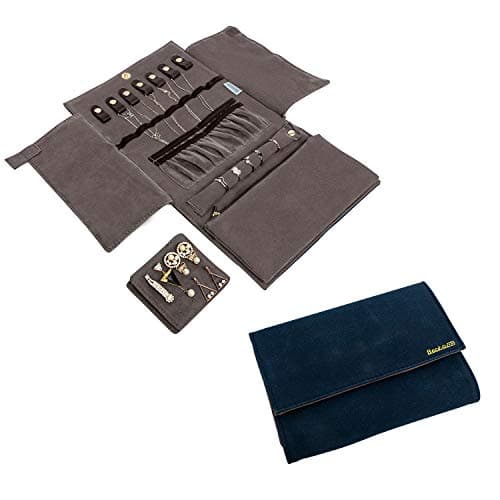
Decide between a roll and a hard case before you look at a single product. They solve different problems and get sold in the same aisle. A roll separates chains so necklaces arrive untangled. A hard case protects small, fragile pieces from being crushed. Buying a hard case for someone whose problem is knotted necklaces is the most common mistake in this category.
The two designs, and what each one is for
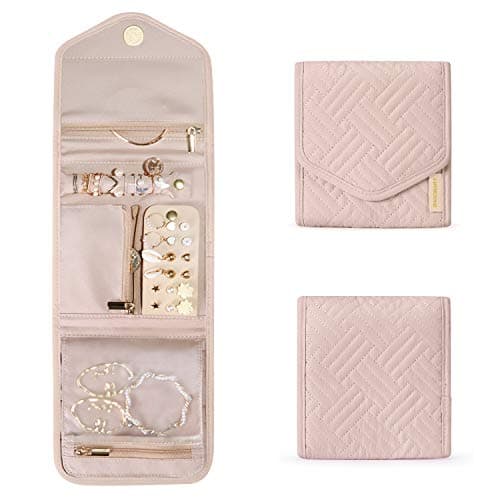
The roll. A fabric or leather sheet with dedicated necklace bars, ring rolls and zip pockets, which rolls up and ties. The necklace bars are the whole point: each chain gets its own anchored channel, so it can't find its neighbors. Rolls also pack beautifully — they flatten into a gap in a suitcase rather than demanding a rigid block of space. What they don't do is protect anything from pressure.
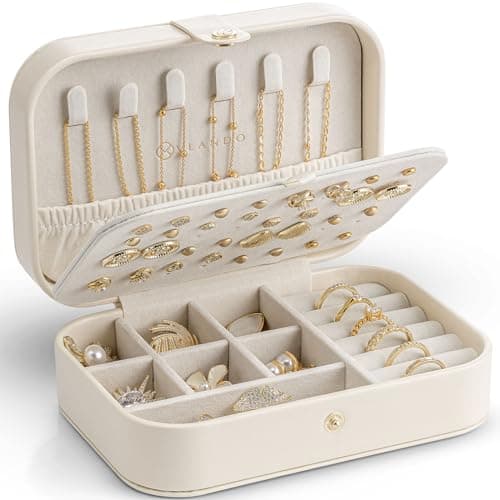
The hard case. A rigid box with compartments and, on the better ones, cards for earring posts. Studs, hoops and delicate settings survive a packed bag in a way they don't in a soft pouch. The trade is that a box is a box — it doesn't flex around the contents of a suitcase, and capacity is limited by its dimensions.
Most people traveling with a real mix — a few chains, several pairs of earrings, a couple of rings — are best served by a roll with zip pockets for the small hard items. That's why the roll leads this ranking.
What actually matters, in order
1. Anchored necklace bars. Not loops, not pockets — bars that hold one end of the chain so it can't slither. This is the single feature separating an organizer that works from a pouch with compartments.
2. Ring rolls. A padded bar that rings slide onto keeps them together and stops metal knocking against metal. Rings loose in a pocket scratch each other, which is a slow, invisible kind of damage.
3. Earring provision. The good hard cases have a card or foam strip that posts push through, so pairs stay pairs. Without it, one earring of each pair goes missing eventually — practically a law.
4. Closure. A zip beats a tie beats a snap. This will be packed under something heavy, and a case that opens in transit has failed at the only job it has.
5. Honest capacity. The commonest complaint about jewelry organizers is that they're smaller than the photos suggest. Count what the recipient actually travels with — usually far less than they own — and buy for that.
The category almost nobody serves: men
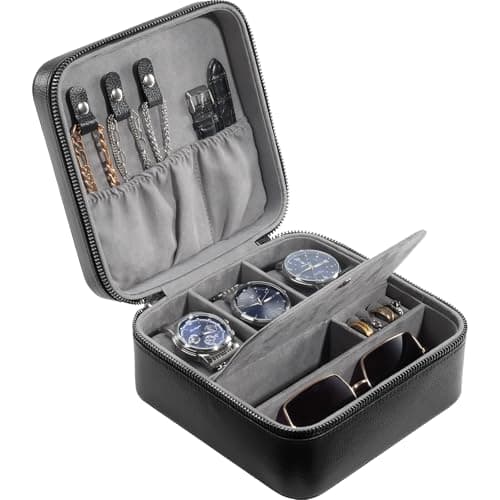
Jewelry organizers are overwhelmingly designed around necklaces and earrings. A man traveling with a watch, a couple of rings, cufflinks and collar stays is badly served by all of them — a watch needs a cushion so the strap doesn't crease and the crystal doesn't knock against a ring.
Watch-and-ring cases exist and are genuinely useful, and they're one of the more original gifts in the travel gifts for dad category precisely because so few people think of them. If the recipient wears a watch they care about and travels with it, this is a better gift than another wash bag.
Where jewelry should not go
Two placements to talk people out of. First, the toiletry bag: it's damp, it contains liquids that leak, and metal doesn't enjoy either. We make the same point in our toiletry bag roundup, because it's the most common thing people do.
Second, checked luggage. Valuables belong in the cabin — airline liability for jewelry in checked bags is typically limited or excluded entirely, and a bag that goes missing takes the contents with it. A jewelry roll is small enough that there's no reason for it to be anywhere but a personal item.
When to spend more
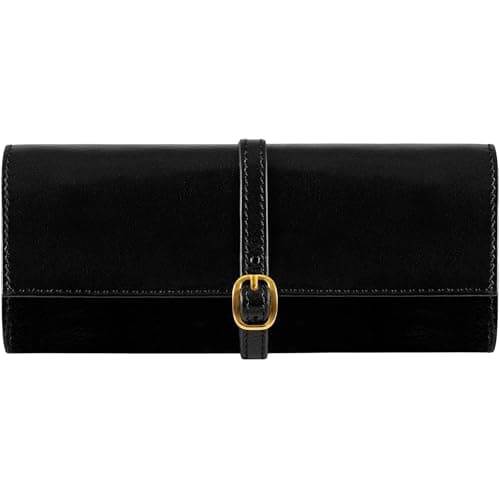
A fabric roll organizes exactly as well as a leather one. What leather buys is the gift dimension: it presents as a present rather than as storage, and full-grain leather ages into something better rather than wearing out. That's a legitimate reason to spend several times as much — it just isn't a functional one, and we'd rather say so than imply the expensive one organizes better.
For a milestone gift that's the right call. For a practical replacement, buy the fabric roll and spend the difference elsewhere. Our guide to how much to spend on a travel gift works through that decision more generally.
How we ranked these
The rubric weights anti-tangle provision, closure security, protection for fragile pieces and honest capacity, scored against our published rubric. We compile published specifications and manufacturer descriptions rather than claiming testing we haven't done. The ranking deliberately puts a mid-priced fabric roll above a leather case costing several times more, because on the job these things exist to do, that's where the money goes furthest.
How to choose a travel jewelry case
1. Chains or studs?
Necklaces mean a roll with anchored bars. Earrings and delicate settings mean a hard case. A mix means a roll with zip pockets, which is what most people actually need.
2. Count what they travel with
Not what they own. Most people take a fraction of their collection, and the commonest complaint here is buying something bigger than the job requires.
3. Is there a watch?
A watch needs a cushion, and almost no general jewelry case provides one. If they travel with a watch they care about, that changes the product entirely.
4. Gift or replacement?
Leather for a gift, fabric for a replacement. They organize identically; the difference is entirely presentation and how it ages.
5. Where will it live?
In a personal item, not a checked bag and not the toiletry bag. Buy something small enough that keeping it in the cabin is easy.