Skip to content
Jet & Jot

02 — Best Travel Gear

The Best Travel First Aid Kits

Nearly every kit sold as a travel first aid kit is a box of plasters. The thing that actually ruins a trip is rarely a cut — so the useful question is what your kit is missing.

By Stephen V.Updated How we choose
#ad

We earn a commission when you buy through our Amazon links, at no extra cost to you. It never changes the pick, and we say plainly when the cheaper option is the better buy. How this works.

Our pick

Best overall

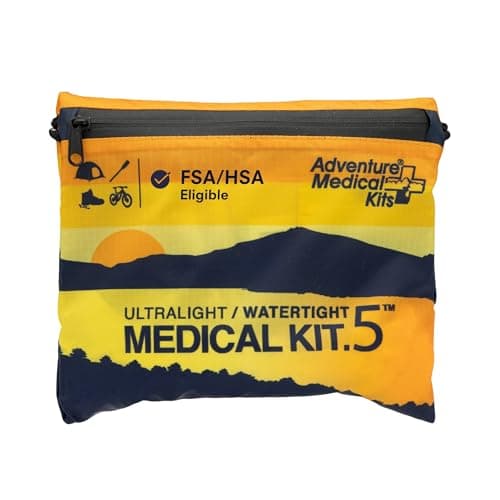
Adventure Medical Kits Ultralight/Watertight .5

The one that survives the trip: a waterproof inner bag so the contents are still usable after the bag they live in gets soaked.

$22.36View on Amazon

$31.9530% off

Price as of November 22, 2026. Prices change — Amazon's is the one that counts.

#ad · we may earn a commission from this link to Adventure Medical Kits Ultralight/Watertight .5

Why it wins, and who should skip it ↓

Almost every product sold as a travel first aid kit is a wound care kit, and a wound is not what ruins a trip. Open any of them and you will find adhesive bandages, gauze, tape, antiseptic wipes and a pair of small scissors. That is a perfectly good answer to a scraped knee. It is no answer at all to the three things that actually derail travel: a stomach upset, a headache that will not shift, and blisters on day two of a walking holiday. Once you see the category that way, choosing becomes much easier — you are not looking for the kit with the highest piece count. You are looking for the kit that covers the gap the recipient already has.

Three limits, before anything else

This page describes what kits contain. It does not tell anyone what to take, when to take it, or what anything treats, for three reasons we would rather state than imply.

  • We are not a medical site. Nothing here is medical advice, and the contents of a boxed kit are not a substitute for advice about a specific person.
  • Medication is personal. If the recipient takes prescription medication, is pregnant, has a condition that governs what they can take, or is buying for a child, the packing list that matters is the one a pharmacist or clinician gives them — not an assortment chosen by a seller.
  • A kit is only as useful as the person holding it. This is the honest reason one pick on this page ranks where it does: it includes a printed first aid guide, and that is worth more than twenty extra bandages.

“TSA approved” is a seller phrase

You will see “TSA approved” and “TSA compliant” on listings throughout this category, including on one of our picks. It is worth knowing exactly what that is and is not.

TSA publishes no approval scheme for first aid kits. There is no certification, no list, and no inspection a manufacturer can pass. What sellers mean by the phrase is that the kit’s contents are sized and packaged to clear the ordinary carry-on rules — which is a reasonable thing to claim, and not a thing anybody approved.

The two rules that genuinely bite on a first aid kit are these. Liquids — antiseptic solution, saline, hand sanitizer and gel are liquids, and in carry-on they fall under the standard liquids rule along with everything else in the toiletry bag. Our TSA liquids guide explains why the container size is what gets assessed rather than how full it is. And scissors— TSA publishes this one plainly: scissors are allowed in carry-on, but if packed in carry-on “they must be less than 4 inches from the pivot point,” and sharp objects in checked bags should be sheathed or securely wrapped. The small snips in a travel kit comfortably clear that, but the page is worth checking if the kit contains anything larger. As TSA itself notes, the final decision always rests with the officer at the checkpoint.

The practical upshot for a gift buyer: no kit on this page will be confiscated as a kit. If anything goes, it will be a liquid that broke the liquids rule or a pair of shears somebody packed separately.

How we picked

Four criteria, in the order that actually decides whether a kit earns its space.

  • Does it survive the bag it lives in? The most common way a travel kit fails is not a missing item — it is a soaked one. Gauze, tape and a cardboard bandage box in a wet daypack are the same as no kit at all. A waterproof inner bag is the single most valuable feature in this category and the one cheap kits skip first.
  • Does it cover wound care or medicine, and does the recipient already own the other? We rank one of each deliberately, because almost nobody needs a second box of plasters and almost everybody is short of the other half.
  • Blisters. Weighted heavily and almost never discussed. Blisters are the most likely travel injury by a wide margin — new shoes, long days, unfamiliar cities — and moleskin or blister dressings are the item most likely to actually be used.
  • Will it be opened as a present? A first aid kit is a hard gift precisely because the good ones look like medical supplies. One pick here is ranked substantially for its packaging, and we say so rather than pretending the decision was clinical.

We compile published listing contents, manufacturer descriptions and published regulations. We have not opened and inventoried these kits, we do not test them, and we make no claim about how well anything in them works.

Piece count is the most misleading number in the category

A “300-piece” kit sounds four times better than a 75-piece one. It almost never is. Piece counts are inflated by the cheapest possible items: a kit reaches three hundred by including two hundred small adhesive bandages in four sizes, and that is a number rather than a capability.

What to count instead, if you are comparing two listings:

  • How many distinct item types rather than how many objects. Ten kinds of thing beats two hundred of one kind.
  • Is there anything for a blister? Moleskin, blister dressings, or nothing.
  • Is there anything larger than a plaster? A gauze pad and a bandage roll, or just small strips.
  • Is there tape? Tape is what makes everything else in the box work on an awkward place like a heel or a knuckle, and the cheapest kits omit it.

The three kits a traveler actually ends up wanting

One: a small wound-care kit that cannot get wet. This lives in the daypack and never comes out of it. Waterproofing is the whole specification; the contents are commodity.

Two: a medicine pouch. This is the one almost nobody buys and almost everybody needs, because the realistic emergency on a trip is feeling unwell at an hour when nothing is open, in a country where the packaging is in a language you do not read. Individually wrapped doses matter here for a second reason beyond tidiness: loose pills in a side pocket are an awkward conversation at a border, and labelled packets are not.

Three: the stuff that is specific to them. No boxed kit covers this and the gift is better for acknowledging it — prescriptions in original labelled packaging, anything they already know they react to, and a photo of the prescription on their phone. That part is theirs to assemble, and it is worth saying in the card.

Where a first aid kit is the wrong gift

Two honest cases. If the recipient has a medical condition or takes regular medication, a boxed assortment chosen by a stranger is not a thoughtful gift — it is a box with items in it they may specifically avoid. Something from our toiletry bag roundup that organizes what they already carry serves them far better.

And if they travel for work between cities with pharmacies on every corner, the kit is a nice idea with a low hit rate. The gift that lands for that recipient is in the business traveler list instead.

Which one for which recipient

You want one safe answer. The Adventure Medical Kits Ultralight/Watertight .5. The waterproof inner bag is the feature that matters, it is rated for two people, and the listing names moleskin specifically — the blister item that most kits leave out.

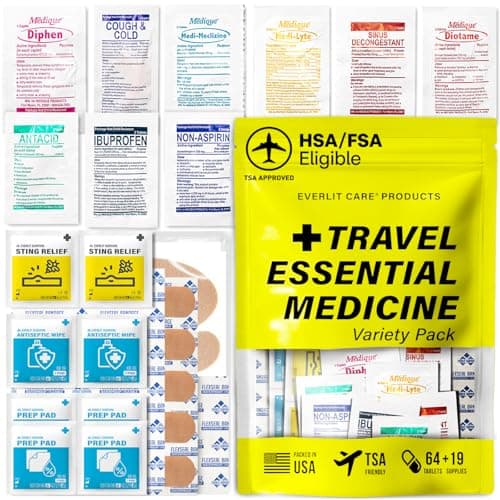
They already own a box of plasters. The EVERLIT medicine kit. It is the other half of the problem, it is small enough to add to a kit they already have, and the doses are individually wrapped. Pair it; do not substitute it.

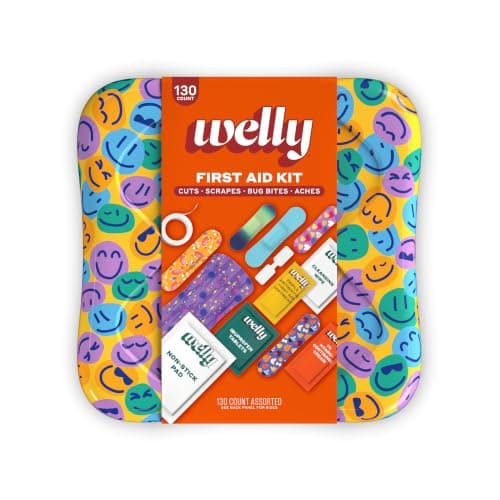
It has to work as an actual present. The Welly kit. A proper tin, both fabric and waterproof bandages, FSA eligible per the listing. We are ranking the packaging and we will say so — but a gift that gets opened with pleasure and then lives in a bathroom is a better outcome than a better kit that reads as a chore.

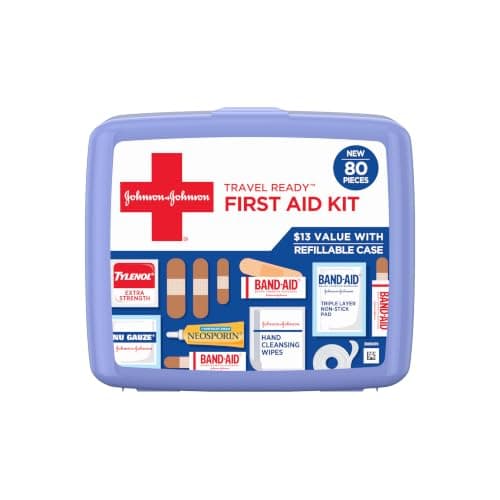
You are filling out a bundle. The BAND-AID kit. It is the cheapest pick here that is still a real answer, and it is the only one that ships with both wound care and a pain reliever in one box.

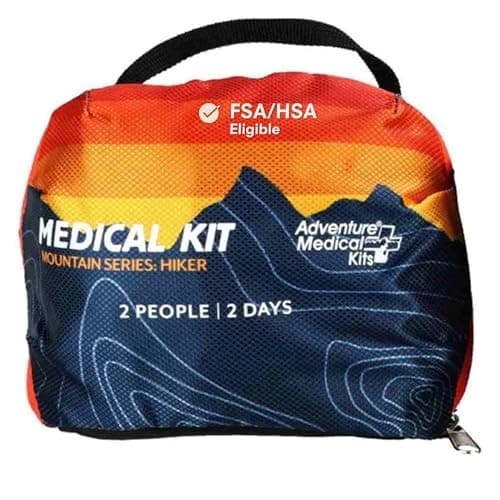
They hike somewhere without cell service. The Mountain Series Hiker. The trauma pad and elastic bandage cover the injury the rest of this page cannot, and the included wilderness first aid guide is the most useful thing in it. For the rest of that kit, see our gifts for hikers list and the best hiking essentials, which ranks the whole day-hike kit by what happens when each part of it fails.

A first aid kit is also one of the better things to add to a larger gift rather than give alone — it pairs naturally with a toiletry bag or with the small practical objects in travel gifts under $25.

The short answer

Quick picks

#GiftBest forScorePrice
01
Adventure Medical Kits Adventure Medical Kits Ultralight/Watertight .5
Adventure Medical Kits Ultralight/Watertight .5

The one that survives the trip: a waterproof inner bag so the contents are still usable after the bag they live in gets soaked.

Anyone whose kit lives in a daypack rather than a hotel drawer
8.4
$22.36Amazon
02
EVERLIT CARE EVERLIT CARE Travel Essential Medicine Kit
EVERLIT CARE Travel Essential Medicine Kit

The half of the problem nobody packs: individually wrapped tablets for the 2 a.m. in a city where the pharmacy is shut.

The traveler who already owns a box of plasters and nothing else
8.0
$19.95Amazon
03
Welly Welly First Aid Kit
Welly First Aid Kit

The only kit here anybody would be pleased to unwrap — a proper tin that earns its place in a bathroom, not just a bag.

Giving a first aid kit as an actual present
8.0
$24.94Amazon
04
BAND-AID BAND-AID Travel Ready Portable First Aid Kit
BAND-AID Travel Ready Portable First Aid Kit

The cheapest answer that is still a real answer, with two brand names in the box the recipient already trusts.

A bundle filler, or a second kit for the car
7.6
$10.76Amazon
05
Adventure Medical Kits Adventure Medical Kits Mountain Series Hiker
Adventure Medical Kits Mountain Series Hiker

The step up that covers the injury the others cannot: serious bleeding, hours from a road.

Hikers and trekkers going somewhere without cell service
7.6
$34.49Amazon

#ad · Live prices from the Amazon Product API, as of November 22, 2026. Where we have no verified live price, we show none — we would rather leave a gap than print a number that has gone stale.

In detail

The picks, in full

01
Adventure Medical Kits Adventure Medical Kits Ultralight/Watertight .5

Anyone whose kit lives in a daypack rather than a hotel drawer

Adventure Medical Kits Ultralight/Watertight .5

Waterproof DryFlex inner bagRated 2 personBandages, gauze and medicationsMoleskin for blisters
8.4/10

The one that survives the trip: a waterproof inner bag so the contents are still usable after the bag they live in gets soaked.

Usefulness
9
Portability
9
Durability
9
Value
7
Giftability
8

Good

  • The waterproof inner bag is the feature that matters most and the one cheap kits skip — wet gauze and a soaked bandage box are the same as no kit at all
  • The listing names moleskin specifically, which is the single most useful item for a traveler who walks a city all day in new shoes
  • Sized and rated for two people, which covers the ordinary case of a couple or a parent and child

Trade-offs

  • Costs several times a supermarket kit for a comparable item count
  • Rated for two people, so a family of four is buying the bigger size or buying twice
  • Wound care and blister care, not a medicine cabinet — the stomach-bug and headache problem is a separate purchase

Skip it if…

…the kit will live in a suitcase in a hotel room. Waterproofing is what you pay for here, and it buys nothing on a bathroom shelf — the Welly or the BAND-AID kit is the sensible buy then.

$22.36View on Amazon

$31.9530% off

Price as of November 22, 2026. Prices change — Amazon's is the one that counts.

#ad · we may earn a commission from this link to Adventure Medical Kits Ultralight/Watertight .5

02
EVERLIT CARE EVERLIT CARE Travel Essential Medicine Kit

The traveler who already owns a box of plasters and nothing else

EVERLIT CARE Travel Essential Medicine Kit

64 individually packed tabletsMini sizeBonus medical suppliesRefill pack
8.0/10

The half of the problem nobody packs: individually wrapped tablets for the 2 a.m. in a city where the pharmacy is shut.

Usefulness
9
Portability
10
Durability
7
Value
8
Giftability
6

Good

  • Almost every other kit in this category is wound care only, and a cut is not what ruins a trip — this is the one that addresses the other half
  • Individually wrapped doses survive a suitcase without turning into loose pills in a side pocket, which also makes them identifiable at a border
  • Small enough to add to a kit the recipient already owns rather than replacing it

Trade-offs

  • It is tablets and supplies, not a complete first aid kit — pair it, do not substitute it
  • The listing describes it as TSA compliant, which is seller phrasing: TSA publishes no first aid kit approval scheme, and what actually matters is the liquids rule and the scissors rule
  • Contents are a fixed assortment, so some of it will be medication the recipient would not have chosen

Skip it if…

…the recipient takes prescription medication or has any medical condition that governs what they can take. Then the only sensible packing list is the one their pharmacist or clinician gives them, and a boxed assortment is the wrong gift.

$19.95View on Amazon

Price as of November 22, 2026. Prices change — Amazon's is the one that counts.

#ad · we may earn a commission from this link to EVERLIT CARE Travel Essential Medicine Kit

03
Welly Welly First Aid Kit

Giving a first aid kit as an actual present

Welly First Aid Kit

130 countFlexible fabric and waterproof bandagesButterfly strips, tape, non-stick padsFSA eligible
8.0/10

The only kit here anybody would be pleased to unwrap — a proper tin that earns its place in a bathroom, not just a bag.

Usefulness
8
Portability
7
Durability
8
Value
7
Giftability
10

Good

  • It looks like a gift, which is the whole problem with this category — the contents of the others are fine and the packaging is medical-supply beige
  • Carries both flexible fabric and waterproof bandages, so it covers the knuckle-and-heel problem and the swimming problem in one box
  • FSA eligible per the listing, which is a genuine saving for a US buyer with a healthcare account

Trade-offs

  • The tin is the reason to buy it and also the reason not to: it is a rigid rectangle, which is the worst shape for a stuffed carry-on
  • Costs roughly double the BAND-AID kit for a comparable job
  • No waterproof outer, so it is a bathroom-and-suitcase kit rather than a daypack kit

Skip it if…

…it is going into a backpack for a hiking trip. Buy the Adventure Medical Kits version instead — a tin in a wet pack is the one failure this category has.

$24.94View on Amazon

Price as of November 22, 2026. Prices change — Amazon's is the one that counts.

#ad · we may earn a commission from this link to Welly First Aid Kit

04
BAND-AID BAND-AID Travel Ready Portable First Aid Kit

A bundle filler, or a second kit for the car

BAND-AID Travel Ready Portable First Aid Kit

80 piecesIncludes Neosporin and TylenolSoft portable caseMinor wound care
7.6/10

The cheapest answer that is still a real answer, with two brand names in the box the recipient already trusts.

Usefulness
8
Portability
9
Durability
6
Value
10
Giftability
5

Good

  • The one kit here that ships with both wound care and a pain reliever, so it is the closest thing to a complete answer in a single cheap box
  • Brand-name contents matter more than they should on a gift: a recipient recognizes BAND-AID and Neosporin and will actually use them
  • Cheap enough to buy two and leave one in a glovebox

Trade-offs

  • Soft case, no waterproofing — contents will not survive a wet pack
  • 80 pieces is mostly adhesive bandages; the gauze and tape provision is thin
  • It is unmistakably a drugstore product, so it does not stand up as a present on its own

Skip it if…

…the kit is the whole gift. It is the right object and the wrong occasion — add it to a packing-cube or toiletry-bag gift instead.

$10.76View on Amazon

$14.6927% off

Price as of November 22, 2026. Prices change — Amazon's is the one that counts.

#ad · we may earn a commission from this link to BAND-AID Travel Ready Portable First Aid Kit

05
Adventure Medical Kits Adventure Medical Kits Mountain Series Hiker

Hikers and trekkers going somewhere without cell service

Adventure Medical Kits Mountain Series Hiker

Trauma pad for severe bleedingElastic bandageWilderness first aid guide includedMountain Series
7.6/10

The step up that covers the injury the others cannot: serious bleeding, hours from a road.

Usefulness
9
Portability
6
Durability
9
Value
7
Giftability
7

Good

  • A trauma pad and an elastic bandage are the two items that address the scenario the rest of this page does not — a bad injury with a long walk out
  • The included wilderness first aid guide is the most underrated item in the category: a kit is only as useful as the knowledge of the person holding it
  • Same manufacturer and the same build quality as our top pick, one tier up in capability

Trade-offs

  • The most expensive kit here, and most of the extra capability is irrelevant on a city trip
  • Bulkier than everything else on this page
  • The listing does not publish a waterproof inner bag the way the Ultralight/Watertight line does, so check before counting on one

Skip it if…

…the recipient's travel is flights, hotels and cities. This is a backcountry kit and the capability it adds is capability they will never open.

$34.49View on Amazon

Price as of November 22, 2026. Prices change — Amazon's is the one that counts.

#ad · we may earn a commission from this link to Adventure Medical Kits Mountain Series Hiker

Buy for where the kit will live

This is the whole decision. A kit that lives in a daypack needs to be waterproof and small and nothing else matters much. A kit that lives in a suitcase can be a tin, because the worst thing that happens to it is a shampoo leak. A kit that lives in a car can be as big as you like. Work out which one you are buying before comparing any contents list.

Add the two things no kit includes

Whatever you buy, the recipient will want two additions, and if the gift acknowledges them it lands better. The first is their own medication, in the original labelled packaging. The second is blister cover, if the kit does not already carry it — this is the most likely injury on a city trip and the cheapest to prepare for.

Check for tape, gauze and a blister item

Ignore the headline piece count and look for these three. Tape is what makes a dressing stay on a heel. A gauze pad covers an area a strip cannot. A blister item is the one most likely to be used at all. A kit with all three and sixty pieces beats a kit with none of them and three hundred.

Liquids live with the toiletries, not with the kit

If the kit contains antiseptic liquid, saline or sanitizer gel and the recipient flies carry-on, those items have to come out and go into the liquids bag like everything else — see the liquids rules. The practical move is to keep the liquid elements with the toiletry bag and let the kit hold the dry contents, which is also how it survives a leak.

Replace what gets used, and check the dates

The failure mode of a gifted kit two years on is a kit with the useful half missing and expired tablets in the rest of it. Anything with a date on it needs looking at once a year, and the item that always needs replacing first is the blister cover and the small bandages. It is worth a line in the card.
How we chose

We don't run a testing lab — and we say so

Every ranking site in this category implies a test bench. We don't have one. We compile the published specs (real dimensions, weight, capacity, TSA and cabin-size compliance), do the arithmetic a gift buyer actually cares about, pull live prices so nothing is stale, and score each pick against a published rubric. The scores are judgments from documented research — not measurements we took. Where a fact came from a manufacturer or a retailer, we name and link them in Sources.

Questions

Frequently asked

Are first aid kits TSA approved?
There is no such thing — TSA publishes no approval scheme or certification for first aid kits, so “TSA approved” on a listing is the seller’s own phrasing. What matters in practice is that the kit’s liquids follow the ordinary carry-on liquids rule and that any scissors meet TSA’s published limit of less than four inches from the pivot point. Kits themselves are not a prohibited category, and the final call at any checkpoint is the officer’s.
Can you take a first aid kit in your carry-on?
Yes. The kit is not the issue; two of its possible contents are. Any antiseptic liquid, saline or gel is a liquid and has to follow the carry-on liquids rule along with the rest of the toiletries. Scissors are allowed if they are less than four inches from the pivot point, per TSA’s published rule, which the small snips in a travel kit clear easily. Everything dry — bandages, gauze, tape, moleskin, tablets — travels without a question.
What should a travel first aid kit contain?
For the dry half: assorted adhesive bandages, a couple of gauze pads, tape, antiseptic wipes, tweezers, small scissors and something for blisters. The half most kits omit and most travelers want is a small supply of everyday medication in individually wrapped doses. Beyond that, the only genuinely important contents are the ones specific to the person — their own prescriptions in original labelled packaging. We are describing what kits hold rather than advising on what anyone should take.
Is a bigger first aid kit better?
Usually not for travel. Piece counts are inflated with the cheapest item in the box, so a 300-piece kit is often two hundred small plasters plus the same handful of useful things a 75-piece kit has. Count distinct item types instead, and check specifically for tape, a gauze pad and a blister item. A kit that is too big to carry gets left in the hotel, which makes it a kit you do not have.
Does a first aid kit make a good gift?
It makes a good part of a gift. The product is genuinely useful and the packaging is usually medical-supply plain, so it tends to land better bundled with a toiletry bagor alongside other small practical items. If it has to stand alone, the Welly tin is the pick that reads as a present. One case where we would not give one at all: a recipient with a medical condition or regular medication, for whom a stranger’s assortment is the wrong object.
Do I need a separate kit for hiking?
If the walking is day hikes near a road, no — a waterproof wound-care kit plus blister cover is the right tool. If it is backcountry, hours from help and without cell service, the capability that changes is managing serious bleeding and a long walk out, which is what the Mountain Series Hiker kit adds with a trauma pad, an elastic bandage and a printed wilderness first aid guide. The guide is the part that matters most and the part nobody counts.

Keep reading

Receipts

Sources

We don't run a testing lab, and we don't pretend to. Product facts come from manufacturer spec sheets and retailer listings, which we name and link. Where we couldn't verify something, we say so on the page rather than quietly leaving it out. Read our full method.