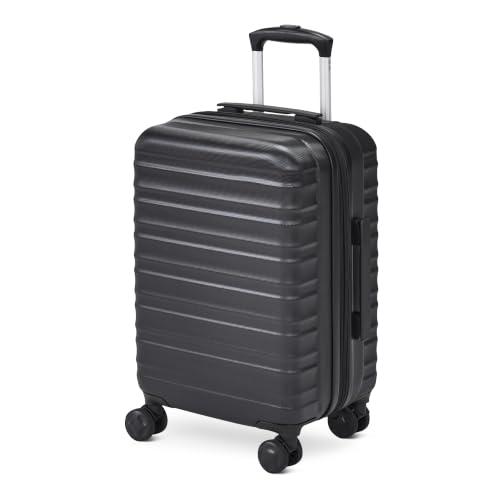
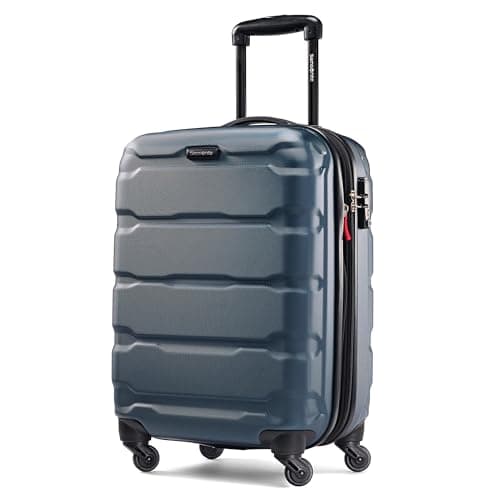
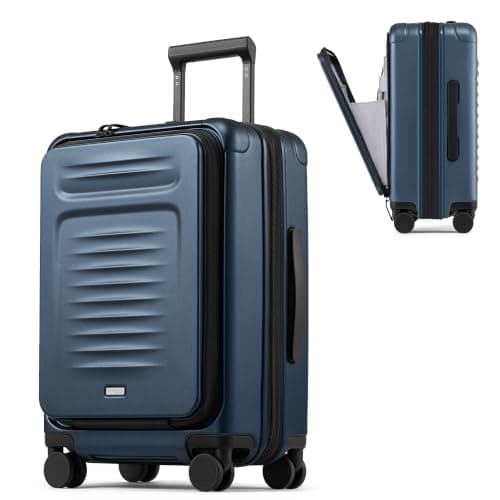
The Coolife hard shell is the pick genuinely under $100, and it is for the traveler who flies a handful of times a year and wants a cabin bag with the extras built in rather than bought separately. The Samsonite Omni PC is the better bag and the one we would rather own — but it sits right on this line and crosses it regularly, so read its live price below before treating it as an under-$100 buy. The budget pick is the Amazon Basics 21-inch: the cheapest hard shell here that genuinely does the job, and the right answer for a first suitcase, a spare, or a bag that lives at a parent’s house. Every price on this page is read live from our price layer and carries an as-of date in the table below — the $100 band is a reading of those prices on that date, not a permanent promise.
What a hundred dollars actually buys in 2026
More than it used to. Polycarbonate and ABS shells, eight-wheel spinner bases and built-in TSA combination locks have all moved down-market far enough that a sub-$100 carry-on is no longer a compromise on the things you can see. What the budget still does not buy is the thing you cannot see: a long warranty with a repair network behind it.
That matters because of where suitcases fail. A carry-on does not wear out evenly — it breaks at three points, in a predictable order:
- The wheels first, almost always. A spinner wheel takes the entire weight of the bag on a diagonal across concrete, jet bridges, cobbles and curbs. On cheap bags the wheel housing is riveted or moulded in, which means a dead wheel is a dead bag. On premium bags the wheel is a replaceable part.
- Then the zipper. An overpacked bag puts the zip chain under tension it was not designed for. A burst zip on a trip is a trip problem, not a warranty problem, which is one reason we keep a strap with a lock on our radar for older bags.
- Then the handle. Telescoping handles develop play, and play becomes a wobble, and a wobble becomes a stuck stage. Rarely fatal, always annoying.
So the honest way to read this band is: a sub-$100 bag will probably do four or five years of moderate use and then fail at a wheel, and you will replace it rather than repair it. If the recipient flies weekly, that math does not work and the money is better spent in our full carry-on luggage roundup, where the warranty-backed options live. If they fly a few times a year, this band is the correct place to shop and spending triple buys durability they will never use up.
How we built the band
Three rules, so the page cannot quietly drift into dishonesty.
- A pick only appears here if our live price layer shows it under $100. We do not type prices into this site — no product record on Jet & Jot has a price field at all, by design. The numbers in the table come from the price layer at the moment the page is rendered, stamped with the date they were collected. If one of these bags rises above the band, the number you see will say so.
- Three qualifying picks minimum, or no page. A price-band page with two options is a page pretending to be a shortlist. Three carry-ons qualified when this page was written, which is why this is the $100 band and not the $50 band — under $50 there are not three, so we did not build that page. Since then the Samsonite Omni has moved above the line and back more than once: it was $97.84 the day this page went up and above $100 at our refresh on 10 November 2026. We have left it on the page and moved it out of the top spot rather than hiding it, because it is still the bag most readers in this band should look at and its real price is right there in the table. That is the mechanism working, not failing.
- Bags just over the line are named in prose, never ranked as picks. Two bags sit immediately above this band and are worth knowing about: the Samsonite Winfield 3 DLX, which is the step up in finish, and the Travelpro Maxlite 5, which is the softside flight-crew standard and the bag we would actually recommend to a frequent flyer. Neither is a pick on this page because neither is under $100.
Beyond price, the ranking criteria are the same ones we use everywhere: does the shell survive a baggage system, is the wheel base a four-wheel spinner or two fixed wheels, is the published size inside the common cabin allowance, and does the listing publish the specifications at all. We compile published listing specifications and manufacturer descriptions and score against our published rubric. We have not destruction-tested a suitcase.
Which bag for which traveler
The best all-round value, and the one to buy if you buy one. The Samsonite Omni PC. Polycarbonate shell with a micro-diamond finish that hides scuffs rather than showing every one, spinner wheels, a built-in TSA combination lock. The argument for it is specific: it is a Samsonite at a price point Samsonite does not usually serve, and the brand’s long-standing presence in this band is why it keeps winning value comparisons. If the recipient will own one carry-on, this is it.
The gadget-lover, or somebody who wants the extras. The Coolife carry-on. Built-in TSA lock, a USB port and a cup holder, in a hard shell sized for the cabin. We are honest about this: the extras are not why a bag survives, and a USB port on a suitcase still needs a power bank plugged into it to do anything. But if the recipient enjoys features — and plenty of people genuinely do — this is the most featured bag in the band, and the shell underneath is sound.
A first suitcase, a spare, or a bag for a guest room.The Amazon Basics 21-inch — our budget pick. It is the cheapest thing here and it is not pretending otherwise: hardside spinner, scratch-resistant finish, expandable, and available in multiple sizes if somebody wants a matching set. For a student’s first bag, a bag kept at a parent’s house, or the second bag of a pair, paying more is spending money on durability that will not be consumed.
What to check before you buy any of them
The published dimensions, against the airline you fly. Cabin allowances are not standardized, and “carry-on size” on a listing is the maker’s claim rather than a certification. Budget carriers in Europe and basic-economy fares in the US are where bags get stopped. Our carry-on size rules guide has the comparison, and the rule of thumb is to measure including the wheels and the handle, because the gate sizer does.
Whether they actually want a hard shell. Every pick in this band is hard-sided, which is a real consequence of the price point — hard shells are cheaper to build well at this money than good softside bags. Hard shells protect contents and do not stretch; softside bags absorb an extra jacket and survive being over-wedged. If the recipient has a preference, respect it: our hard shell vs soft side comparison is the page that settles it.
Whether a suitcase is the right gift at all. This is the one worth asking before spending anything. Luggage is a big, visible, opinion-laden object, and a traveler who already owns a carry-on they like will not switch for a cheaper one. If there is any doubt, the money goes further in a category where there is no incumbent — see carry-on vs checked: what to gift and travel gifts under $100 for alternatives in the same budget. If they would rather wear the bag than pull it, the same hundred dollars goes further than you would expect — see best travel backpacks under $100.
How to make a budget suitcase last
Four habits, all free, all aimed at the three failure points above.
Do not overpack it. The single biggest cause of both zip failure and wheel failure is weight the bag was not built for, and packing cubes make an honest volume limit visible before the zip tells you. Lift it over curbs and cobbles rather than dragging — spinner wheels are designed for smooth floors and die on anything else. Keep it out of the hold where you can: the baggage system is where handles get snapped and shells get cracked, and a luggage scale at home is how you stay under the cabin weight limit that keeps it with you. And store it empty and unlatched, because a shell stored under compression keeps the shape it was stored in.
One final piece of honesty about this band, because the whole point of a price page is to be straight about money. A hundred dollars spent on a carry-on is a good purchase for an occasional flyer and a false economy for a frequent one. If you are buying for someone who flies most weeks, the right page is the full carry-on roundup, and the right question is warranty rather than price.
Read the price with its date, not as a rule
The band on this page is a reading of live prices on a stamped date. The table shows the date it was collected. If a bag has moved above $100 since then, the number shown will tell you, because we never print a price we have not just read.
Judge the wheels, because the wheels go first
A four-wheel spinner base is easier in an airport and more exposed on bad ground. Under $100 the wheel is almost never a replaceable part, so a dead wheel is a dead bag — which is the real difference between this band and a warranty-backed one.
Measure with the wheels and handle included
That is how a gate sizer measures. “Carry-on size” on a listing is a manufacturer claim, not a certification, and cabin allowances vary by airline and fare class.
Expect a hard shell at this price
Hard shells are cheaper to build well at this money than softside bags, so the whole band skews that way. If the recipient specifically prefers softside, spend more or buy something else.
Do not buy luggage for someone who already likes theirs
Suitcases are large, visible and opinionated purchases, and nobody downgrades. If there is an incumbent bag they are happy with, the same money does far more in a category with no incumbent.
Budget for the strap, not the brand
If the gift is going to somebody with an older bag, a strap with a built-in lock extends a failing suitcase for a few dollars, which is a better use of a small budget than a marginally better new shell.