Buy plain cubes if you can't find anything. Buy compression if it won't fit. That's the whole decision in one line. Packing cubes are an organization tool that happens to tidy a bag; compression bags and compression cubes are a volume tool that happens to make a mess of your clothes. Diagnose which problem you actually have and the answer is obvious.
What each one actually does
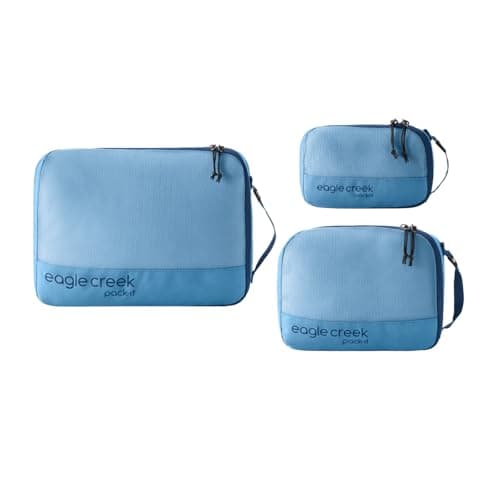
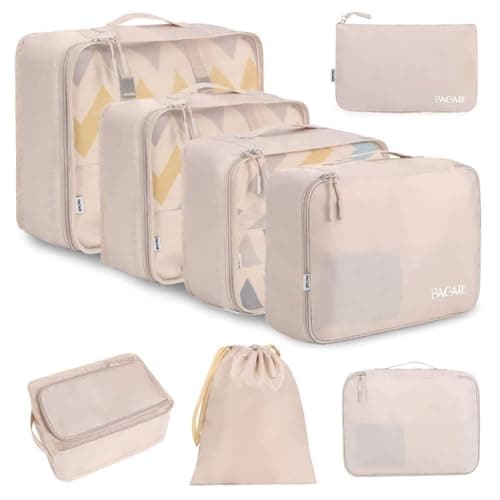
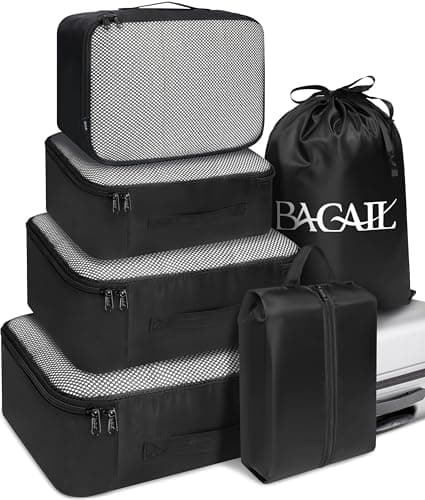
Packing cubes are zip-up fabric boxes. You sort clothes into them by category — tops in one, underwear in another, one per person on a family trip — and the suitcase becomes a set of labeled drawers instead of a heap. They compress mildly, mostly by holding clothes in a defined shape rather than by squeezing air out. The gain is that you stop unpacking the whole bag to find one shirt.
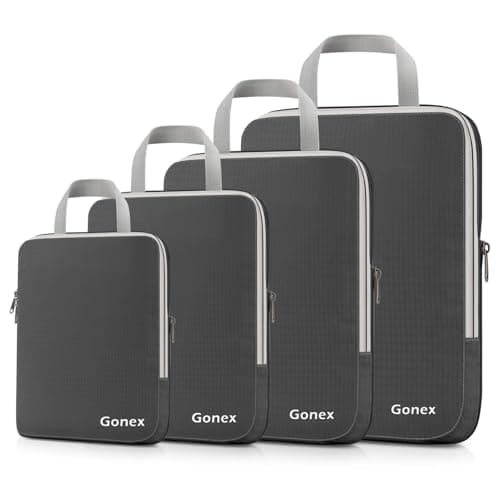
Compression bags and compression cubes exist to remove air. The zip-style versions have a second zip that pulls the bag down onto its contents; the roll-style versions are valved plastic bags you squeeze the air out of by rolling. Either way the goal is volume, and the reduction is real — enough to change whether a trip fits in a carry-on.
The honest trade-offs
Compression costs you three things, and nobody selling it mentions them.
- Creases. Squeezing air out of clothes puts wrinkles in them. Fine for t-shirts, socks and gym gear. Bad for shirts, dresses and anything with a collar. If they're traveling with tailoring, compression is the wrong tool and a garment folder is the right one.
- Weight, not just volume. Compression makes things smaller, not lighter. It's genuinely possible to compress a bag into carry-on dimensions and still be over the weight limit — and airlines weigh as well as measure. A cheap luggage scale is the companion purchase.
- The return trip. Roll-style vacuum bags need to be re-rolled by hand, and a hotel room is a worse place to do that than a bedroom floor. Zip-style compression cubes don't have this problem, which is why we generally prefer them for actual travel.
Plain cubes cost you almost nothing by comparison. They add a little weight and a little bulk from the fabric itself, and that's it.
Which one for which trip
Buy plain cubes for: family trips where bags are shared, multi-stop itineraries where you're living out of the case, business travel where shirts matter, and anyone whose complaint is "I can never find anything."
Buy compression cubes for: carry-on-only travel, cold-weather trips where bulky knitwear is the problem, long backpacking trips, and anyone whose complaint is "it doesn't fit."
Buy both, honestly: the setup most experienced travelers land on is plain cubes for the things they need to find and one compression cube for bulk items — the jumper, the jacket, the towel. Sets are cheap enough that this isn't an extravagance.
Zip compression or roll-and-vacuum?
Two different products get called "compression bags" and they behave very differently.
Zip compression cubes are fabric cubes with a second compression zip. They're reusable indefinitely, they work identically in both directions of a trip, and they still function as organizers. This is the version we recommend for travel.
Roll-up vacuum bags are plastic and squeeze more air out, so the volume reduction is larger. They're excellent for storage at home and for one-way packing. The catch is repacking on the road, and plastic bags puncture — a split seam mid-trip means the compression is simply gone.
What neither one does
Neither product makes clothes lighter, neither one creates space in a rigid suitcase shell that's already structurally full, and neither one fixes over-packing. That last one is worth saying plainly: the most common outcome of buying compression is packing more, not carrying less. If the goal is genuinely to travel lighter, the tool is a shorter packing list, not a better bag insert.
For the full ranked shortlist of both types, see our packing cubes roundup, which includes compression models alongside plain ones. If you're buying for someone about to go long-term, our gifts for backpackers list covers where compression fits into the rest of that kit.
How to decide in under a minute
Ask what they complain about
"I can never find anything" means cubes. "It never fits" means compression. "I always over-pack" means neither — that's a list problem, not a bag problem, and buying compression will make it worse.
Check what they wear
Structured clothing — shirts, blazers, dresses — argues against compression and for a garment folder. Casual and technical fabrics compress happily and recover fast.
Count the stops
One destination and back means compression is easy to manage. Six stops in three weeks means repacking constantly, which strongly favors zip cubes over roll-up vacuum bags.
Check the weight limit, not just the size
Compression can get a bag under the size limit and leave it over the weight limit. If they fly budget carriers, weigh the bag before celebrating.
Buy a set, not a single
Mixed sets are the sensible purchase — a few plain cubes for organization plus one compression cube for bulk. It's the configuration most people arrive at eventually, so starting there saves a second purchase.