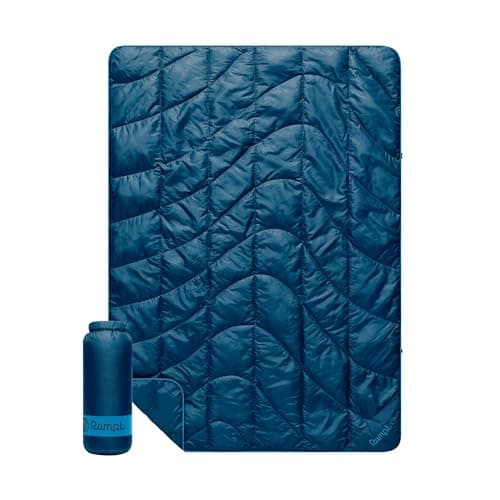
Buy the warmest blanket that still packs small enough to be carried without thinking about it. That is the whole category in one sentence. A travel blanket only works if it is in the bag when the cabin gets cold, and the reason most of them end up in a closet is not that they were insufficiently cozy — it is that they were too big to bother bringing. Warmth is easy to buy. Warmth you will actually carry is the thing worth paying for.
Why the airline blanket is not the answer
Cabin temperature on a long flight typically sits several degrees below what anyone would choose at home, and airlines have been quietly removing the fix. On most US domestic routes the blanket disappeared from economy years ago. Where one still exists, it is a thin polyester square roughly the size of a bath towel, handed out sealed, and it stops somewhere around the knees of an average adult. It is a gesture, not insulation.
That leaves the traveler with three options: be cold, wear a coat that then has to be carried through two airports, or bring a blanket that is designed to be brought. The third option is what this page is about, and it is also why a travel blanket is a genuinely good gift. It solves a problem the recipient complains about every single trip and almost never gets around to fixing, because a blanket feels like the kind of thing you should not have to buy.
It is worth being honest about what it does not fix. A blanket makes a cold seat tolerable; it does not make a bad seat comfortable. If the complaint is really about sleep rather than temperature, a neck pillow and a sleep mask do more, and the three of them together are the standard comfort kit for a red-eye.
The four things that separate a good travel blanket from a bad one
1. What is actually inside it. This is the decision that everything else follows from, and there are only three real answers. Fleece is a single layer of brushed polyester: soft, cheap, washes well, and warm only in the sense that any layer is warm. Synthetic insulation is loose fiber trapped between two thin shell fabrics — the same construction as a puffy jacket — and it holds far more warmth per ounce than fleece because the warmth comes from trapped air rather than from the cloth itself. Wool, usually merino or a cashmere blend, does something neither synthetic does: it regulates. It keeps you warm without the clammy feeling that plush polyester produces once the cabin heats up on descent.
The practical version: if the person is genuinely, reliably cold on planes, buy insulation or wool. If they just want something soft over their legs, fleece is fine and costs a fraction as much. Buying an expensive fleece blanket is the most common mistake in this category — you are paying a premium for a pattern, not for warmth.
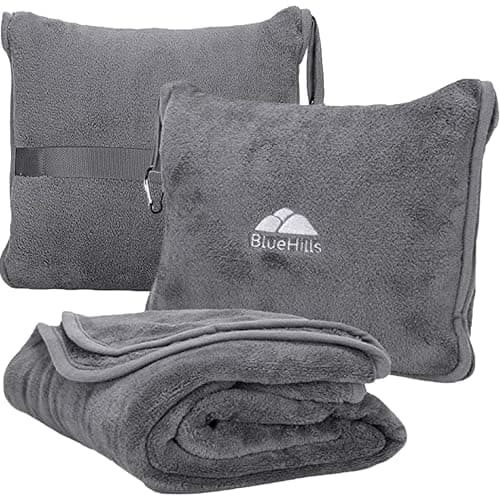
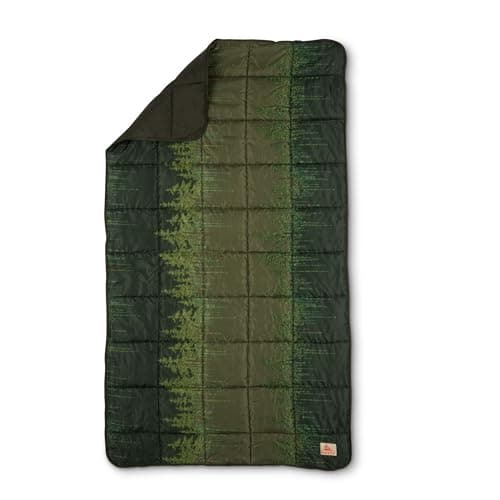
2. How it packs, and what it attaches to. A blanket that has to go inside the carry-on competes with everything else in there and loses. The good ones solve this in one of two ways. Either they compress into a stuff sack small enough to disappear — the Rumpl goes to roughly four by ten inches, about a water bottle — or they fold into their own case and hang off the outside of the bag on a luggage sleeve or a carabiner clip, which is what the BlueHills and the BEDELITE do. Both approaches work. What does not work is a loose blanket in a tote, which is how a blanket gets left at home on trip two.
3. Coverage. Blanket dimensions are printed on every listing and skimmed by almost every buyer. They matter more here than in bedding, because a travel blanket is used sitting up in a seat, where a short blanket leaves either your shoulders or your feet exposed and you spend the flight negotiating between them. Roughly 60 by 40 inches is the workable minimum for an adult. Anything much smaller is a lap blanket, whatever the listing calls it, and full-length coverage means something in the 75-inch range — which is a camp blanket, with the weight that implies.
4. How it washes. Travel blankets get used on airport floors, in rental cars and against headrests that a hundred other people have used. Machine washable is not a nice-to-have. It is the difference between a blanket that stays in rotation and one that quietly stops being used after the first spilled coffee. Wool is the honest exception: it needs hand-washing or dry cleaning, and that is a real trade-off to weigh rather than a detail to skip past.
Fleece, puffy and wool — what the spec numbers mean
Three numbers show up constantly in this category and only one of them is about warmth. GSM — grams per square meter — is the weight of the fabric; a 270 GSM flannel is a substantial cloth and a 200 GSM fleece is a light one, but GSM says nothing about trapped air, so it only lets you compare fleece to fleece. Denier (the 30D or 75D in a shell spec) is thread thickness: a 30D ripstop is lightweight and a 75D taffeta is tougher. Denier tells you about durability and packability, never about warmth. Fill weight — the 150g figure on an insulated blanket — is the only number that is actually about heat, and it is only comparable between blankets using the same kind of fill.
The other spec worth understanding is the water-repellent finish, listed as DWR and increasingly as PFAS-free or PFC-free. This is a surface treatment, not waterproofing. It buys you time to wipe up a drink before it soaks through, and it keeps damp grass from wetting a blanket straight through at a campsite. It does not make a blanket rainproof and no manufacturer claims it does.
The 2-in-1 pillow question
A large share of travel blankets sold today fold into a zippered case that becomes a pillow. It is a genuinely good idea and it is also oversold. The good version — the BlueHills is the clearest example — has a plush case sized so the folded blanket fills it properly, plus a strap that slides over a suitcase handle. Fold it neatly and you get a real pillow. Stuff it in a hurry and you get a lumpy cushion, which is worth knowing before you gift one.
What a 2-in-1 will never be is small. The pillow is the packed size, and that packed size is a pillow. If the person you are buying for measures their packing in cubic inches — the carry-on-only crowd — a compressible insulated blanket in a stuff sack is a better fit, and they can keep using the neck pillow they already own. If the person always travels with a roller bag and hates carrying things, the 2-in-1 clipped to the handle is the more useful design.
Planes, cars and campsites are three different purchases
A blanket bought for flights is optimized for packed size, coverage and the ability to attach to a bag. A blanket bought for road trips can be much larger and heavier — nobody carries anything in a car — and should be something you do not mind being sat on by a dog. A blanket bought for campsites and outdoor evenings needs a tough shell and a water-repellent finish, and it is usually the wrong shape for a plane seat.
Buying one blanket for all three means compromising on all three. If you only know that the person travels, the flight-focused blanket is the safer default: it works in a car, and it is the only one of the three that works on a plane. If you know their travel is mostly road trips or camping, size up and buy the tougher shell instead.
Can you bring a travel blanket on a plane?
Yes. A blanket is not a restricted item, it can be carried loose or in a bag, and it does not go through security any differently from a jacket. The only rule that touches it is the carry-on allowance: a blanket stuffed inside your bag counts toward that bag's size, which is why a luggage-sleeve or clip design is genuinely useful — it rides outside, with your coat, rather than competing for space you have already paid for. If the recipient is close to their airline's limit already, our carry-on size rules guide explains where the lines actually fall.
One related point that catches people out: a blanket does nothing for the other half of long-haul discomfort, which is circulation. Sitting still for eight hours makes ankles swell whether or not your legs are warm. That is what compression socks are for, and the two together cover more ground than either alone.
Buying one as a gift
Travel blankets are one of the more forgiving travel gifts, because there is no sizing to get wrong and no compatibility to check. Four notes that make the difference between a good one and a great one.
First, buy for the temperature complaint you have actually heard. If they have told you they freeze on flights, that is a mandate for insulation or wool, and a plush fleece will quietly disappoint them. If they have never mentioned being cold, the fleece is genuinely the better gift — softer to the touch, easier to wash, and it will not sit unused because it felt too nice to drag through an airport.
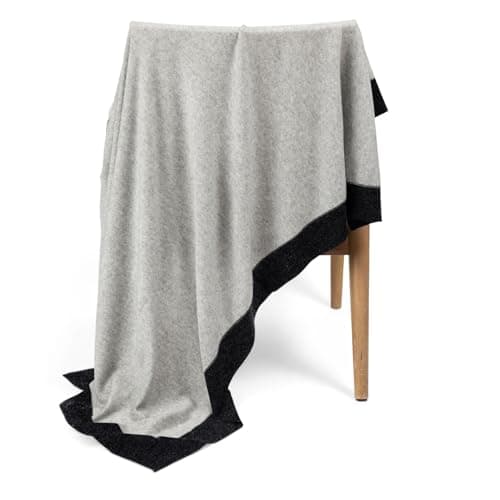
Second, match the look to where they travel. A camp blanket in a bright outdoor print reads completely differently in a hotel lounge than it does at a trailhead, and a cashmere throw looks out of place on a campsite. Our business travelers list and adventure travelers list pull in opposite directions here for the same reason.
Third, blankets are one of the best bundle anchors on this site. A blanket, a sleep mask and a neck pillow in one box is a complete long-haul comfort kit and it presents far better than any of the three alone — the whole idea behind our long-flight accessories roundup.
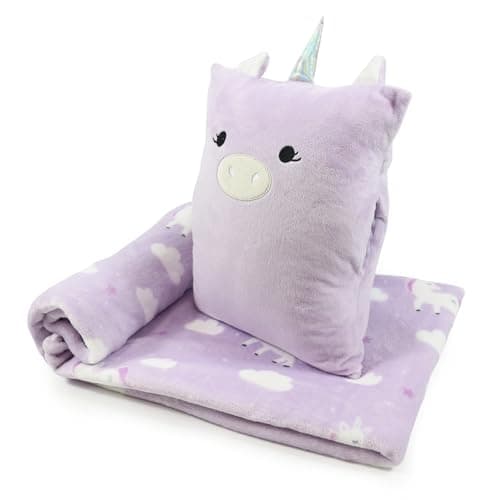
Fourth, for children, buy the kid-sized version rather than a small adult blanket. A 40 by 60-inch blanket fits a child in a plane seat; a 60-inch-wide adult blanket ends up on the cabin floor within an hour. More travel gifts for kids follow the same rule.
How we ranked these
Scored against our published rubric from published specifications, manufacturer documentation and aggregated owner feedback. We do not run a lab and we do not claim measurements we have not taken. Warmth per packed inch carries the most weight under usefulness and portability, because it is the trade-off that decides whether a blanket travels or stays home. Washability moves the durability score, which is why the most expensive pick here does not win it. Price per square inch of coverage drives value, which is why the cheapest pick scores highest on that axis and still does not win overall.
How to choose a travel blanket
1. Are they actually cold, or just uncomfortable?
Cold means insulation or wool. Uncomfortable means something soft, and a fleece throw at a fraction of the price does that job just as well. This one question eliminates most of the options on any listing page.
2. Where will it be used — plane, car, or outdoors?
Planes reward packed size and an attachment point. Cars do not care about either, so buy bigger. Outdoors means a tough shell and a water-repellent finish, and accepts the weight that comes with them.
3. How does it travel — inside the bag or outside it?
A compressible blanket in a stuff sack goes inside and disappears. A folding blanket with a luggage sleeve or a clip rides outside and never competes for carry-on space. Both are fine; a blanket with neither ends up carried loose, which is how it gets left behind.
4. Is the coverage enough for the person?
Roughly 60 by 40 inches is the minimum for an adult in a seat. Around 75 inches long gives full-length coverage and belongs in a car or at a campsite. Around 40 by 60 inches is a child's blanket, and buying an adult one for a small child just puts it on the floor.
5. Who is going to wash it, and how?
Machine washable is the default requirement for anything used on planes and in cars. Wool is the one legitimate exception, and only when you know the recipient will hand-wash it. If you cannot picture them doing that, buy a different blanket.
6. Does it need to look like a gift?
Technical blankets look like gear and camp blankets look like camping. A wool throw in a matching pouch or a jacquard fleece in its own case presents like a present without any wrapping. That matters more for a gift than any spec on this page, and it is the reason the picks here span materials rather than ranking one construction as the answer.
What you should spend
Fleece travel blankets are the cheapest thing on this page by a wide margin and are a legitimate buy, not a compromise. Insulated packable blankets and camp blankets sit in the middle, and that is where the warmth-per-ounce jump happens. Cashmere and merino blends are the splurge tier, bought for feel and presentation rather than for warmth per dollar. We publish a live price on every pick rather than a number that goes stale — the buttons above show what each one costs today.