Almost all packing advice addresses the wrong problem. Rolling versus folding is worth a few percent. Taking four fewer items is worth thirty. Start with what goes in, not how it's arranged, and the arranging gets much easier.
Step one: the count, not the technique
The dominant packing mistake is one outfit per day. It feels prudent and it's why bags don't close. Almost everyone re-wears trousers, jumpers and outer layers, and laundry exists in every country on earth.
A workable rule for a week: two or three bottoms, four or five tops, one outer layer, two pairs of shoes including the ones on your feet, and underwear and socks for the trip length. That's it for most trips, and experienced long-term travelers live out of roughly this indefinitely.
This page is about technique — how to fold, roll and load. If the question is which gear makes carry-on-only possible in the first place, that is the kit list rather than the method, and it lives in the one-bag travel packing list.
The test worth applying to every item: what happens if I don't take this? If the answer is "I buy one there for very little" or "nothing", it stays home. The exceptions are medication, chargers and anything genuinely hard to replace at the destination.
Step two: roll, fold or cube — the honest answer
Rolling is better for casual and technical fabrics: t-shirts, jeans, gym clothes, underwear. It resists hard creases and packs into gaps.
Folding is better for structured clothing: shirts, blazers, dresses. A garment folder that keeps them flat beats rolling them into a ball, and it's why business travelers use folders rather than cubes.
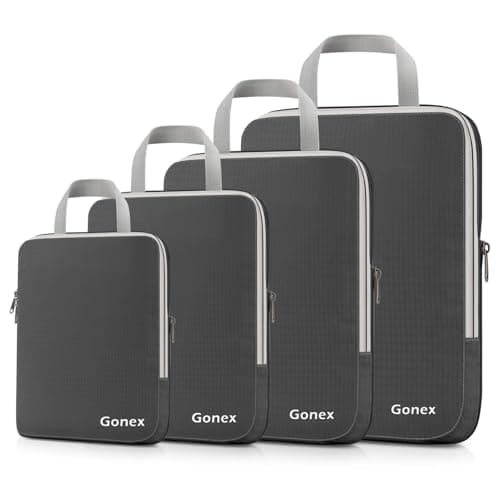
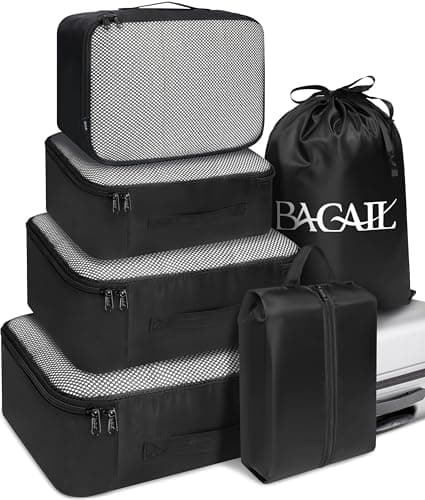
Cubes don't really change volume — they change findability. That's still worth a lot, because the real cost of a badly packed bag is unpacking it entirely to find one shirt in a hotel room.
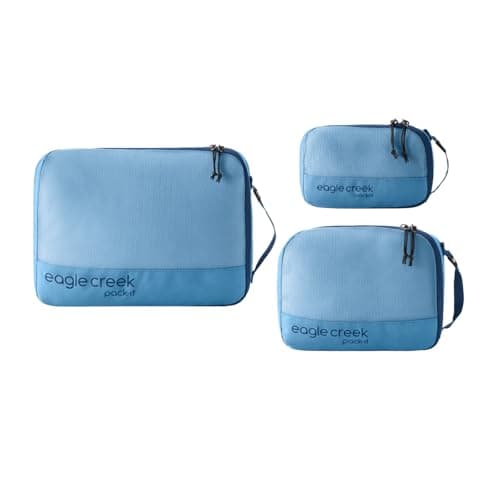
Compression genuinely reduces volume, and it costs you creases and nothing in weight. It's the right tool for bulky knitwear and jackets, and the wrong one for anything with a collar. We work through that trade in packing cubes vs compression bags.
Step three: the loading order
For a wheeled carry-on, packed standing up:
- Heaviest at the wheel end. Shoes and anything dense go closest to the wheels, so the bag doesn't tip backwards when it's upright and rolling.
- Shoes at the edges, soles outward, stuffed with socks, chargers or underwear. Shoes are the single biggest waste of space if packed empty.
- Cubes as the middle mass. Clothes in cubes fill the main cavity as stackable blocks rather than a shifting heap.
- Fragile and structured items on top, away from the crush.
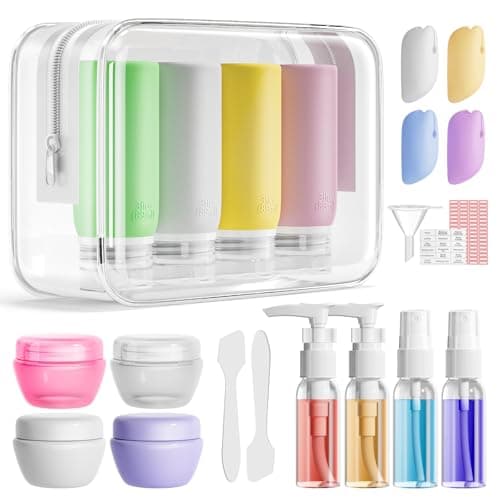
- Liquids bag at the very top, or in an external pocket. It's coming out at security, and burying it under a laptop is how queues happen.
For a clamshell backpack the same logic applies rotated ninety degrees: heavy items closest to your back, so the weight sits over your hips rather than pulling backwards off your shoulders.
Step four: the personal item is not an afterthought
The personal item is where the trip actually happens: laptop, documents, medication, a change of clothes, chargers, and anything you'd be genuinely stuck without if the cabin bag got gate-checked. That last point is the one to internalize — on a full flight, cabin bags get taken at the door, and whatever's in them is gone until the destination.
Anything irreplaceable — passport, medication, jewelry, camera, keys — lives in the personal item, always. We make the same point in the jewelry case roundup, because valuables in the hold are where airline liability quietly stops.
Step five: weigh it, and leave room
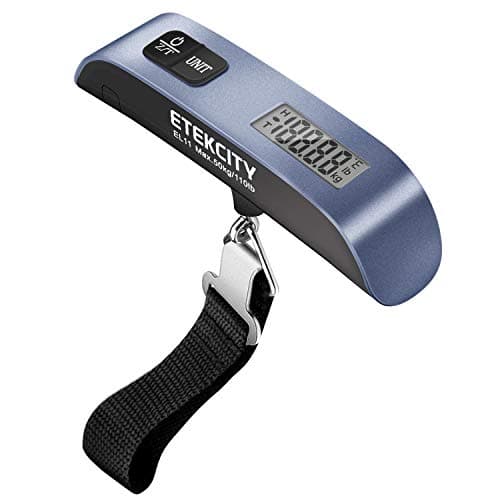
If the airline weighs cabin bags — and many outside the US do — weigh it at home. A cheap luggage scale settles the question in the bedroom instead of at a desk with a queue behind you, and it's one of the best-value objects in travel.
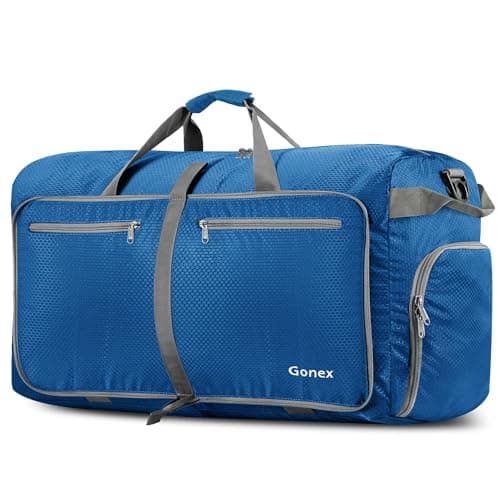
Leave a little space too. A bag packed to absolute capacity is a bag that can't absorb a souvenir, a gift, or the jumper you take off in the airport. A packable duffel folded flat in the bottom solves the return leg for very little weight.
And check the size against the specific airline before you go — the limits vary more than people expect, which is the whole subject of carry-on size rules.
The short version
Take less. Roll casual, fold structured, compress bulky. Heavy at the wheels, liquids on top, valuables in the personal item. Weigh it. Leave room. Everything else is detail, and no technique rescues a bag that has four days too many clothes in it.
What actually helps, in order
1. Packing cubes
For findability rather than volume — the real cost of bad packing is unpacking everything to find one shirt.
2. One compression cube
For the jumper, the jacket, the towel. Volume reduction where creases don't matter.
3. A garment folder
Only if there's tailoring. It's the difference between arriving ready to wear and ready to iron.
4. Refillable bottles
Compliant by size and reusable forever, which removes the travel-minis purchase permanently.
5. A luggage scale
The cheapest insurance in travel if the airline weighs cabin bags.
6. A packable duffel
Flat in the bottom on the way out, a second bag on the way home.