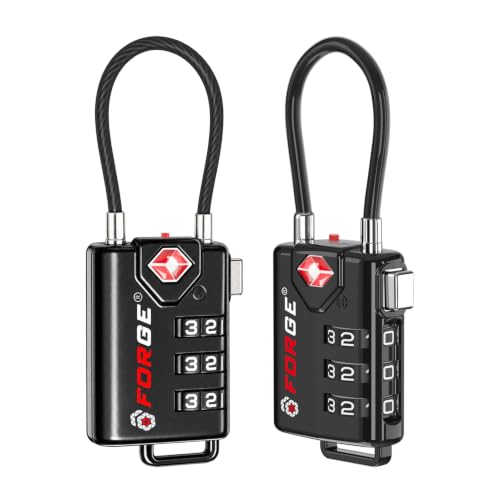
A travel lock is a seal, not a safe. Every lock on this page can be opened by someone who is not the owner, and two of the three routes in are published policy rather than a flaw. That sounds like a reason not to buy one. It is actually the reason to buy the right one: once you know a lock cannot protect anything valuable, you stop shopping for strength and start shopping for the two things a travel lock really does deliver: deterrence against an opportunist, and evidence that the bag was opened at all.
What “TSA approved” actually means
It means the lock can be opened without being destroyed. In TSA’s own words, the agency “has worked with several companies to develop locks” that its officers can open, and those locks open with “universal ‘master’ keys.” If a locked checked bag has to be inspected and cannot be opened any other way, TSA says plainly that “the locks may have to be cut.” Either way the bag gets opened; the only question the lock answers is whether it is still attached afterward.
That is a narrower promise than the phrase suggests, and it is worth separating from the looser claims elsewhere in travel retail. Unlike the “TSA approved” first aid kit, which TSA has no scheme for at all, recognized locks are a real arrangement with real standards behind them — the Travel Sentry red diamond and the Safe Skies torch are the two marks to look for, and Travel Sentry says its standard is used across 80 countries and some 800 airports. The honest caveat is simply what the arrangement is for: it exists so the lock survives the inspection. It is not a security rating, and nobody involved claims it is.
One consequence follows immediately, and it decides how you should think about the whole purchase. A lock that opens to a master key held by thousands of people in hundreds of airports is not a lock you put in front of anything you would be upset to lose. Passports, cash, medication, laptops, camera bodies and jewelry travel in the cabin, with you. We make that case in full in how to keep valuables safe while traveling, and it has not changed: the only reliable protection for something valuable is not checking it.
So what is a lock genuinely good for?
Three things, all of them real.
- It stops the casual hand. Baggage theft is mostly opportunistic: a bag sitting unattended, an unzipped pocket, thirty seconds of privacy. A lock turns a ten-second opportunity into a problem that needs tools and time, and almost nobody bothers.
- It keeps the bag shut. An overpacked suitcase on a conveyor belt does not need a thief to spill its contents. Holding two zip pulls together is, unglamorously, the most common thing a travel lock actually accomplishes.
- It tells you something happened. This is the underrated one, and the reason our top pick is what it is. If an officer opens your bag, TSA puts a “Notice of Baggage Inspection” inside it. A lock with an open-alert indicator tells you to go looking for that notice — and to check the contents — before you have left the airport, rather than three days later in a hotel room.
And the thing a lock is not good for, stated once so the rest of this page is honest: securing a soft-sided bag against a determined person. A lock through two zip pulls does not secure the zip chain, the seams or the fabric. It secures the pulls. On a hard shell with a latching lid the geometry is better, which is one reason the lock shapes differ as much as they do.
The failure mode nobody shops for
Here is the number that should actually change your purchase. TSA published a photograph of “244 locks pulled from under an airport baggage handling conveyor belt” — one month, one New York airport. Not cut off by screeners. Knocked off, snagged, torn away by the machinery.
That is the real-world lifespan problem with this category, and it has three practical consequences. Buy a multipack, not a single lock, because you will lose one. Do not spend serious money on an object with that attrition rate. And prefer a lock body that does not present a big loop of cable for a belt to catch — which is a genuine point in favor of the wide-bodied Master Lock, and a genuine cost of the cable designs we otherwise like.
How we picked
Four criteria, weighted for a gift buyer rather than a security auditor.
- Does the shackle fit the bag they own? The single most common failure at the point of use. A flexible cable threads through two widely spaced zip pulls, a backpack, a locker hasp and a strap. A thin rigid shackle seats properly in a hard-shell latch and through tight zip pulls where a thick cable will not go. There is no universal shape, so this question comes first.
- Combination or key? A combination has nothing to lose and is slower to use. A key is instant and is itself losable. For one person with one bag, combination. For a household with four bags, one key that opens all of them is transformative.
- Does it tell you it was opened? Only one design here does, and it is the only genuinely informative feature anyone sells in this category.
- Is it a multipack? Because of the conveyor-belt number above. One lock is almost always the wrong quantity.
We compile published listing specifications, manufacturer descriptions and TSA’s own published statements. We have not attacked any of these locks and we do not publish a security rating, because any such rating from a gift site would be invented. Where a listing does not publish a figure, we say so rather than carrying an estimate.
Which lock for which traveler
They check a bag and want to know if it was searched. The Forge open-alert pair. The indicator changes state when the master key has been used, which converts a vague worry into a specific action: look for the inspection notice, check the contents, do it before you leave the terminal. A two-pack covers the suitcase and the day bag, which is the right quantity.
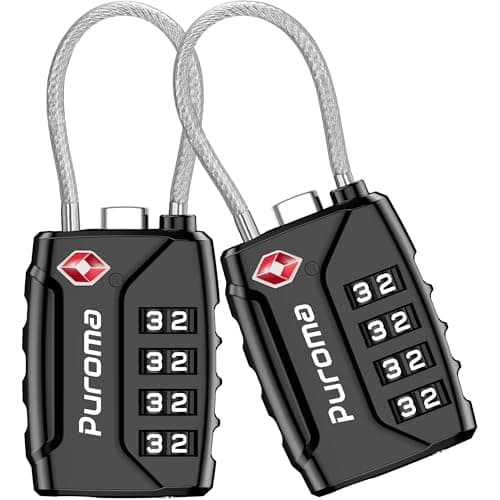
They just need locks and do not want to think about it. The Puroma two-pack. Four-digit combination, flexible cable, a pair in the box, and cheap enough that losing one to a conveyor belt is an annoyance rather than a loss. This is the default answer and it is on our travel gifts under $25 list for a reason.
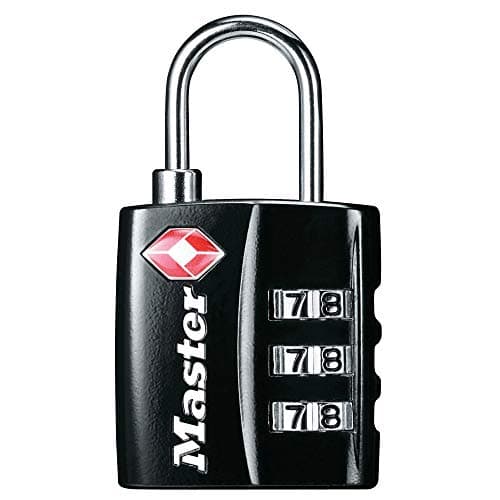
The bag is a hard shell. The Master Lock 4680DBLK. Wide body, thin rigid shackle — the shape that actually sits flush in a latch rather than swinging off it, and the shape least likely to be ripped away by baggage machinery. The trade is that it is one lock and it will not reach around anything.
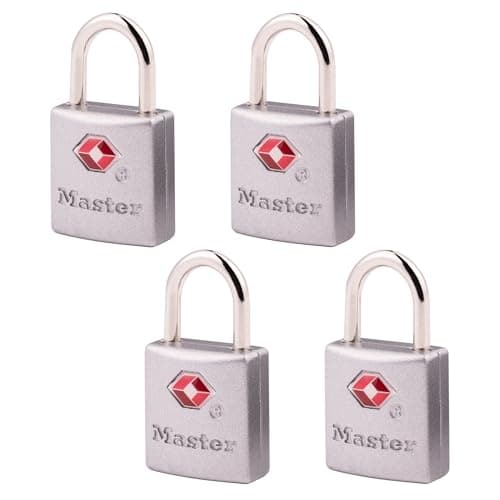
A family, or more than two bags. The Master Lock 4683Q keyed-alike four-pack. One key opens all four, there is no combination to forget halfway through a trip, and brass and nickel survive humidity far better than painted zinc — which matters on a cruise or a coastal trip. Keep the key somewhere other than the bag it opens, which is the discipline this pick demands.
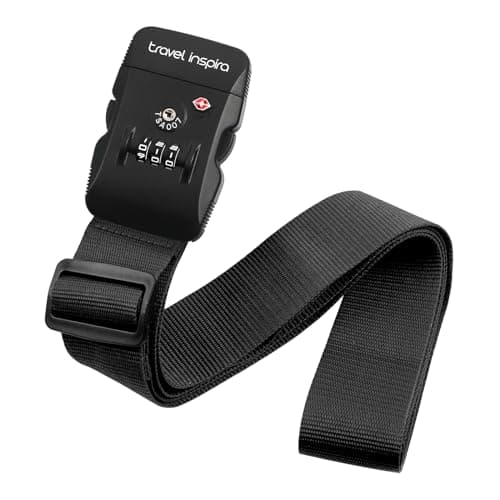
An older suitcase they refuse to replace. The Travel Inspira strap. This is not a theft product and we would rather say so: it is a nylon band that holds a bag together when a zip bursts or a latch pops, with a TSA lock built into the buckle and an address tag on it. If the recipient’s actual problem is a bag that is coming apart, this is the only thing on the page that addresses it — though the honest answer may be a new carry-on.
The cabin-bag cases: hostels, trains and beaches
Most writing about luggage locks assumes a checked suitcase, which quietly excludes the situations where a lock does the most work. A hostel locker needs a shackle long enough to reach a hasp. An overnight train in Europe — a real and frequently searched case — means a bag on a rack, out of sight, with strangers moving past it, and there a cable lock threading a zip pair to the luggage rack itself is doing something no checked-bag lock ever does. A beach day means a daypack nobody is watching.
For all three, buy a cable, and buy a combination rather than a key, because the key will end up in the swim shorts. The cable’s reach is the entire point: it is the only shackle here that can tie a bag to something fixed. That is also the clearest argument against treating the rigid-body lock as the default pick even though it survives baggage systems better.
What a lock cannot do, and what we would buy instead
It will not find a lost bag. That is a different product and a far more useful one — see our luggage tracker roundup and how to not lose your luggage, because mishandled baggage is a vastly more likely outcome than theft.
It will not identify the bag. A luggage tag does that, and a strap does it partially by making the bag visually distinct on a carousel.
It will not stop an airline weighing your bag. If the recurring problem is overweight fees rather than security, a luggage scale is the gift that actually saves money, and it saves it twice a trip.
As a gift, and how to make it land
On its own, a pair of locks is a stocking filler. It is a good one — it is small, it is genuinely used, and nobody buys themselves locks until the trip they need them for is 24 hours away. But it reads as supplies, not as a present, so it belongs in a bundle. A set of locks plus packing cubes plus a tag is a coherent checked-bag kit for a modest amount of money; we set out that logic in how much to spend on a travel gift.
One more thing worth saying to a gift buyer. Of the two unglamorous checked-bag accessories we rank, the lock is the one with the ceiling on its usefulness and the laundry bag is the one that gets used on every single trip. If you are choosing between them for someone who travels a lot, the laundry bag is the better object. The locks are the better add-on.
And if the worry the gift is answering is theft in general rather than a checked bag in particular, the locks are one item in a wider kit. Our anti-theft travel accessories roundup ranks that kit on the same principle as this page — what adds time and friction to a thirty-second opportunity — and starts with the one piece that works without being remembered.
Match the shackle to the bag, first
Flexible cable for soft-sided bags, backpacks, hostel lockers and anything you want to tie to a luggage rack. Thin rigid shackle for hard-shell latches and tight zip pulls. If you do not know which bag they own, buy the cable: it fits more situations, at the cost of being easier for baggage machinery to snag.
Look for the red diamond or the torch
Travel Sentry’s red diamond and the Safe Skies torch are the marks that mean an officer can open the lock with a master key rather than cutting it. A lock without one, on a checked bag going through a US airport, is a lock you may not get back.
Buy two, or four — not one
Locks disappear into baggage systems at a rate the industry does not advertise. TSA’s own photo of 244 of them under a single conveyor belt in a single month is the honest picture. Multipacks are also how you cover the suitcase and the day bag, which is the realistic need.
Combination for one person, keyed-alike for a household
A combination cannot be lost; a key cannot be forgotten. For a solo traveler the combination wins because a lost key strands a bag abroad. For a family with four bags, one key for all of them removes four separate things to remember, and that is worth the risk.
Set the combination to something you will not reset
Every combination lock here is resettable, which is a feature at home and a hazard in a hotel room. Set it once, write it somewhere that is not in the bag, and leave it alone.
Do not put anything important behind it
The master-key system is the whole design, not a weakness, and a lock on a checked bag is a deterrent and a seal. Valuables, documents, medication and electronics go in the cabin. If that advice conflicts with the gift you are imagining, the gift to buy is a better personal item bag.