A travel gift card is the right choice when the recipient already has a specific trip booked, when you are contributing to something bigger than you could buy alone, or when you genuinely do not know them well enough to choose. Outside those three cases it is a transfer of money with a logo on it, and both people in the transaction usually know that. Experience vouchers have the opposite problem: they feel generous and thoughtful, and they quietly hand the recipient a scheduling obligation.
What is actually wrong with a gift card
Not thoughtlessness — the real issue is narrower than that. A gift card does two things a physical gift does not. It states the exact amount you spent, which removes the pleasant vagueness that lets a gift be judged on its aptness instead of its price. And it moves the work of choosing onto the person receiving it, at which point they are shopping for themselves with your money.
There is also a quieter cost. A brand-locked card is worth its face value only to someone who was going to spend at that brand anyway. An airline credit is money that has to be redeemed with that airline, on that airline's routes and prices, and often cannot be used for the parts of a ticket people most want covered. A hotel chain card is the same arrangement with a different logo. Before buying one, check whether the recipient is loyal to that brand — if they are not, a general-purpose card is worth more to them even though it looks less travel-specific.
The three situations where a card wins outright
They have a trip booked and they are saving for it. Now the money is not abstract. It is the excursion, the meal on the last night, the checked bag they were going to skip. Money towards a named, dated trip is a genuinely good gift, and it beats a physical present that has to go in the bag they are trying to keep light.
Several people are pooling for something big. A group contributing towards one significant thing — a flight, a milestone trip, a piece of gear well beyond one person's budget — is the most efficient gifting there is. Nobody wants four separate small presents when one large one was possible.
You do not know them well. A colleague, a newly-acquired in-law, a Secret Santa. In this situation the honest signal of "I did not want to guess" is better received than a confidently wrong object. Our how much to spend on a travel gift guide covers what the amount says in each of these settings.
Experience vouchers: generous, and secretly homework
An experience gift — a tour, a tasting, a balloon flight, a spa day — reads beautifully on the card and then has to be arranged. That is the part nobody accounts for. Before buying one, check four things, because each of them has ruined an experience gift for somebody:
Expiry. Retail gift cards in the US commonly run for years, but experience and tour vouchers frequently do not — twelve months is a common window, and a voucher with a short fuse converts a present into a deadline.
Geography. An experience is tied to a place. If it is not where they live or where they are already going, you have gifted them a trip they now have to fund to redeem your gift.
Who else has to be free. A voucher for two requires a second person's calendar. A voucher for a couple requires both of them to want it, which is a bigger assumption than it looks.
Transferability. If it is named and non-transferable, it cannot be passed on when the date does not work. That is the difference between a gift that gets used and one that expires quietly.
The hybrid that actually works
Give the voucher and give one small physical thing to unwrap alongside it. This solves the entire problem in one move. The card carries the value; the object carries the thought and gives the moment something to be. It also means the gift exists in the room, which matters more than anyone admits when everyone else is opening boxes.
The object should point at the trip rather than compete with it. Three work particularly well:
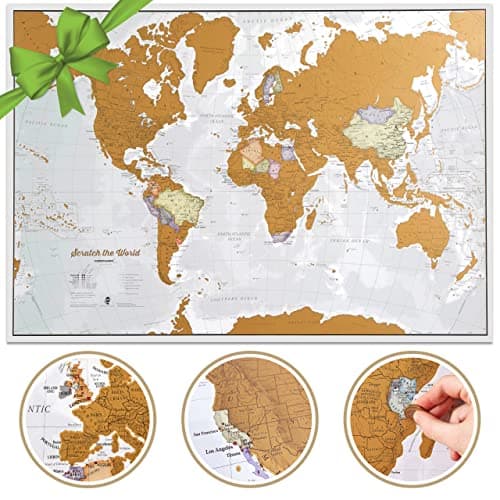
A scratch-off world map. It turns the voucher into a plan — you hand over money towards a trip and something to scratch when they get back. It needs a wall and ideally a frame, and it lands flat for someone who has barely traveled yet.
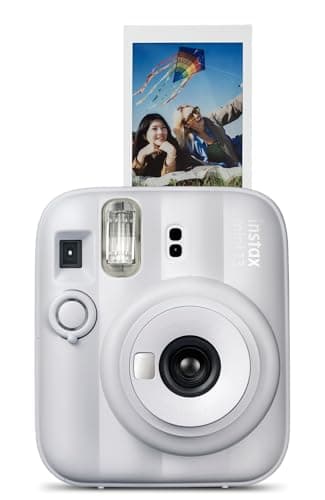
An instant camera. It brings the experience home as prints instead of another phone folder nobody reopens. Buy film with it, or the gift stalls on the first day.
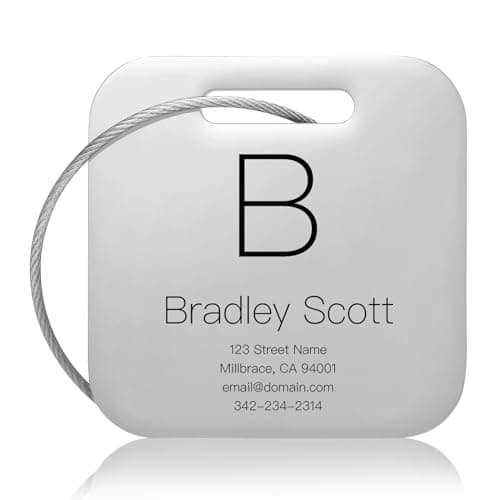
Engraved luggage tags. The cheapest of the three and the one most likely to be used on the very trip you are funding. The engraving is the personal part; the steel is the part that survives a baggage belt. More options on that theme are in our personalized travel gifts guide.
How to hand over an intangible gift
Write down what it is for. "Towards the Lisbon trip" or "for the day you finally do the diving course" costs nothing and does the work that the card cannot: it shows you were paying attention. A bare card with a number on it says the amount; a card with a sentence on it says the thought.
Give it early enough to be useful. Money towards a trip is worth considerably more before the booking than after it, when it becomes reimbursement.
And do not send a card because you ran out of time. That is the version recipients can spot, and it is also entirely avoidable — most of the small gifts on our stocking stuffers and under $25 lists arrive quickly and say more.
When a physical gift is simply better
If the person travels regularly and owns imperfect gear, an object beats a voucher nearly every time — because you are solving a problem they have stopped noticing. The worn-out wash bag, the neck pillow that never worked, the phone charger that dies mid-flight. That is the whole premise of what to get someone who travels a lot, and it is why the traveler-type lists on this site exist: matching the object to how somebody actually travels is the part a gift card cannot do for you.
The exception worth naming is the traveler who already owns everything. There, a voucher towards an experience often does beat a fifth gadget — we make that argument in gifts for travelers who have everything.
There is one occasion where the weightless gift is not a compromise at all but the correct answer: somebody emigrating. A person packing their life into two checked bags cannot afford a kilo of your good intentions, so a transfer, a subscription or a gift card that works in the destination country genuinely beats an object — the reasoning is in gifts for someone moving abroad.
The occasion where a contribution most often beats an object is a honeymoon, where the trip is booked and the luggage is already allocated. Honeymoon gifts for couples covers that case, including the honest note on region-locked cards.