Skip to content
Jet & Jot

03 — Buying Guides

Travel Adapter vs Voltage Converter

An adapter changes the shape of the plug. A converter changes the electricity. Almost everyone only needs the first, and the people who need the second usually don't know it.

By Stephen V.Updated How we choose
#ad

We earn a commission when you buy through our Amazon links, at no extra cost to you. It never changes the pick, and we say plainly when the cheaper option is the better buy. How this works.

An adapter changes the shape of the plug. A converter changes the voltage. They are completely different products and only one of them is in most people's bags. This is the confusion that destroys hair dryers, curling irons and travel kettles every summer, and it takes about ninety seconds to resolve permanently.

The thirty-second version

Different countries run on different mains voltage — broadly, around 110-120V in North America and Japan, and around 220-240V across most of Europe, Asia, Africa and Australia. They also use different physical plug shapes.

A travel adapter is a mechanical shape-shifter. It lets your plug fit the socket. It does absolutely nothing to the electricity flowing through it.

A voltage converter (or transformer) changes the electricity itself, stepping 240V down to 120V or vice versa. It's heavier, more expensive, and most travelers never need one.

How to know which you need: read the brick

Every charger and appliance has its input range printed on it, usually in tiny text on the plug or the power brick. Find the line that starts "INPUT". You'll see one of two things:

  • "100-240V" — this is dual voltage. It handles anything in the world. You need only an adapter. Practically every phone charger, laptop charger, camera charger, e-reader and electric toothbrush made in the last fifteen years says this.
  • "120V" only (or "220-240V" only) — this is single voltage. Plugging it into the wrong country's supply through a plain adapter will damage it, sometimes spectacularly. This is where a converter is required.

That's the whole test. If someone is travelling with a bag of USB chargers and a laptop, they need an adapter and nothing else.

The things that actually catch people out

The single-voltage survivors are almost all high-wattage heating appliances: hair dryers, straighteners, curling irons, travel kettles, some electric shavers and some medical devices. These are exactly the items people pack without thinking about, and exactly the ones that die.

Worse, they're also the items a cheap converter handles badly. High-wattage heating elements draw a lot of power, and many travel converters are rated only for low-wattage use or for short periods. Running a 1,800W hair dryer through an undersized converter is a good way to destroy both.

Our honest advice, and it's what experienced travelers do: don't take the hair dryer. Buy a dual-voltage travel version, or use the one in the hotel. Carrying a transformer around the world to run a hair dryer is a losing trade on weight alone.

Two more things adapters don't do

They don't add a ground. Many cheap adapters are two-pin only, which means an appliance that expects an earth connection won't get one. For phone chargers that's fine; for anything with a metal body it's worth using a grounded adapter.

They don't fix frequency. Mains frequency differs too (50Hz vs 60Hz). Modern electronics don't care. A small number of motor or clock-driven appliances do, and no adapter or standard converter addresses it.

What to actually buy

For essentially every traveler: a universal adapter with several USB ports. The USB ports are the real upgrade, because they let one object replace three separate chargers, which is the actual space saving in a bag. Look for a grounded version, and check it covers the specific region — "universal" usually means the four common plug types, which is enough for most itineraries.

We rank the options in our best universal travel adapters roundup, and an adapter appears on our travel gadgets list as one of the four items that earn their place for almost everyone.

One caution on the all-in-one blocks: they're heavy for what they are, and in a loose or worn socket a heavy adapter can sag and lose contact. A plug-kit style set is lighter but easier to lose a piece of. Both are reasonable; buy the block if they're going to one region, the kit if they're crossing several.

The bottom line

Buy an adapter. Read the word "INPUT" on anything with a heating element before it goes in the bag. If it says 100-240V you're done; if it says a single voltage, either leave it at home or buy the dual-voltage travel version of it. Almost nobody needs to own a converter, and the people who think they do usually need to buy a different hair dryer instead.

The short answer

Quick picks

#GiftBest forScorePrice
01
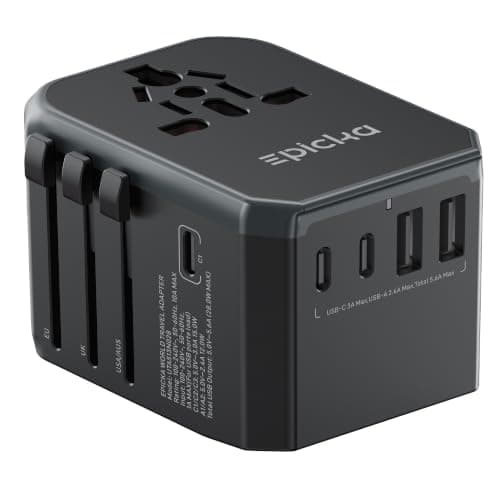
EPICKA EPICKA Universal Travel Adapter
EPICKA Universal Travel Adapter

The best-selling all-in-one adapter — one plug that works in 150+ countries.

The gift for anyone who travels internationally
8.8
$17.99Amazon
02
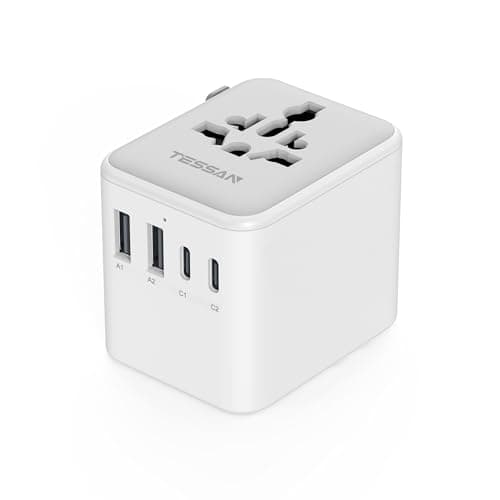
TESSAN TESSAN Universal Travel Adapter
TESSAN Universal Travel Adapter

More outlets and ports than the EPICKA — the pick for a couple's shared charging hub.

Couples and gadget-heavy travelers
8.2
$19.99Amazon
03
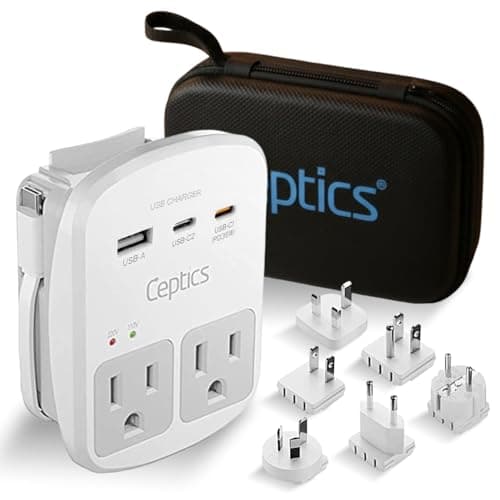
Ceptics Ceptics World Travel Adapter Kit
Ceptics World Travel Adapter Kit

A kit of separate country plugs — the choice when one universal block feels flimsy.

The frequent international traveler
8.0
$34.99Amazon

#ad · Live prices from the Amazon Product API, as of Aug 11, 2026. Where we have no verified live price, we show none — we would rather leave a gap than print a number that has gone stale.

In detail

The picks, in full

01
EPICKA EPICKA Universal Travel Adapter

The gift for anyone who travels internationally

EPICKA Universal Travel Adapter

Covers 150+ countriesUSB-C + USB-A portsBuilt-in fuse + spareSlide-out plugs
8.8/10

The best-selling all-in-one adapter — one plug that works in 150+ countries.

Usefulness
10
Portability
8
Durability
8
Value
9
Giftability
9

Good

  • One device covers the US, UK, EU and Australia plug shapes
  • Charges several devices at once from its own USB ports
  • A built-in fuse plus a spare protects gear from surges

Trade-offs

  • It's a voltage adapter, not a converter — won't run high-watt hair tools abroad
  • Bulkier than a single-country plug

Skip it if…

they're taking a hair dryer or straightener overseas. This changes the plug shape, not the voltage — those need a true converter.

$17.99View on Amazon

$19.9910% off

Price as of Aug 11, 2026. Prices change — Amazon's is the one that counts.

#ad · we may earn a commission from this link to EPICKA Universal Travel Adapter

02
TESSAN TESSAN Universal Travel Adapter

Couples and gadget-heavy travelers

TESSAN Universal Travel Adapter

Multi-outletUSB-C + USB-ACovers 200+ countriesCompact body
8.2/10

More outlets and ports than the EPICKA — the pick for a couple's shared charging hub.

Usefulness
9
Portability
7
Durability
8
Value
9
Giftability
8

Good

  • Extra AC outlets turn one foreign socket into a charging station
  • Plenty of USB ports for phones, watches and earbuds together
  • Great for two people sharing one hotel outlet

Trade-offs

  • Bulkier and heavier than a single-plug adapter
  • Same voltage-adapter-not-converter limitation

Skip it if…

the traveler packs ultralight and carries one device. The EPICKA is smaller; this earns its size only if you're charging a pile of gear.

$19.99View on Amazon

Price as of Aug 11, 2026. Prices change — Amazon's is the one that counts.

#ad · we may earn a commission from this link to TESSAN Universal Travel Adapter

03
Ceptics Ceptics World Travel Adapter Kit

The frequent international traveler

Ceptics World Travel Adapter Kit

Set of regional plugsUS-socket adaptersUSB chargingCompact pouch
8.0/10

A kit of separate country plugs — the choice when one universal block feels flimsy.

Usefulness
8
Portability
8
Durability
9
Value
8
Giftability
7

Good

  • Individual plugs are smaller and sturdier than one all-in-one block
  • Each accepts a US plug directly, so you keep your own chargers
  • The set stores neatly in its pouch

Trade-offs

  • More pieces to keep track of than a single adapter
  • You need to bring the right plug for the country

Skip it if…

they'd rather carry one thing than a pouch of plugs. The EPICKA all-in-one is simpler for a single trip.

$34.99View on Amazon

Price as of Aug 11, 2026. Prices change — Amazon's is the one that counts.

#ad · we may earn a commission from this link to Ceptics World Travel Adapter Kit

The check, in order

1. Read the INPUT line

On the plug or power brick. "100-240V" means an adapter is all that's needed. A single voltage means stop and think.

2. Identify the heating appliances

Hair dryers, straighteners, curling irons, kettles. These are the single-voltage survivors and the things that get destroyed.

3. Prefer replacing over converting

A dual-voltage travel hair dryer is lighter, cheaper and safer than carrying a transformer capable of running a normal one.

4. Buy grounded, with USB ports

The USB ports are the real space saving — one object instead of three chargers. A grounded adapter covers appliances with metal bodies.

5. Check the region

"Universal" usually means the four common plug types. That covers most itineraries, but confirm it against where they're actually going.
How we chose

We don't run a testing lab — and we say so

Every ranking site in this category implies a test bench. We don't have one. We compile the published specs (real dimensions, weight, capacity, TSA and cabin-size compliance), do the arithmetic a gift buyer actually cares about, pull live prices so nothing is stale, and score each pick against a published rubric. The scores are judgments from documented research — not measurements we took. Where a fact came from a manufacturer or a retailer, we name and link them in Sources.

Questions

Frequently asked

What is the difference between a travel adapter and a voltage converter?
An adapter changes the physical shape of the plug so it fits a foreign socket, and does nothing to the electricity. A converter changes the voltage itself, stepping 240V down to 120V or vice versa. Almost every traveler needs only an adapter; converters are for single-voltage appliances.
How do I know if I need a voltage converter?
Read the INPUT line printed on the plug or power brick. If it says "100-240V" the device is dual voltage and an adapter alone is enough — this covers virtually every phone, laptop and camera charger. If it lists a single voltage, that device needs a converter or should stay at home.
Will a travel adapter damage my hair dryer?
If the hair dryer is single voltage and you plug it into a higher-voltage supply through a plain adapter, yes — this is the most common way appliances die abroad. High-wattage heating appliances are also badly served by most travel converters. The practical answer is a dual-voltage travel hair dryer, or the hotel's.
Do phone and laptop chargers need a converter?
Essentially never. Practically every phone charger, laptop charger, camera charger and e-reader made in the last fifteen years is dual voltage and says "100-240V" on the brick. They need an adapter for the plug shape and nothing more.
Do travel adapters provide a ground connection?
Not all of them — many cheap adapters are two-pin only, so an appliance expecting an earth connection won't get one. That's fine for a phone charger and worth avoiding for anything with a metal body. Buy a grounded adapter if you can.
What about the 50Hz vs 60Hz difference?
Mains frequency does differ between regions, and modern electronics don't care. A small number of motor-driven or clock-driven appliances do, and neither an adapter nor a standard voltage converter addresses it. In practice this affects almost no travelers.

Keep reading

Receipts

Sources

We don't run a testing lab, and we don't pretend to. Product facts come from manufacturer spec sheets and retailer listings, which we name and link. Where we couldn't verify something, we say so on the page rather than quietly leaving it out. Read our full method.