A travel adapter changes the shape of the plug so it fits the wall. It does not change the voltage. That one sentence prevents the most expensive mistake in international travel, and it decides which of the adapters below is the right gift.
Adapter vs converter: the confusion that fries hair dryers
These are two different jobs, and mixing them up is how a straightener dies in a hotel room. An adapter is a mechanical shim: it lets a US plug physically fit a European, UK, or Australian socket. A converter (or transformer) actually steps the voltage up or down. Much of the world runs on roughly 220 to 240 volts, while the US runs on about 110 to 120. The adapters on this page are adapters, not converters. They handle the plug shape, and they leave the voltage alone.
Here's why that matters. Most modern electronics are "dual voltage," meaning they happily accept anything from 100 to 240 volts. Phone chargers, laptop bricks, tablets, e-readers, and camera chargers almost always fall in this group, so they only ever need an adapter. The exception is high-watt heating tools: many hair dryers, straighteners, curling irons, and travel kettles are single-voltage, and pushing 240 volts into one through a plain adapter can wreck it or trip the room's breaker. Those need a true voltage converter, which none of these are.
So skip the temptation to hand someone an all-in-one adapter and call it "everything you need for Europe" if they're the type who packs a full-size hair dryer. The adapter won't protect it. The fix is easy, though, and it's on the label.
Check the label before you worry
The reassuring part: nearly everything a traveler charges is already dual voltage. Look at the small print on the charger brick for "INPUT: 100-240V." If it's there, the device is fine on an adapter anywhere in the world. If a device lists only 120V, it needs a converter, or the traveler is better off buying a cheap dual-voltage travel version of it at the destination. In practice, that warning applies to heat tools and almost nothing else.
USB ports do more work than the plug
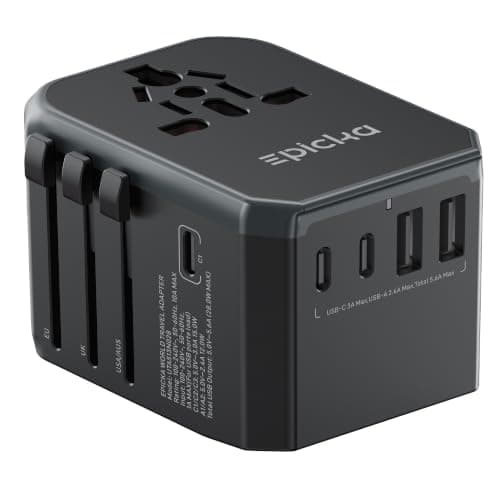
On a modern travel adapter, the most-used part isn't the wall pin at all. It's the row of USB-A and USB-C ports on the side. Most people charge a phone, a watch, and a set of earbuds straight from those and barely touch the AC outlet. More ports means fewer cables and no need to also pack a separate wall charger, which is worth more to a real traveler than any spec on the box.
Our rank-one pick has its own long read if you want the detail before buying: the EPICKA universal adapter review.
Geography narrows this further than most listings admit. A Europe-only trip is two plug shapes on one voltage, and the right buy there is often not the universal block at all — the full argument is in best travel adapter for Europe.
One block, a multi-outlet, or a plug kit?
The three shapes suit three different travelers:
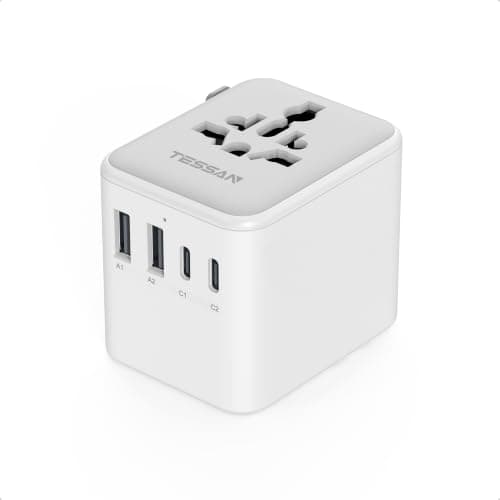
- The all-in-one universal block covers 150-plus countries in one slide-out device with USB ports built in. It's the simplest single gift for anyone who travels internationally at all.
- The multi-outlet adapter adds extra AC sockets, so a couple can turn one foreign wall outlet into a shared charging station. Best when two people are splitting a hotel room and one plug.
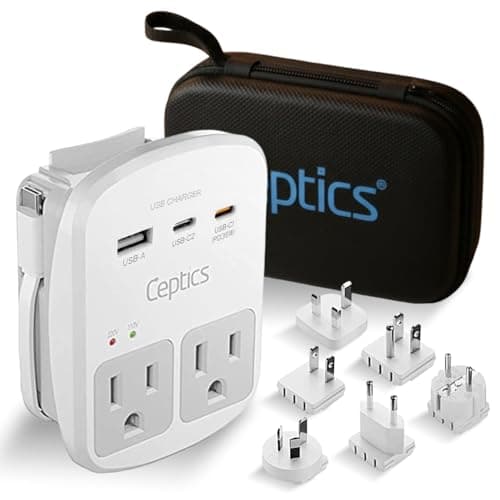
- The plug kit is a pouch of separate country plugs, each smaller and sturdier than a single big block, that accept your own US chargers directly. It's the pick for a frequent international traveler who finds one bulky block flimsy.
Whichever shape you choose, an adapter is the natural add-on to a travel backpack or any of our gifts for frequent flyers: small, useful, and something they'll actually pack every trip. It is also the item most often lost between trips, which is the argument for pairing it with a travel tech organizer that gives it an assigned place.
One thing an adapter does not do is add outlets. A hotel room with one reachable socket is still a room with one reachable socket, and the fix for that is a travel power strip — though note that a US-market strip should not be taken abroad behind an adapter, which is the one place these two products get dangerously confused.
How to choose a travel adapter
Start with the label question. It's the one that protects their gear, and the rest is about convenience.
1. Do they need an adapter or a converter?
Check what they'll plug in. If everything reads 100-240V (phones, laptops, cameras, most modern gear), an adapter is all they need. If they travel with a single-voltage hair dryer or straightener, that device needs a converter or a dual-voltage replacement, because an adapter alone won't step the voltage down.
2. Where are they going?
A universal all-in-one covers essentially anywhere, which is why it's the safe gift when you don't know the itinerary. If they only ever visit one region, a simpler single-region plug also works, but the universal block future-proofs the next trip.
3. How many devices at once?
Count the things they charge overnight. One traveler with a phone and a watch is fine with a single adapter. A couple, or a gadget-heavy packer, gets more from a multi-outlet model that feeds several devices from one foreign socket.
4. Does it have USB-C?
Newer phones, tablets, and laptops charge over USB-C, so an adapter with USB-C ports (not just older USB-A) lets them leave the wall chargers at home. It's the port that matters most now.
5. One block or a plug kit?
A single universal block is simplest to carry and use. A kit of separate plugs is smaller per piece and sturdier, and it keeps the traveler using their own trusted chargers, at the cost of more pieces to track. Match it to whether they value simplicity or ruggedness.
6. Is it safely built?
Look for a built-in fuse (ideally with a spare) as basic surge protection for whatever's plugged in. It's a small thing that separates a reassuring gift from a cheap one.