Wear soft layers in natural fibres, proper socks, and shoes you can get back on after your feet have swollen. The single mistake almost everybody makes is dressing for the destination — you spend fourteen hours in the cabin and twenty minutes walking out of the airport, and only one of those is worth optimising for. The cabin is colder and drier than people remember, it does not change temperature when you want it to, and you cannot go and get a different jumper. Everything below follows from that.
The layer system, from the skin out
Three layers and a wrap. This is the whole answer and the rest of the page is detail.
Base: soft, natural, not tight. A merino or cotton-blend t-shirt or long-sleeve. Merino is the quiet winner here because it does not hold smell over a long leg, which matters if you are going straight into a day at the other end. Avoid anything with a waistband, seam or underwire that is pleasant for an hour and awful for ten.
Mid: something with a zip. A zip or buttons let you regulate temperature without taking the layer off and losing it under a seat. A pullover hoodie is warm and binary; a zip-through is adjustable, which on a flight is worth more.
Bottom: a soft trouser, not a legging and not a jean. Jeans are the commonest long-haul regret: stiff, unforgiving at the waistband, and cold once they are not touching you. A wide, soft trouser or a travel jogger is the right object. Tight leggings are comfortable for three hours and restrictive over eight, which is worth knowing before a fourteen-hour leg.
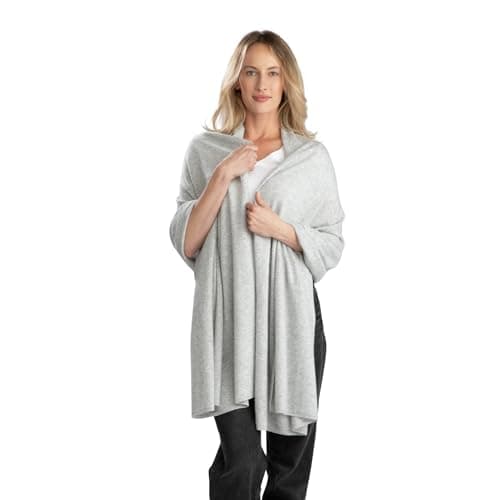
The wrap, which is the item that does the most work. A large wrap is three things in one — a shawl over the shoulders, a blanket over the legs, and a bundle behind the lower back — and it is the reason the Jet&Bo cashmere wrap leads the picks on this page. That versatility is what justifies carrying it; a cardigan is only ever a cardigan.
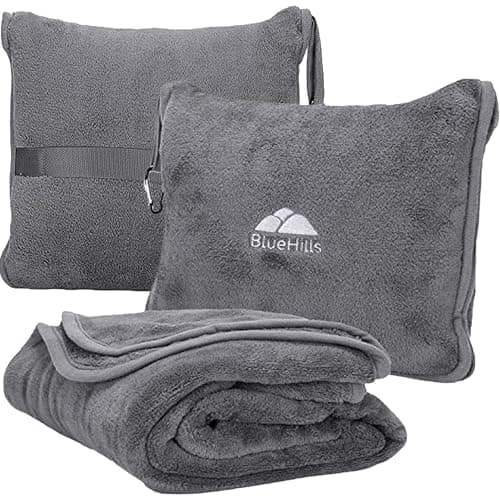
If a cashmere wrap is more than the trip warrants, the BlueHills 2-in-1 is the practical version: a blanket that packs into its own pillow, so it is one item in the bag rather than two. The field is ranked on best travel blankets.
Socks matter more than anything above the waist
Two separate things happen to feet on a long flight, and they want different socks.
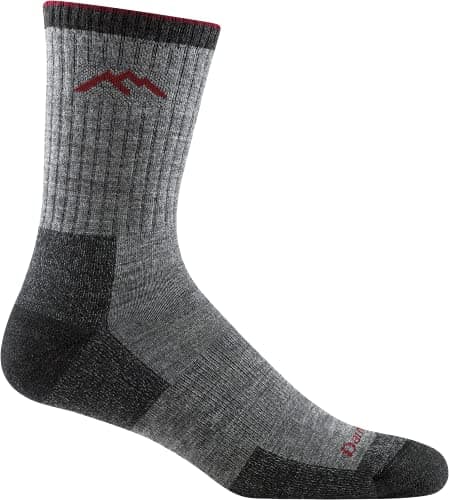
They get cold. Floor-level air near a bulkhead or a window seat is colder than cabin temperature, and cold feet keep people awake. A real wool sock — the Darn Tough hiker is the one we rank for this — solves it completely, and it is the difference between dozing and not.
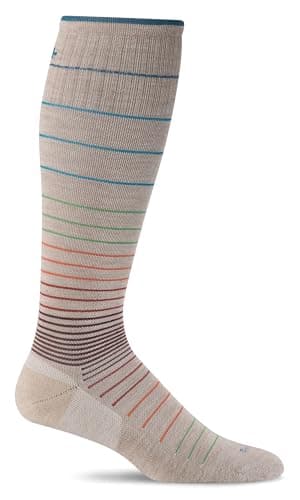
They swell. Hours of sitting still means fluid pooling in the lower legs, which is why shoes that fitted at departure do not at arrival. Compression socks are the intervention here, and the honest version of that recommendation has a threshold attached: the CDC Yellow Book's page on travel-associated clots states that “for flights <4 hours, the risk of symptomatic VTE is negligible,” with more than four hours being the definition of long-distance travel most research uses — and it reports that graduated compression stockings “appear to reduce asymptomatic DVT in travelers and are generally well tolerated.” We go through the thresholds, the risk factors and the grades in do you need compression socks on a flight.
The Sockwell Circulator is ranked here rather than a cheaper pair for one reason: merino over fourteen hours is a different experience from nylon, and a compression sock that is unpleasant at hour six comes off at hour seven and then does nothing at all. The whole category is on best compression socks for flying.
Shoes: the decision people get wrong twice
Wear shoes you can take off without untying and get back on over a swollen foot. In practice that means a slip-on, a sneaker with real laces you can slacken, or a low boot — and not a tight dress shoe, not a knee-high boot that needs two hands and a seat you do not have.
Two caveats. Keep something on your feet for the lavatory; the floor in there is wet, and socks alone is a decision you regret. And do not fly in sandals on a long-haul: feet get genuinely cold, and there is no layer to add.
The fabrics that fail at hour eight
Everything on the avoid list is comfortable at the gate.
- Denim. Stiff, cold when not in contact, and the waistband is a problem after a meal in a seat.
- Anything tight at a joint or a seam. Skinny jeans, tight waistbands, underwire. The pressure point you cannot feel at hour one is the only thing you can feel at hour nine.
- Polyester next to the skin. It holds smell over a long leg, which is the difference between arriving fresh and arriving aware of yourself.
- White and pale linen. Spilled coffee is a feature of turbulence, and linen arrives creased regardless — see how to keep clothes from wrinkling in a suitcase.
- New shoes. An airport is three miles of walking you did not plan for.
The arrival problem, solved in the bag
If you land into a meeting, a wedding or a hot climate, the answer is not to dress for it on the plane. It is to put one change in the carry-on and use the airport bathroom twenty minutes before landing.
A clean shirt, clean underwear and a toothbrush in the top of the personal item changes the arrival completely, and it is a far better trade than fourteen uncomfortable hours. This is also the single best reason to have a proper under-seat bag rather than whatever fitted.
What to keep out, not packed
Three things belong in the seat pocket rather than the overhead bin, because the bin is closed for the parts of the flight when you want them: the wrap, the socks you are going to change into, and whatever covers your eyes. Everything else can go up.
The light-and-noise half of a comfortable long-haul is a separate subject, and it matters as much as clothing — see best sleep masks for travel and how to sleep on a plane. The free measures the CDC names alongside stockings are worth repeating here too: frequent walking, calf exercises, an aisle seat, and hydration. None of them is something you can buy, and all of them beat anything you can.
Buying any of this for somebody
Flight clothing is a surprisingly good gift and a slightly odd one, so the trick is to buy the accessories rather than the garments. Nobody wants to be given trousers; a cashmere wrap, good wool socks or a packable blanket are all genuinely welcome, get used on the first trip, and do not need a size.
A wrap in particular is one of the few travel presents that works as a proper occasion gift rather than an accessory, which is why it sits on Mother's Day travel gifts as well.
That is also the right shape for a long-haul gift bundle: a wrap, a sleep mask and a pair of socks reads as somebody understanding the flight. See best travel accessories for long flights for the full kit, gifts for frequent flyers for the person who does this monthly, and gifts for flight attendants for the people who are in that cabin for a living.