Yes, in your carry-on. Never in a checked bag. And there is a capacity ceiling. Those three facts cover almost every real situation, and the second one is the rule people break most often — a power bank left in a checked suitcase is the single most common reason a bag gets pulled off a plane.
Why checked bags are a hard no
Lithium batteries can enter thermal runaway — a self-sustaining fire that's very difficult to extinguish. In the cabin, crew can reach it and deal with it immediately. In the hold, nobody can. That's the entire reasoning, and it's why this rule is a genuine prohibition rather than a preference.
The practical consequence: if a passenger checks a bag with a power bank in it and the airline finds it, the bag comes off the aircraft. If they don't find it, it's an actual safety risk rather than a technicality. Take it out and put it in the carry-on.
The same logic applies to spare lithium batteries, e-cigarettes and vapes — all cabin-only. Devices with batteries installed (a laptop, a camera) are treated differently from loose batteries and power banks.
The capacity limit, and the unit nobody advertises
Airlines cap lithium batteries by watt-hours (Wh), not by mAh. Almost every power bank is marketed in mAh, so the number on the box isn't the number the airline cares about. Converting is straightforward:
Wh = (mAh ÷ 1000) × voltage. Most power bank cells run at a nominal 3.6V or 3.7V. So a 10,000mAh bank is roughly 37Wh, and a 20,000mAh bank is roughly 74Wh.
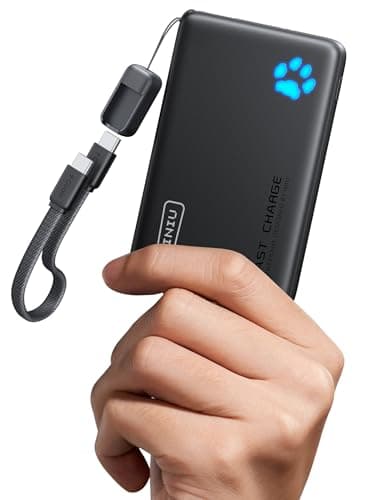
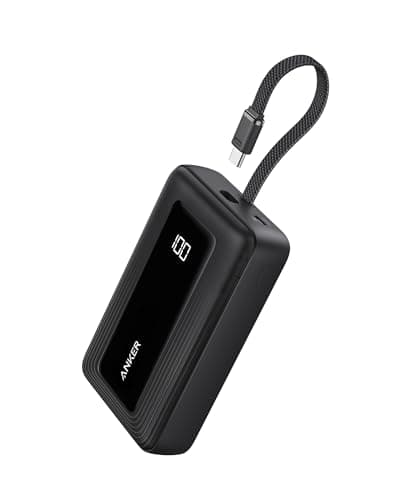
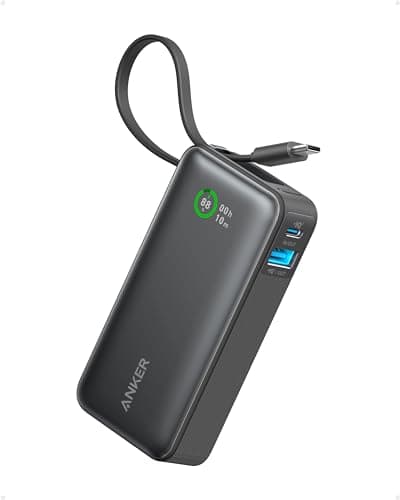
Broadly, the international framework used by most carriers allows batteries under a first threshold freely, allows a band above that with airline approval and a quantity limit, and prohibits anything above a second threshold. Standard consumer power banks — 10,000mAh and 20,000mAh — sit comfortably in the freely-allowed band. Very large banks can cross into approval territory.
Most reputable banks print the Wh figure somewhere on the casing, which is worth checking before a trip. We're not quoting the specific thresholds because they're set by regulators and individual carriers and do get revised; the airline's own dangerous-goods page is the authoritative source and takes a minute to find.
Where this bites: portable power stations
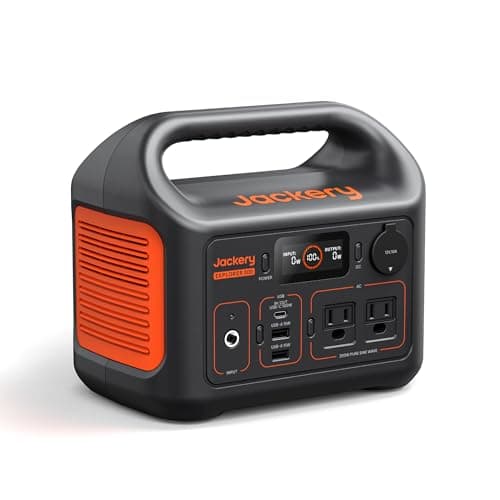
The camping-style units with AC outlets are not power banks in the airline sense. They're far above the cabin limit, they can't go in the hold either, and they are simply not air travel equipment. This surprises people who've bought one for van life or festivals and then assume it travels — it doesn't. We flag this on the product itself and in gifts for van lifers, because it's the one category where the gift genuinely can't come on the trip.
If someone flies to their trips, a compliant power bank is the equivalent gift. Our travel power bank roundup ranks the options with this constraint built in.
Practical rules that keep it simple
- Carry-on only, every time. No exceptions worth remembering.
- Keep it accessible. Security may want to see it, and digging through a packed bag at the belt is nobody's favorite moment.
- Protect the terminals. A loose bank rattling against keys and coins is a short-circuit risk. Its own pouch, or a pocket of its own, is enough.
- Don't charge it in flight unless the airline permits it. Policies vary and some carriers explicitly prohibit using power banks during flight.
- Damaged or swollen banks don't fly. A bank that has puffed up should be disposed of properly, not packed.
What to buy if you want to never think about this
A 10,000mAh bank sits well inside every limit, covers about two phone recharges, and is small enough to carry without resentment. That's the right size for almost every traveler, and it's why our power bank roundup leads with that capacity rather than the biggest available.
Step up to 20,000mAh if they charge two devices, face long delays, or travel as a couple — still comfortably legal, just heavier. Beyond that the weight rarely justifies itself and the paperwork starts.
For where a power bank sits among the other things worth packing, see best travel gadgets, and for the long-flight context, travel accessories for long flights.
Checking a power bank before you fly
1. Find the Wh figure
Most reputable banks print it on the casing. If not, divide mAh by 1000 and multiply by 3.6 or 3.7 for a close estimate.
2. Check the airline's dangerous goods page
Thresholds are set by regulators and individual carriers and do get revised. The airline's own page is authoritative and takes a minute.
3. Move it to the carry-on
Before you get to the airport, not at the desk. This is the rule people break most often.
4. Give it its own pocket
Loose terminals against keys and coins are a short-circuit risk, and security may want to see it anyway.
5. Leave the power station at home
Camping units with AC outlets are far above cabin limits and can't be checked either. They are road-only gear.