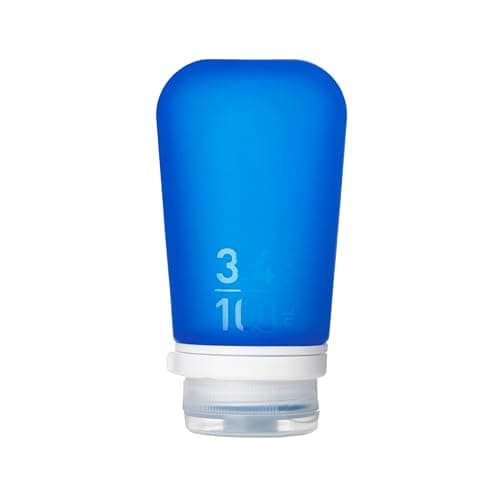
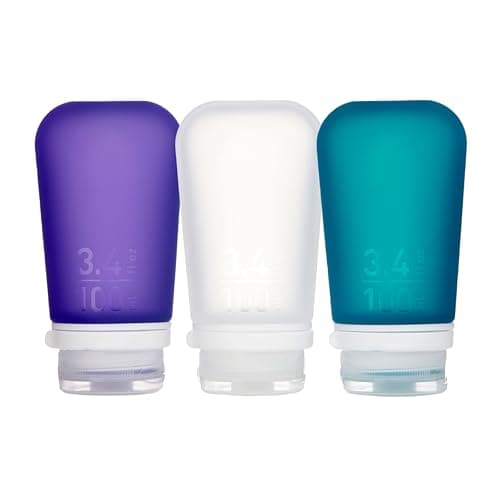
The liquids rule limits the size of the container, not how much liquid is in it. TSA’s own wording is that carry-on liquids “are limited to travel-sized containers that are 3.4 ounces (100 milliliters) or less per item”, and that anything in a larger container goes in checked baggage. Read that twice, because the consequence is the single most useful thing to know about this category: 3.4 oz is the correct size, and a 1 oz bottle is throwing away two thirds of what the traveler is allowed to bring. Count the bottles in the average twenty-piece travel set and you will find almost none of them are 3.4 oz.
Size is the spec that matters, and nobody advertises it
A week of shampoo is roughly 3 oz for most people. A week of conditioner, if they use it properly, is more. At 1 oz per bottle a seven-night trip means either decanting twice from a bottle they did not bring, or buying shampoo on arrival — which is exactly the problem the bottles were supposed to solve.
So the first thing to check on any listing is the printed capacity per bottle, and the target is 3.4 oz / 100 ml, or 3 oz as a near miss. Anything labeled 1 oz, 1.3 oz, 1.7 oz or 2 oz is a travel bottle for a weekend, and it is fine for a weekend. Sold as a full travel kit, it is a kit that runs out.
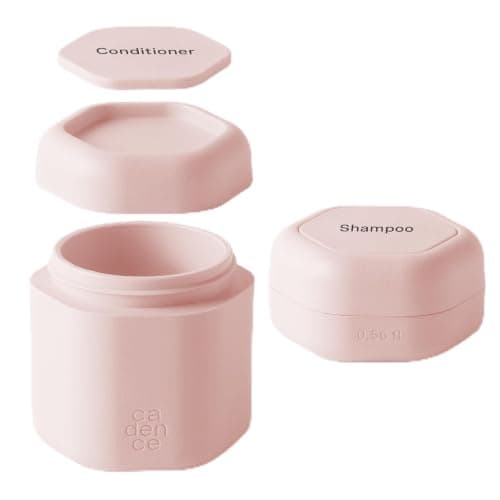
There is one real exception, and it is why one pick on this page is tiny. Face serums, eye creams and prescription topicals come in small quantities to begin with and get used by the drop. For those, 0.56 oz is plenty and a hard capsule is a better object than a squeeze bottle. For shampoo, conditioner and body wash, size wins.
What actually fails is the cap
Nobody has ever come home and complained that the bottle split. The story is always the same: the bag was opened and everything inside it was coated in conditioner. That is a closure failure, and there are two mechanisms behind it.
Pressure. A part-full squeeze bottle contains air, and air in a pressurized cabin expands as the cabin pressure drops on the climb. A soft silicone bottle with a flip cap and a tired gasket has one place to vent, and it vents into the wash bag. The old traveler’s trick — squeeze the air out before closing it — is a real fix and it works on every bottle here.
Mechanics. A flip cap is held shut by friction and a gasket. A locking cap is held shut by a physical catch that has to be moved before the cap can open at all. That is the difference between the expensive bottles on this page and the cheap ones, and it is most of what the money buys. Our top pick locks. The budget sets do not, and their listings do not claim to.
If you buy a set without a locking cap — which is a perfectly reasonable decision — put it in something that contains a spill. Our toiletry bag roundup ranks on exactly that: a wipe-clean lining and a zip that closes around the mess. The bottles and the bag are one system and they are usually bought separately.
The twenty-piece kit problem
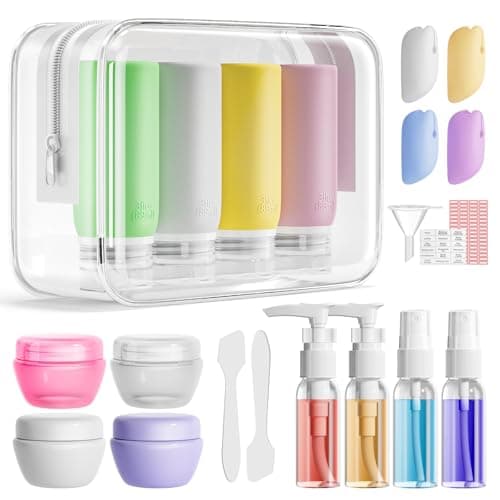
Search this category and the top results are 16, 18, 20 and 23-piece sets for the price of a sandwich. They are not a scam — they are good value for what they are — but it is worth being clear about what is in the box. A typical kit is three or four small squeeze bottles plus spray and pump bottles, a couple of jars, a funnel, a scoop, a few labels and a zip pouch.
Most travelers need four containers: shampoo, conditioner, body wash, and one for whatever they personally will not travel without. The other sixteen items in the kit go in a drawer. If you are buying for yourself, that is a harmless waste. If you are buying this as a gift, the twenty-piece kit is the one that reads most like a bag of plastic and least like a present, and that matters.
Which is why the ranking on this page does not follow price. The best-value object is not the one with the most pieces; it is the one where every piece gets used.
How we picked
Four criteria, in the order a gift buyer should apply them.
- Published capacity per bottle. 3.4 oz / 100 ml is the target, because it is the carry-on maximum. We take the number printed in the listing and nothing else.
- The closure. Locking cap, flip cap with a gasket, or a screw lid on a hard capsule. This is where the money goes and where the failures happen.
- Can it be identified at arm’s length? Four identical unmarked white bottles is how conditioner ends up on a face at 6am. Preprinted text, a label system or a writable surface is worth more than it sounds.
- Can it be cleaned and refilled? The bottles people still own in three years are the ones with an opening wide enough to get thick product in and a brush in afterwards. Narrow-neck bottles get funky and get thrown away.
We compile published listing specifications, manufacturer descriptions and TSA’s published liquids rule. We have not pressure-tested anything and we do not publish a leak rating, because any leak rating from a gift site would be invented. Where a listing calls a bottle leak-proof, that is the seller’s claim and we attribute it as one.
Which one for which recipient
They travel every month and still refill hotel miniatures. The humangear GoToob+ three-pack in Large. Three bottles at the full 3.4 oz, a cap that physically locks, and a wide opening that takes thick conditioner and a cleaning brush. It costs several times what a budget set does and it is the one on this page most likely to still be in use in five years.
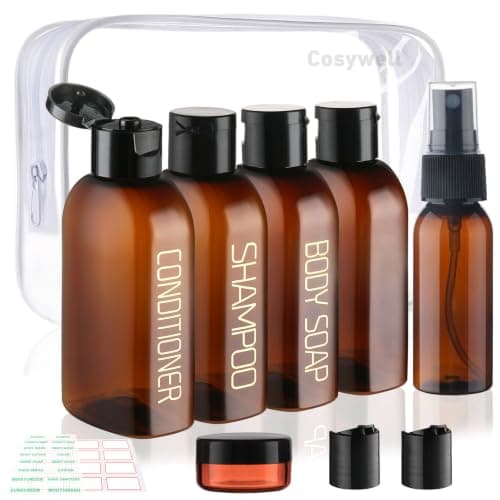
You want the right thing for under ten dollars. The Cosywell four-pack. Every bottle is 3.4 oz — the maximum — and three of them come printed SHAMPOO, CONDITIONER and BODY SOAP, which solves the identification problem permanently rather than with stickers. This is the buyer-first answer on this page: if you only read one line, this is the set to buy, and it costs a fraction of our top pick.
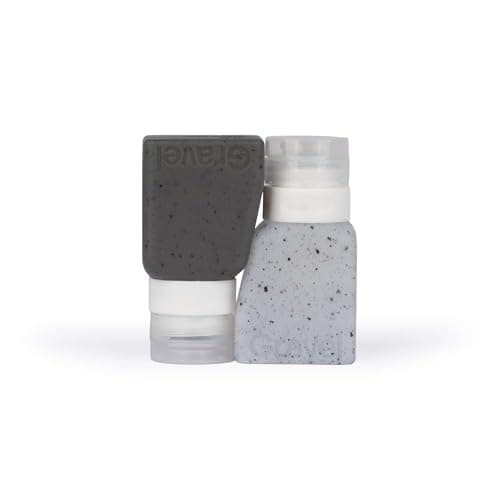
They already own bottles and cannot tell them apart. The Gravel 3 oz pair, which ships with a label system. Near-maximum size, a sensible middle price, and the one pick aimed squarely at the problem of a wash bag full of anonymous silicone.
It has to look like a gift. The Cadence Capsules basic set. Three hard 0.56 oz capsules with magnetic lids that snap together into a block, built for creams, balms, powders and pills rather than for liquids. It is the most expensive pick here and the smallest by volume — by some distance the dearest thing on this page per ounce — and it is the only one that genuinely presents as a present. Buy it for a skincare routine, not for shampoo.
A stocking filler, or a first kit. The 21-piece silicone set. Cheap, cheerful, includes the funnel and the pouch, and the right answer for someone who currently owns nothing. Just know that the bottles are small and that most of the twenty-one pieces will not travel twice. It appears on our stocking stuffers list for exactly that reason.
You want one good bottle, not a set. The single GoToob+ Large. Same bottle, same locking lid, well under half the three-pack price. It is the honest purchase for the common real case: one premium bottle for the product they actually care about, cheap bottles for the rest.
Where the bottles fit in the rest of the bag
Bottles are one of four things in a carry-on that have a rule attached to them, and the rule is the one most people get wrong at the checkpoint. Our TSA liquids rules guide covers the whole 3-1-1 picture — the quart bag, what counts as a liquid (creams, gels and pastes all do), and the exemptions. The short version for bottles: the container has to be 3.4 oz or smaller, and a big bottle with a little left in it is not allowed through, which is the mistake that gets a bag pulled aside.
For the order things go into the case, our how to pack a carry-on guide puts the liquids bag where it can come out without unpacking anything else — the single best reason to use a quart bag even when you are not flying out of a US airport.
And the gift logic: refillable bottles are the gift that eliminates a recurring purchase, which is a category we like. It is the same argument that makes a travel water bottle a better present than it looks — buy the object once, stop buying the single-use version forever.
Buy 3.4 oz, or 3 oz, and nothing smaller
The carry-on limit is on the container, so 3.4 oz / 100 ml is the largest bottle allowed and therefore the only size that uses the allowance fully. Smaller bottles are a weekend solution sold as a travel solution. The one exception is creams and serums, which are used by the drop and are better in a small hard capsule.
Pay for the cap, not the bottle
A locking cap has a catch that must be moved before it can open. A flip cap relies on a gasket that ages. If the budget does not stretch to locking caps, squeeze the air out before closing each bottle and put the whole lot inside a bag that can be wiped out.
Four bottles, not twenty
Shampoo, conditioner, body wash, and one personal item. That is the real requirement for almost everybody. A twenty-piece kit is mostly a funnel, a scoop and jars that stay in a drawer — fine for a few dollars, poor as a gift.
Make sure you can tell them apart
Preprinted text beats a label system, which beats a marker, which beats nothing. Anonymous identical bottles is a small daily irritation that lasts for the life of the set.
Wide neck, or it gets thrown away
Thick conditioner will not pour into a narrow neck and a brush will not reach inside one. Wide-opening silicone is why the premium bottles last for years and the cheap ones last for a season.
Squeeze bottles for liquids, capsules for creams
A squeeze bottle gets the last of a runny product out and cannot dispense a thick balm. A hard wide-mouth capsule takes balm, powder and pills and is a poor way to carry shampoo. These are two different products and the listings sell them as one category.