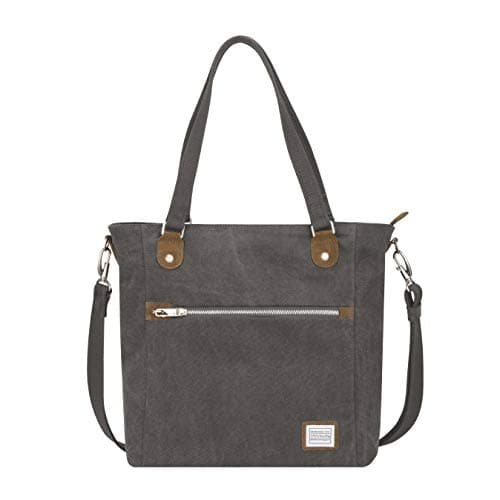
The Travelon Anti-Theft Heritage Tote is our top pick, and it is for the city traveler whose actual risk is a hand in a bag on a crowded metro rather than a break-in. It is the only item here that works continuously, without being remembered. The budget pick is the Puroma TSA lock two-pack — the cheapest thing on this page that genuinely adds friction, and the one most likely to be bought for somebody else as an afterthought and then used on every trip.
Be honest about the threat first
This category sells fear, and it sells it with images of a thief cutting a strap with a knife. That is not the thing that happens. The realistic loss on a trip is overwhelmingly one of three events, and none of them involves tools:
- A bag left open for thirty seconds. On a chair back, on a station floor, in an overhead rack, at a cafe table. The thief needs a moment of inattention and nothing else.
- A pocket in a crowd. A metro door, a market, a queue, a photo being taken. Fast, practiced, and over before it registers.
- Something left behind, not taken at all. A phone on a taxi seat, a passport in a hotel safe nobody emptied, a wallet on a cafe table. Statistically this is the one that ruins most trips, and it is the one no anti-theft product addresses.
Against those three, the useful products are the ones that add time and friction — enough that a thirty-second opportunity becomes a job — plus one that helps with the third event by telling you where something is. That is the whole honest case for this category, and everything below is ranked on it.
What none of it does is protect something valuable from a determined person who has decided to take it. We said the same thing on our luggage locks page and it has not changed: the reliable protection for something irreplaceable is not bringing it, or keeping it on your body. The full argument is in how to keep valuables safe while traveling.
How we chose
Four criteria, and one of them disqualifies most of the category.
- Does it work without being remembered? The best anti-theft feature is one that is on by default. A locking zipper you have to engage every time will be engaged for two days and then forgotten; a slash-resistant panel is always doing its job.
- Does it add real friction, or just look secure? We rank published construction — slash-resistant body material, locking zippers, a cable shackle — over marketing language. If a listing does not publish what a feature is made of, we treat it as decoration.
- Does it survive being a normal object? Anti-theft gear that looks like security equipment announces that there is something worth taking. The picks here look like ordinary bags, wallets and locks.
- Would somebody use it at home too? This is the giftability test, and it is why the tote and the wallet rank above the hardware. Products used only on trips get left in a drawer.
We compile published listing specifications and manufacturer descriptions, score each pick against our published rubric, and read every price from the live price layer. We have not attacked any of these products and we publish no security rating, because a security rating from a gift site would be invented. One pick we would otherwise have included — a well-known brand’s compact RFID passport wallet — is left off entirely because our price layer currently shows no verified live offer for it, and we would rather leave a gap than rank something we cannot price.
Which accessory for which traveler
City trips in Europe, Latin America or anywhere crowded. The Travelon Anti-Theft Heritage Tote. A slash-resistant body, locking zippers, RFID-blocking card pockets and a locking strap, in a bag that reads as a normal tote rather than as travel equipment. The reason it tops the list is that its protection is structural: the panel and the strap are working whether or not the owner is thinking about them, which is the only kind of security a tired traveler reliably gets.
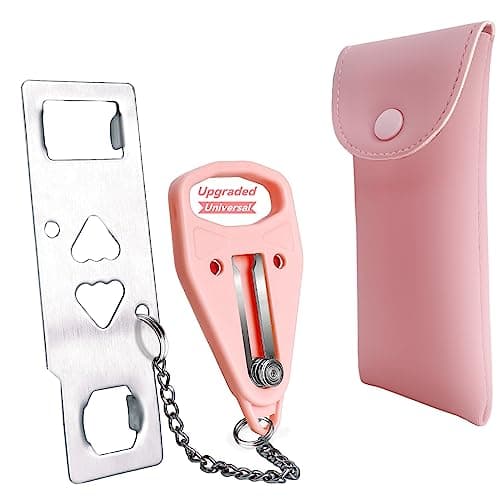
Hostels, cheap hotels and solo travel. The AceMining portable door lock. Ten dollars of steel that fits an inward-opening door with no tools and no damage, and it addresses something nothing else here does: the hours you are asleep in a room whose key history you know nothing about. For a solo traveler it buys more peace of mind per dollar than anything on this page. See also our gifts for solo travelers list.
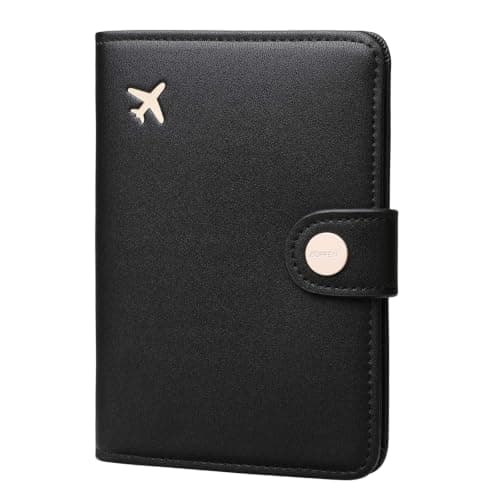
Anyone who carries a passport. The Zoppen RFID-blocking passport organizer. Honest framing: its anti-theft value is modest — the RFID shielding addresses a threat that is far rarer than the category implies. Its real value is that everything lives in one object, so the passport, the boarding pass and the cards are either all in your hand or all in the bag, and the most common travel loss is a document put down separately and forgotten. Our travel wallet roundup ranks the category properly.
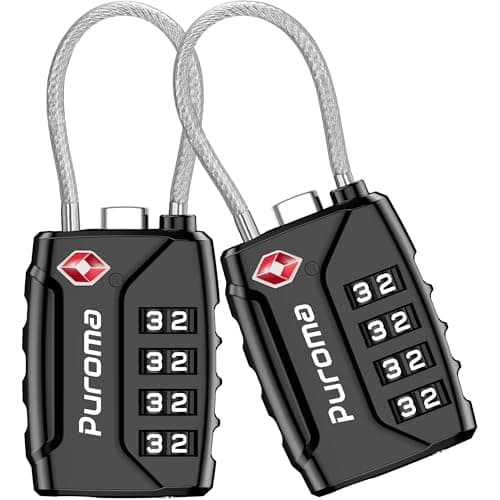
Anyone who checks a bag or uses a locker.The Puroma TSA lock two-pack — our budget pick. A flexible cable shackle reaches through two zip pulls, a hostel locker hasp or a luggage rack, which is the shape that handles the most situations. Two in the pack because one is the wrong quantity; the full argument, including what “TSA approved” actually means, is on our luggage locks page.
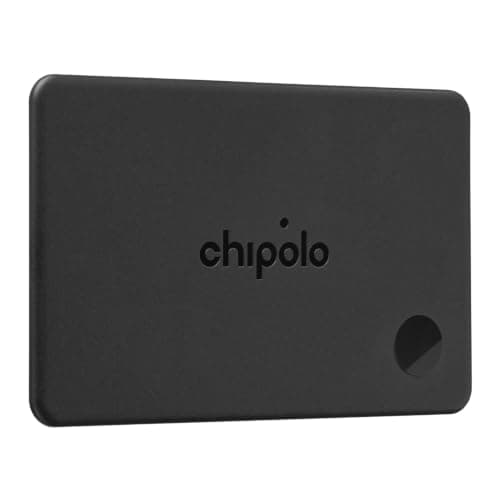
The traveler who loses things rather than gets robbed. The Chipolo Card. Credit-card thin, so it goes in the wallet or the passport holder rather than needing its own pocket, and it works with Apple or Google’s finding networks. This is the pick for the third event in our list above, the one that actually happens most: not theft, but a wallet left on a table. Our luggage tracker roundup covers the bag-sized versions, and AirTag alternatives covers the choice between networks.
What we would not buy, and why
Money belts worn under clothing. They work, and they are miserable: you cannot access one in public without undressing slightly, so in practice people move cash to a pocket on day two and the belt stops existing. A front pocket and a second stash in the hotel is the version people actually keep doing.
Slash-proof backpacks with visible steel mesh. The mesh is real; the problem is that the bag advertises itself. A bag that looks like a vault is a bag worth opening.
RFID-blocking everything. RFID shielding is cheap to add, so it appears on everything, and the implied threat — somebody reading your contactless card through a bag in a crowd — is far less common than the marketing suggests. Treat it as a free extra on a product you were buying anyway, never as the reason to buy.
Portable safes that cable to a hotel fixture. Heavy, bulky, and they secure a bag to furniture that is usually easier to defeat than the bag. For a hotel room, the door lock above is a tenth of the weight and addresses the actual risk.
The free measures that beat all of it
Worth saying on a page that sells products. The habits do more than the hardware, and they cost nothing.
Split your money and cards across two places, so one loss is not total. Carry a photo of your passport on your phone and a copy in your email. Put the bag strap across your body and the bag in front of you in a crowd, not behind. Never leave a bag on the back of a chair. Keep one card that never leaves the hotel. And when you set a lock code or a hotel safe code, do not use the one you always use, and do not leave it set to the factory zeros — which is the single most common way a hotel safe gets opened by someone who is not you.
As a gift, this is a thoughtful category for a specific recipient: a first-time international traveler, somebody going to a city with a pickpocketing reputation, a solo traveler, a student heading abroad. It is a bad general gift, because handing somebody anti-theft equipment implies something about their destination. Pair it with something warmer — see gifts for someone going to Europe and gifts for study abroad students for the framing that works.
Prefer protection that is on by default
A slash-resistant panel works whether or not the owner remembers it. A zipper lock that has to be engaged each time gets used for two days. Structural features beat features that need discipline.
Buy the bag that does not look like security
Visible steel mesh and tactical styling advertise that there is something worth taking. The best anti-theft bag looks like an ordinary bag and happens to be difficult.
Treat RFID blocking as a free extra, never a reason
It costs manufacturers almost nothing to add, which is why it is on everything. Take it if it comes with a product you wanted anyway; do not choose a product because of it.
For a hotel room, the door is the weak point
Not the window and not the safe. A portable lock for an inward-opening door is small, cheap and addresses the hours nobody is awake. Check it fits the door type before the trip.
A cable shackle fits more situations than a rigid one
It reaches through two widely spaced zip pulls, a locker hasp, a backpack and a luggage rack. Buy a multipack, because travel locks are lost at a rate the industry does not advertise.
Split your valuables before you buy anything
Two places for cash and cards, a passport photo on your phone, one card that never leaves the room. These cost nothing and prevent more loss than any product on this page.