Match the tracker to the phone, and the comparison is over. iPhone owner: AirTag. Samsung Galaxy owner: SmartTag2. Don't know, mixed household, or the recipient switches platforms: Tile. Everything else on this page is detail — but it's detail worth reading, because buying the famous one for the wrong phone is the single most common mistake in this category.
Why the network decides everything
None of these are GPS devices. On their own each one is a short-range Bluetooth beacon with a battery, and Bluetooth reaches across a room, not across a continent. What actually finds a bag two countries away is other people's phones — a vast crowd of devices quietly and anonymously relaying the tracker's position back to its owner.
That means the practical question is not "which tracker is best built" but "how many phones will be listening for it." And because each platform's network is built from its own devices, the answer depends on which platform the tracker belongs to.
- Apple's Find My network is built from Apple devices, which is an enormous installed base. This is why an AirTag so often reappears on a map long after a lone Bluetooth tag would have gone silent.
- Samsung's SmartThings Find works the same way across Samsung Galaxy devices. Inside that ecosystem it's genuinely large.
- Tile's community network is built from the Tile app and partner devices. It's smaller than either first-party network, but it is the one that works properly on both iPhone and Android.
The three-way comparison
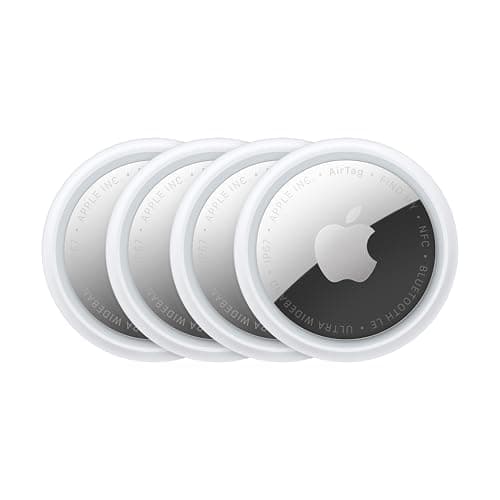
AirTag — for iPhone owners. The largest finding network of the three, precision finding on recent iPhones that walks you the last few feet, and a replaceable coin-cell battery that lasts about a year. Two catches: it's a smooth disc with no hole, so it needs a keyring or holder bought separately, and on Android it can't do its main job at all.
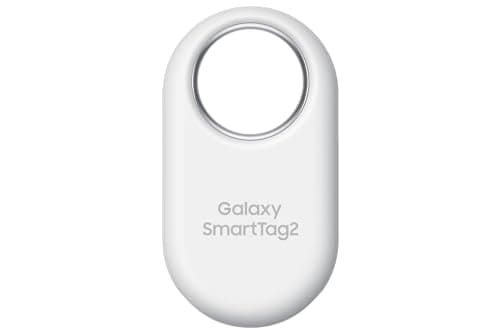
Galaxy SmartTag2 — for Samsung owners. The Samsung equivalent, with a long battery life and a built-in hole so it clips straight to a bag with no extra purchase. It taps SmartThings Find, which means it's excellent for a Galaxy owner and largely pointless for anyone else.
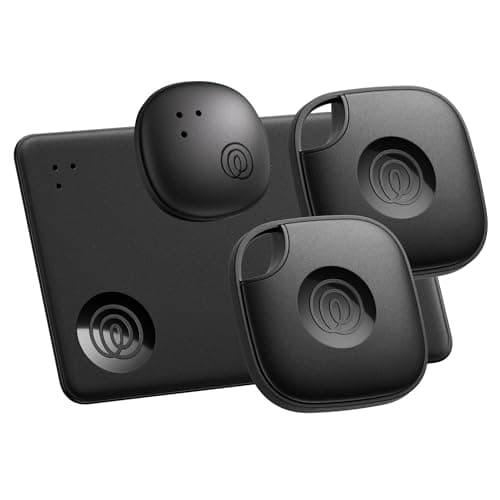
Tile — for everyone else. The cross-platform answer. Works fully on both iPhone and Android, has a hole built in, and rings loudly. The network is smaller, so recovery from a genuinely distant location is less likely than with a first-party tag on its home platform. For a mixed household or an unknown recipient, that trade is worth making.
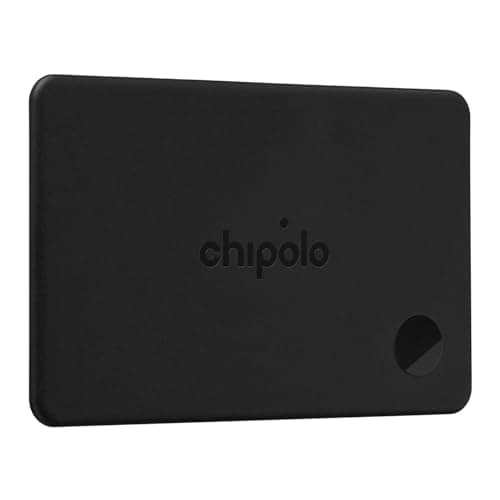
Card-shaped trackers — for wallets, not suitcases. A disc doesn't sit flat in a wallet or a passport sleeve. If that's the target rather than a bag, a card-thin tracker is the only shape that works.
Airline and safety questions people actually ask
Can a tracker go in a checked bag? Yes. These devices use small coin-cell or rechargeable lithium batteries, and under current FAA guidance small personal electronics like these are permitted in both carry-on and checked baggage. That's exactly what makes them useful — a tracker keeps reporting after the bag disappears down the belt. Rules can change, so it's worth checking current guidance before a major trip.
Do airlines accept tracker data? Increasingly, yes — several major carriers now accept location data from Bluetooth trackers as part of a delayed-baggage claim, and some integrate it directly into their apps. Support varies by airline, so treat it as a strong possibility rather than a guarantee.
Can they be used to track a person? This is the legitimate concern with the category, and all three platforms have built anti-stalking features: alerts when an unknown tracker appears to be traveling with you, and audible chirps from a tracker separated from its owner. Cross-platform detection has improved considerably. It's worth knowing these features exist and that they are, by design, impossible to fully disable.
Battery, attachment and the practical stuff
Battery type. Coin-cell trackers let you swap a cheap battery when it dies, typically once a year. Rechargeable ones mean no swaps but an occasional top-up. Neither is wrong — match it to whether the owner would rather never plug something in or never hunt for a battery.
Attachment. This trips up more gift-givers than anything else. Some trackers have a hole and clip straight on; others are smooth discs that need a separate holder. If you're gifting the latter, buy a holder in the same order or the tracker rolls loose in the bottom of a bag.
How many. Trackers ship in multi-packs for a reason — most households have a suitcase, a carry-on, a camera bag and a set of keys worth tracking. A four-pack is usually better value than two singles, and it makes a much better gift. Our travel gifts for couples list covers why this suits two-person households particularly well.
The bottom line
Buy for the phone, not the brand. An AirTag on an Android phone is close to dead weight, and a cheaper tracker matched to the right platform will outperform an expensive mismatched one every single time. If you're genuinely unsure what phone they carry, the cross-platform option is the safe purchase and not a meaningful compromise.
For the full ranked shortlist including current live prices, see our best luggage trackers roundup, and for where a tracker sits among the rest of a flyer's kit, our gifts for frequent flyers list.