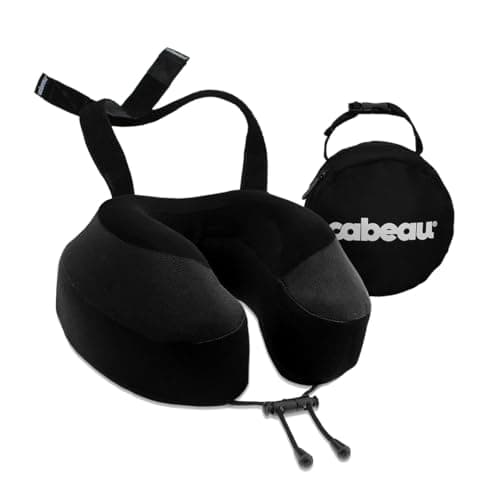
Fix the head first. A neck pillow that actually holds the head up — the Cabeau Evolution S3 is the one we rank first — does more for sleep in an economy seat than anything else you can buy, because a falling head is what wakes people every twenty minutes. Then darkness, then noise, then warmth, in that order. Most people buy this list backwards: headphones first, pillow last, and then wonder why they still did not sleep. The seat is also free and beats all of it, so start there.
Before you buy anything: the seat
A window seat is the single biggest sleep upgrade available on a plane and it costs nothing but a seat selection. You get a wall to lean against, you control the shade, and nobody climbs over you at 3 am. An aisle seat is the opposite on all three counts. If someone is flying overnight and intends to sleep, picking the window at check-in is worth more than the first fifty dollars of gear.
The second free move is the row. Avoid the row in front of an exit row where seats sometimes do not recline, and avoid the back galley, which is lit and busy all night. None of this is secret, and all of it is free.
Problem one: your head falls
An upright seat gives the back of the skull nothing to rest against. As soon as the neck relaxes, the head goes — forward into a chin-to-chest nod, or sideways towards a shoulder — and the muscle correction that follows is what pulls someone out of light sleep over and over. That is the mechanism, and it is why a pillow is the first purchase rather than a luxury.
Which pillow depends on which direction the head falls. Forward-nodders want something that fills the gap behind the skull and straps to the seat so it cannot migrate. Side-leaners want lateral bracing, which is a different product entirely — we lay out that decision in Trtl vs Cabeau and in the side-sleeper guide. Buying the wrong shape is the most common mistake in this whole category.
Problem two: the cabin is never dark
Cabin lighting dims; it does not go out. Add seat-back screens left on, reading lights, galley light and a neighbour's open shade at sunrise, and the light reaching closed eyelids is far more than a bedroom at night. A mask is the cheapest high-impact item on this page.
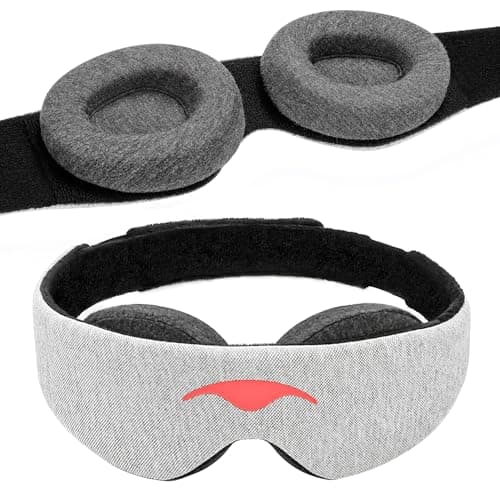
There are two kinds and the difference is real. A flat silk or cotton mask rests on the eyelids — cheap, packable, and it leaks light around the nose unless it has a shaped nose pad. A cupped blackout mask holds molded cups over the eye sockets so nothing touches the eyes and the person can blink freely inside it; that is noticeably more comfortable for anyone who finds pressure on the eyelids unpleasant, and it blocks far more light. We rank both kinds on the sleep mask roundup, and the cupped one people ask about most gets a full Manta Sleep Mask review.
Problem three: the cabin is loud, in two different ways
Cabin noise has a low-frequency component — engine and airflow rumble that is constant for the whole flight — and a high-frequency component: crying, announcements, carts, conversation. Active noise cancelling is very good at the first and much less effective at the second. This distinction matters because people buy expensive headphones expecting silence and get a quiet rumble with a toddler still audible over the top of it.
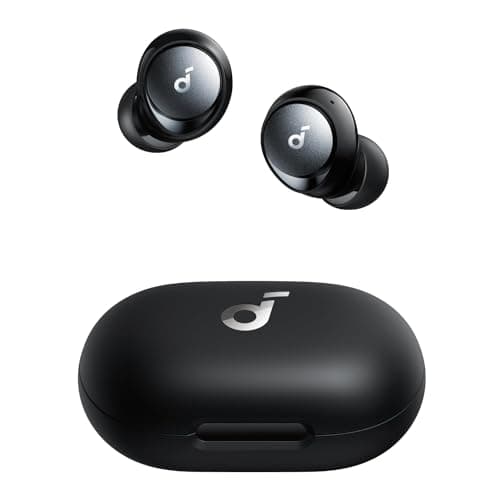
For sleeping specifically, earbuds beat over-ear headphones for one simple reason: you can lie against a wall or a pillow wearing them. A large pair of over-ears presses into the side of the head the moment it leans, which is why a flagship over-ear can be the worse choice for sleep despite cancelling more. Our headphones versus earbuds guide goes through that trade in full, and the noise-cancelling roundup ranks both form factors together.
One thing that does not help in the air: a portable sound machine. A cabin is already 80-plus decibels of broadband noise, so a small speaker in your lap adds nothing except an annoyed neighbor. Those are for the hotel room at the other end, where the enemy is a corridor door rather than an engine — we rank them on best travel white noise machines.
Problem four: it gets cold, and the airline blanket is small
Cabins run cool overnight, and body temperature drops during sleep anyway. The thin airline blanket covers a torso, not a person. A real travel blanket is the least glamorous item on this page and the one people consistently say they wish they had packed.
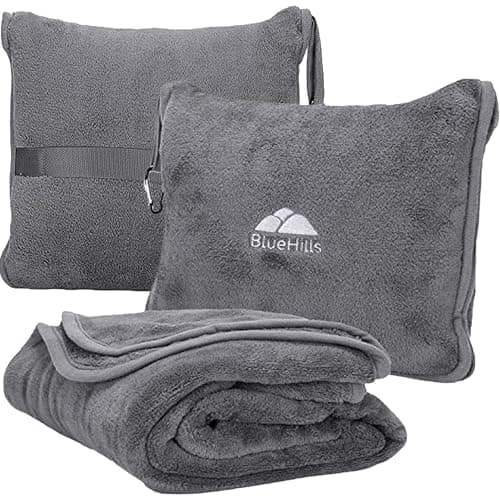
The practical catch is that a blanket has to be carried through an airport before it is useful on a plane, which is why the ones with a case that doubles as a pillow and a sleeve that slides over a suitcase handle win over bigger, warmer blankets that have to live inside the bag. That constraint — carryability, not warmth — is the spine of our travel blanket roundup.
Sleep is one block of a long flight rather than the whole of it, and the hours either side of it reward a plan too - what to do on a long flight covers them.
What not to buy
Inflatable foot hammocks and leg rests. Some people love them; they are also the item most likely to annoy the person in front and to be asked to be stowed. Buy one knowing that.
An expensive flat mask. Beyond a shaped nose pad and washable fabric, there is very little left to pay for in a flat mask. The money either goes to a cupped blackout mask or stays in your pocket.
Anything pharmaceutical, from us. We are not a medical site and we are not going to recommend sleep aids, melatonin doses or anything else you swallow. That is a conversation with a clinician or a pharmacist, not with a gift guide. Everything on this page is a physical object that addresses a physical problem.
The order to buy it in, if this is a gift
One item: the pillow. Two items: pillow and mask — about as effective a pair as exists for the money, and they fit in one box. Three: add the blanket. Four: add earbuds, which are the most expensive thing here and the one most people already own some version of. That is also the order we use on travel accessories for long flights, where the same kit is priced as a bundle.
If the recipient is a nervous flyer rather than simply a tired one, the list changes — noise and darkness do more than neck support in that case, and nothing on any list treats the fear itself. We say so plainly in gifts for nervous flyers.
Sleeping on the flight is half the problem; the other half starts when they land in a time zone their body has not agreed to. How to beat jet lag sets out what the CDC and NHS actually advise — shift bedtime before you fly, in the right direction for east or west, then chase daylight on arrival.
How to choose each piece
1. The pillow: which way does their head fall?
Forward means a raised back panel and a seat strap. Sideways means a lateral brace. Soft chin support is a third answer, and the only one that comes in a children's size.
2. The mask: flat or cupped?
Flat if it has to cost very little and pack to nothing, and look for a shaped nose pad or it will leak light. Cupped if they are a serious sleeper or dislike pressure on the eyelids.
3. The audio: earbuds for sleeping
Earbuds if the point is sleep, because a head leaning on a wall cannot wear over-ears comfortably. Over-ears if the point is music and films.
4. The blanket: can they carry it?
A blanket that packs into its own pillow case and clips to a bag gets brought. A warmer blanket that lives inside the carry-on usually does not.
What you should spend
A good pillow and a good mask together sit under the price of one flagship set of earbuds, and they do more for sleep. Buy in that order. Every button on this page shows a live price, and where we have no verified price we show none rather than a stale number.