Pack the case full, roll anything soft, and keep stiff garments flat with something soft between the layers. A crease is a sharp fold held under pressure for hours — so the fix is to remove the sharpness, the pressure, or both, and a tightly packed suitcase does that better than a loosely packed one. That is counterintuitive and it is the most useful sentence on this page: clothes shift and crumple in the space you left them.
Why clothes wrinkle, in one paragraph
Fabric holds the shape it is pressed into. A fold concentrates the bend into a narrow line; weight on top of it holds that line in place; time and warmth set it. All three are required. A loose fold with nothing on top of it shakes out in a minute, and the same fold under twenty pounds of suitcase for eight hours is a crease you need steam to remove.
Which gives three levers, and you can pull any of them:
- Soften the bend — roll instead of fold, so the curve is wide rather than sharp.
- Remove the pressure — hang the garment in a garment bag instead of stacking it.
- Remove the time — unpack and hang the moment you arrive, before the crease sets.
Roll, fold, or neither — by garment
The internet argues about rolling versus folding as though one answer fits everything. It does not. The right method depends on how stiff the fabric is and whether the garment has structure in it.
Roll: t-shirts, knitwear, jeans, underwear, socks, activewear, soft dresses, pyjamas. Anything soft and anything that will be worn without being looked at closely. Rolling also saves real space, which matters for the “pack it full” rule below.
Fold flat, in as few folds as possible: dress shirts, linen, chinos, anything with a crease that is supposed to be there. Fold along the seams the garment was made with — a trouser crease folded on its own crease is not damage, it is the crease.
Neither — hang it: a tailored jacket, a suit, a formal dress. Structured garments have canvas, padding and a shoulder shape that folding destroys in a way steam will not fully fix. This is the one case where a garment bag is not an indulgence.
Interleave the stiff things. The trick that does the most work for a shirt: lay it flat and put something soft — a rolled t-shirt, a knit — inside the fold rather than letting the fabric press against itself. A fold around a soft core is a curve. A fold around nothing is a crease.
Pack it full, and pack it in cubes
An under-filled suitcase is the single commonest cause of a crumpled arrival. In transit, the bag is tipped, dropped and stacked; clothes with room to move slide into the gaps and arrive in whatever shape the tumbling left them.
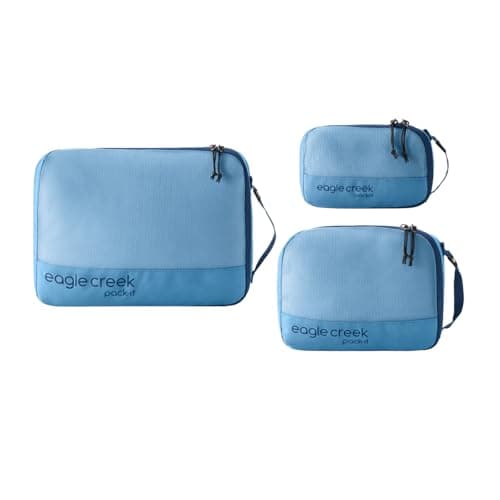
Packing cubes solve this properly, and for a reason that has nothing to do with tidiness: a cube is a small container that is itself packed full, so the clothes inside it cannot move even when the suitcase is half empty. The Eagle Creek Pack-It Reveal set is the first pick here for that reason — see-through mesh, multiple sizes and a lifetime warranty — and the ranked field is on best packing cubes.
One important exception. Compression cubes and compression bags are the wrong tool for this job. They work by squeezing air out, which means applying exactly the pressure that sets a crease. They are excellent for bulk — a down jacket, a week of knitwear — and they are the worst thing you can do to a linen shirt. The trade-off is the subject of packing cubes vs compression bags.
Fabrics that cannot be rescued, and what to pack instead
Honesty first: linen creases, and no packing method changes that. It is a property of the fibre, which is stiff and holds a bend. A linen shirt packed perfectly still arrives with character, and anyone who tells you otherwise is selling a packing cube.
Cotton poplin and anything heavily starched creases sharply too. The fabrics that travel well are wool — which recovers overnight on a hanger because the fibre is elastic — knits, synthetics, and anything described as a travel or performance weave.
The practical conclusion for a trip with a dress code: pack wool rather than cotton for the jacket and trousers, and accept that a linen shirt is a linen shirt. Our business trip packing list builds the whole case around that principle.
On arrival: the ten minutes that matter most
More creases are removed in the first ten minutes in a hotel room than by any packing technique.
Unpack and hang immediately. Before the shower, before the phone. A crease that has not had hours to set under pressure often drops out on a hanger in an hour.
Use the bathroom. Hang the garment near the shower, run it hot, shut the door. Steam relaxes the fibre; this is the free version of a steamer and it works on most things short of a set crease in heavy cotton.
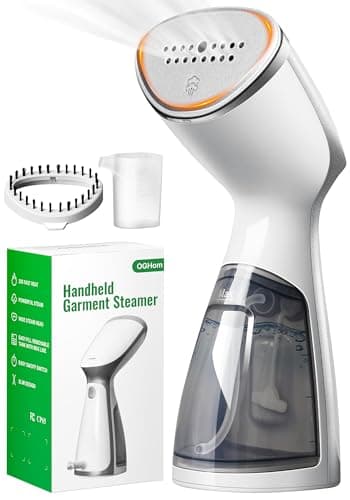
Then, if it matters, steam it. The OGHom handheld steamer is the pick for anyone whose trips involve a collar — it heats fast, works on hanging garments and packs beside a toiletry bag. A steamer is far better suited to travel than an iron because it needs no board and does not scorch.
One warning worth repeating. If the trip is a cruise, leave both at home: cruise lines' published prohibited-items lists cover clothing irons and garment steamers explicitly, and they are confiscated at the terminal. See how to pack for a cruise.
When a garment bag is the right answer
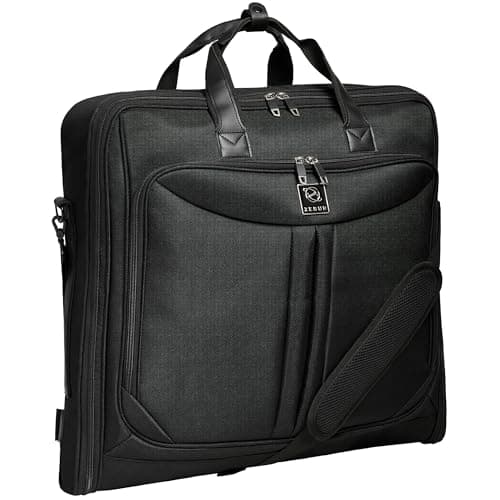
For one suit, one jacket or one formal dress, a garment bag beats every packing technique on this page, because it removes the fold entirely. The ZEGUR bag holds up to four suits, folds over for carry-on, and keeps the good jacket out of the hold — which is the real argument for it: a suit that gets checked arrives when the airline says it does, and that is a bad bet on a wedding morning.
It is the wrong purchase for anyone whose travel wardrobe is jeans and knitwear, and it is a specific gift rather than a general one. For getting a suit into a normal carry-on without a garment bag, the fold that actually works is in how to pack a suit in a carry-on, and the general packing method is how to pack a carry-on.
The short version
- Roll anything soft. Fold stiff things flat, along their own seams.
- Put something soft inside every fold so the fabric is not pressing against itself.
- Pack the case full. Use cubes so the clothes cannot move even if it is not.
- Keep compression for bulky knitwear, never for shirts or linen.
- Hang a structured jacket or formal dress in a garment bag instead of packing it.
- Unpack and hang within ten minutes of arriving.
- Bathroom steam first, handheld steamer second, iron never.
As a gift, this whole subject is one of the better ones to buy into — cubes for the frequent traveler who still packs loose, a steamer for anyone whose trips involve a collar. Both appear on gifts for business travelers and the cubes-specific case is made in our Bagail packing cubes review.