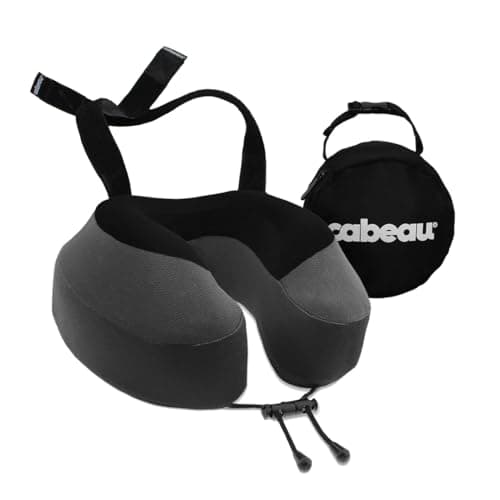
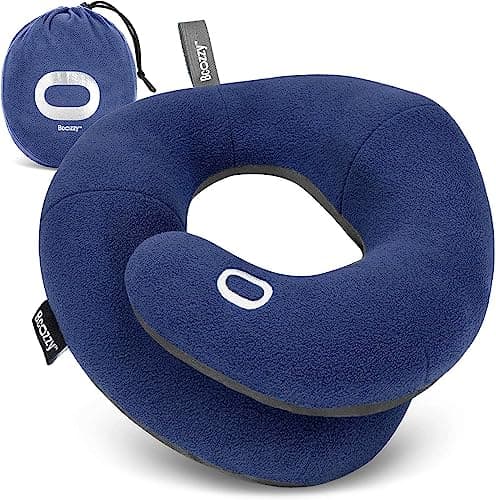
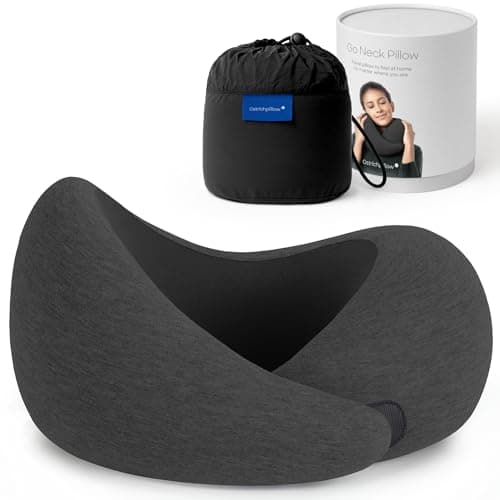
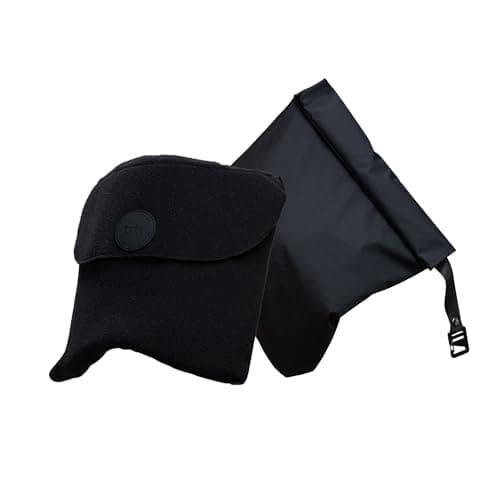
If their head falls sideways, buy a wrap-style pillow with internal support, not a horseshoe. The classic U-shaped travel pillow is designed to stop a head falling backwards. It does very little for a head that tips to one side, which is exactly what a side sleeper's head does the moment they relax. That single mismatch is why so many people conclude travel pillows "don't work."
Why the standard pillow fails side sleepers
Sit upright in a seat and let yourself doze off. There are three directions your head can go: backwards into the headrest, forwards onto your chest, or sideways onto your shoulder. A horseshoe pillow is essentially a cushion that fills the gap behind and beside your neck — it stops the backwards fall well, does something for the forwards flop, and offers almost no lateral resistance because there's nothing rigid in it.
A side sleeper needs the opposite: something firm enough to hold the head's weight when it leans, positioned between the ear and the shoulder. That's a structural requirement, not a comfort preference, and it's why the design matters far more than the price.
The four designs, and which direction each one holds
- Wrap / scarf style with an internal support. A rigid internal rib wraps around the neck and takes the weight sideways. This is the design built for side sleepers, and it's also the smallest to pack. The trade is that you commit to one side per adjustment, and the fleece can be warm.
- Structured memory foam with a raised back. A firm horseshoe with a taller rear panel. Its real strength is stopping the head-nod backwards and forwards, but the firmer versions do give usable lateral support too — enough that they're a reasonable compromise for someone who moves around.
- Overlapping-end designs. The ends cross over and prop the chin. Excellent for the forward flop and for children, gentle rather than rigid. Not the answer for a hard sideways lean.
- Inflatable and flat pillows. Pack to nothing, support almost nothing. Fine as a lumbar cushion, not a solution for a sleeping head in any direction.
Which way does your head actually fall?
Most people don't know, which is why this is worth thirty seconds of attention before spending. The reliable test is to ask someone who's watched them sleep on a flight or in a car, because the sensation people remember is waking up, not the direction they fell.
As a rough guide: people who sleep on their side in bed almost always lean sideways in a seat. People who snore or sleep on their back tend to fall backwards or forwards. And a surprising number do both across a long flight, which is the case where the firmer structured memory-foam option is the sensible all-rounder.
The other half of the problem
A pillow that holds the head still doesn't help if the light and noise keep someone awake. On a long flight the three variables are support, darkness and sound, and fixing only one of them produces a disappointingly small improvement. Realistically:
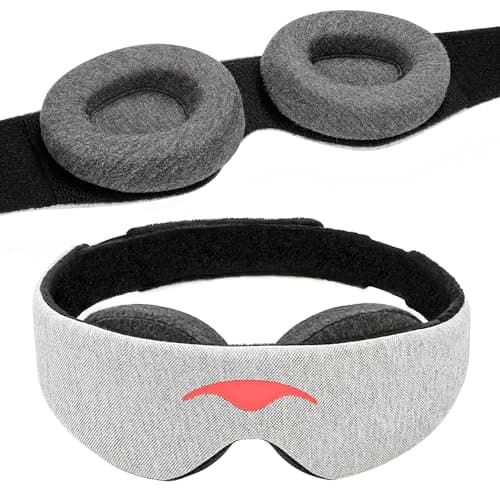
- A contoured blackout mask with eye cups blocks light without pressing on the eyes, which matters if they're going to be wearing it for hours.
- Noise canceling flattens the engine drone that keeps people at a shallow sleep depth. Earbuds are far more comfortable than over-ears if the head is going to be leaning against something. Our noise-canceling headphone roundup covers that trade-off directly.
- A window seat gives something to lean against, which does more for a side sleeper than any pillow. It's free, and it's worth saying.
Practical notes on packing and fit
Packed size. Wrap-style pillows roll up smaller than anything else in the category, which is the second reason they suit one-bag travelers. Structured horseshoes are bulky even when compressed, and usually end up clipped to the outside of a bag.
Neck size matters. Wrap-style pillows are sized, and a wrap that's too loose provides no support at all. Check the sizing guidance rather than assuming one size fits everyone.
Washability. A pillow that spends its life against a face and in an airport should have a removable, machine-washable cover. A surprising number don't.
For the full ranked shortlist across all sleeping positions, including live prices, see our best travel pillow roundup. If you're buying this as a gift for a long-haul flyer, our gifts for frequent flyers list puts it alongside the rest of the sleep kit.
How to choose a travel pillow for a side sleeper
1. Confirm the direction
Sideways lean means a wrap-style pillow with an internal support. Forwards flop means an overlapping-end design. Backwards means a structured horseshoe with a raised rear panel. Get this wrong and no amount of money fixes it.
2. Check the sizing
Wrap-style pillows are sized to the neck and a loose one does nothing. This is the most common reason a well-chosen wrap pillow gets returned.
3. Decide how much bag space you'll give it
Wrap pillows roll to a fraction of a horseshoe's volume. If they travel with a personal item only, that difference decides it regardless of which direction their head falls.
4. Consider warmth
Fleece wrap pillows are warm by design. That's welcome on a cold cabin and unpleasant on a hot bus. If they mostly travel somewhere warm, the firmer memory-foam option is the more comfortable compromise.
5. Don't buy the pillow alone
Support without darkness and quiet produces a small improvement. If the goal is actually sleeping on a plane, budget for a mask and something for the noise as well — it's the combination that works, not any single item.