Buy for the hot water they will actually have, not for the coffee you imagine them drinking. Every portable brewer on this page is a filter and a vessel. Not one of them heats water, and the reviews that call these things useless are almost always written by someone who ended up somewhere with no kettle. Solve the water question first and the rest of the decision is small.
The hot water problem
This is the question that decides the purchase, and it is the one the product photos never answer. A brewer is useful exactly as often as its owner can get water to somewhere near boiling.
American hotel rooms usually cannot. The standard US in-room setup is a pod machine or a small drip brewer with a carafe, not a kettle. A pod machine will push hot water through without a pod, which is the workaround most travelers land on, but the water comes out below boiling and in a fixed volume you do not control. It works. It is not ideal, and it is worth knowing before you gift someone a pour-over cone that assumes a gooseneck kettle.
Hotels in the UK, Europe and most of Asia usually can. A kettle in the room is close to standard across a lot of the world, and anyone traveling to those places has genuinely boiling water on tap. If the trip in question is to Europe, the brewer question gets much easier — and the other things worth packing for that trip are a different list.
Camping and van life can, with a stove. Anyone with a camp stove has the best water situation of anyone here: boiling, in the volume they want, whenever they want it. That is why the collapsible dripper and the all-in-one both make more sense for the camper than for the business traveler.
Airports and planes can, if you ask. Any coffee shop will hand over a cup of hot water, usually free, and cabin crew pour hot water for tea on almost every flight. That is the trick behind bringing a brewer through security at all — you supply the coffee, someone else supplies the heat.
If none of those apply, the honest answer is a good insulated bottle filled at a coffee shop, not a brewer. There is no shame in that, and it is a better gift than a device that needs a kitchen.
The four ways to make coffee away from a kitchen
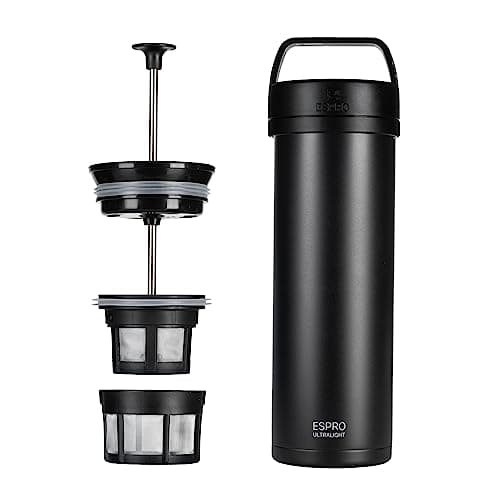
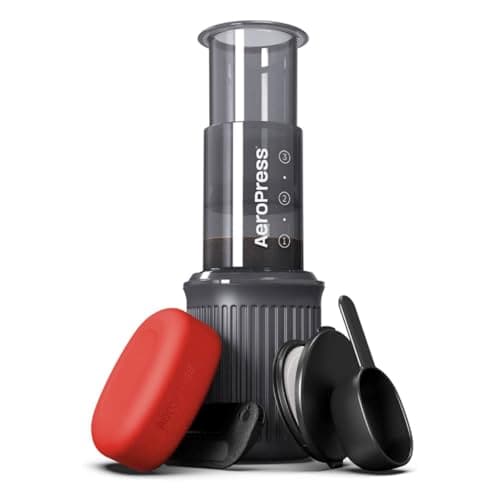
1. Immersion and press. Coffee sits in water for a set time, then gets separated from it — a plunge, a screen, or both. The AeroPress and the ESPRO are the two shapes of this. It is the most forgiving method by a distance: an imperfect grind and slightly cool water still produce something good, which matters when the beans came from a gas station. This is the default recommendation for a gift, because it is the method least likely to disappoint someone who is not careful about technique.
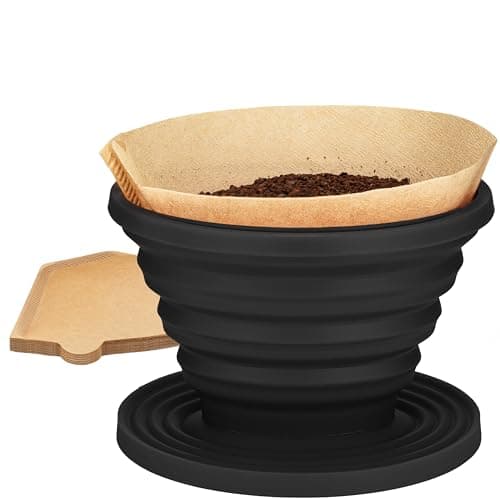
2. Pour-over. Water is poured through a cone of grounds and drips into the cup. Lightest, cheapest and easiest to pack — a collapsible dripper is under an ounce. It is also the fussiest: the cup genuinely changes with the pour, and a wide-spouted hotel kettle dumping water in one go is not a good pour. Buy this for someone who wants the ritual, or for someone who needs the pack size above all else.
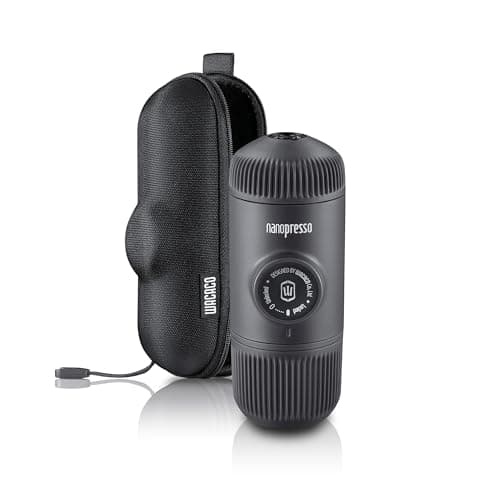
3. Hand-pump espresso. A piston forces hot water through a tightly packed puck at real pressure. The Nanopresso reaches a maximum of 18 bar, which is genuinely in espresso territory. It is the only method on this page that makes an espresso an espresso drinker will accept — and the least forgiving, because espresso needs a fine, even grind that supermarket pre-ground does not supply.
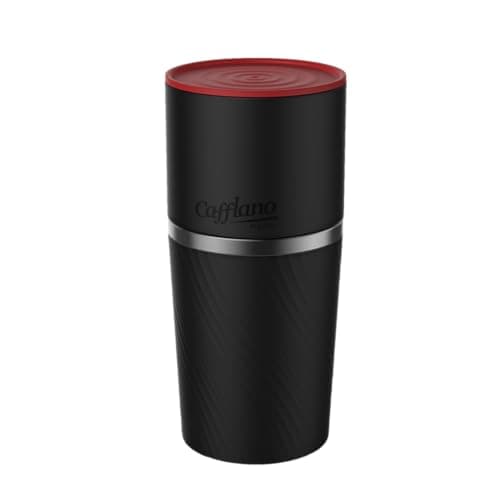
4. All-in-one. Grinder, kettle, filter and cup in a single object, which is what the Cafflano does. Nothing to forget and nothing to match up, at the cost of each individual part being smaller and slower than a dedicated one. It is the best-presenting gift in the category by a distance.
There is a fifth option — instant. Specialty instant coffee has improved enormously and weighs nothing, and for a single overnight trip it is genuinely the right answer. If the recipient travels light and rarely, say so rather than buying them hardware they will use twice.
Grind is the other half, and it is where gifts go wrong
Two things are worth knowing before you buy anyone coffee gear.
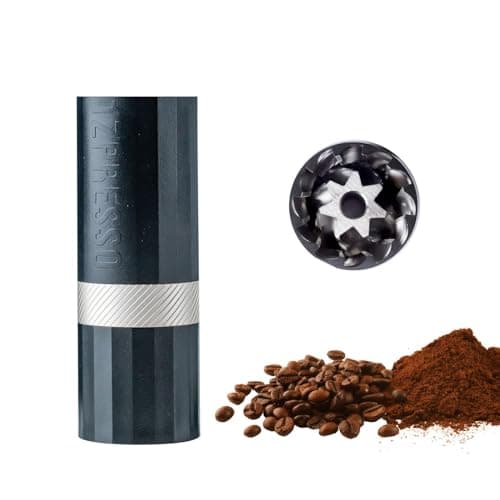
First, ground coffee goes flat fast. Whole beans hold their aromatics for weeks; once ground, the surface area explodes and the good part is largely gone within days of the bag being opened. This is why a hand grinder changes the cup more than swapping one brewer for another does, and why a grinder is on this page at all despite not being a brewer.
Second, each method wants a different grind. A press wants coarse, or it plunges hard and leaves silt. Pour-over wants medium. Espresso wants fine and extremely even, which is the hardest thing for an inexpensive grinder to do — and the reason the Nanopresso disappoints people who feed it whatever pre-ground was in the cupboard. An AeroPress is the exception that makes it the safe gift: the short steep and hand pressure mean a mediocre grind still gives a decent cup.
The practical takeaway for a gift buyer: if you are buying a grinder, buy the brewer too, or buy it for someone who already has one. A grinder alone, given to someone who buys pre-ground and is happy, is a minute of extra work every morning dressed up as a present.
What the numbers on the box mean
Bar.A pressure figure, and only meaningful on espresso devices. Commercial espresso is pulled at around 9 bar; the “18 bar” on a hand pump is a maximum the device can reach, not the pressure it holds through a shot. More bar is not better past a point — it is a ceiling, not a setting.
Capacity.Read it against the drink they actually want. An 80 ml espresso tank and a 16 oz press body are not comparable numbers; one makes a shot and the other makes a mug. Almost every “too small” complaint in this category is a mug drinker who bought an espresso device.
Weight. The real number to check, because it decides whether the thing gets packed on the second trip. A sub-ounce dripper is free. A 336 g espresso maker is a considered choice. A stainless all-in-one is a commitment, and it is the reason the most impressive object here is not the one we rank first.
Filters. Paper is a consumable and a permanent metal screen is not — but they do not make the same cup. Paper traps oils and fine particles for a cleaner, lighter drink; metal lets them through for a heavier body. Neither is better. Just know that a paper-filter brewer needs filters packed, and running out at a campsite ends the coffee.
Electric travel coffee makers, and why they are not here
There is a real tail of people searching for an electric travel coffee maker, and the honest answer is that it is usually the wrong purchase for international travel. A heating element draws far more current than a phone charger, and a 120 V US appliance plugged into 230 V European mains through a plug adapter is a fire, not an inconvenience. A plug adapter changes the shape of the pins and nothing else — we explain that distinction in full in travel adapter vs voltage converter.
If the trips are all domestic and always to hotels, an electric kettle or a small drip machine is a reasonable gift and none of this applies. For anyone crossing borders, a manual brewer sidesteps the entire problem: no volts, no watts, no converter, no melted travel kettle. That is the quiet argument for every pick on this page.
Capsule systems sit in the same place. There are portable machines that take capsules, and they work well — until the trip goes somewhere those capsules are not sold. Ground coffee is available everywhere on earth.
Airport rules, in one paragraph
TSA lists a coffee or espresso maker as allowed in both carry-on and checked bags, and coffee beans or ground coffee the same way. The two practical notes: ground coffee is a powder, and TSA officers may ask for powders to be taken out of the bag for a clearer X-ray image, so packing it near the top saves a rummage. And a brewed, full press is a liquid like any other — it has to be empty through the checkpoint and filled on the far side, which is the same rule that governs everything else in the bag. A hand grinder is not a restricted item.
Cleanup decides whether it gets used twice
This is the failure mode nobody photographs. Coffee makes wet grounds, and a hotel room is a bad place to deal with them. Wet grounds do not go down a bathroom sink without eventually blocking it, and they do not go in a trash can without a liner unless you enjoy the housekeeping conversation.
A brewer that ejects a dry-ish puck — the AeroPress, or an espresso basket knocked out over a bin — solves this in about four seconds. A press leaves a slurry in the bottom of the vessel you also want to drink from tomorrow. That is not a reason to avoid the press; it is a reason to ask where they will be. A campsite with a fire pit or a van with a trash bag makes it irrelevant. A business hotel on a four-night trip does not.
The same logic sits behind every pick in our travel gadgets roundup: gear that adds a chore gets used once and then rides along unused for the rest of the trip.
Buying travel coffee gear as a gift
Coffee gear converts unusually well as a present because it lands on an existing daily habit rather than asking someone to start a new one. Four things separate a good version of this gift from a great one.
First, match the method to what they already drink. Someone who orders a flat white wants the espresso maker; someone who drinks a big mug of drip wants the press or the plunger. Getting this wrong is the single most common failure, and it is not recoverable — two ounces of intense espresso does not satisfy a mug drinker, ever.
Second, the brewer alone is an incomplete gift. A plastic plunger in a box is functional and underwhelming. The same plunger with a bag of good whole-bean coffee is a complete, obviously thoughtful present, and the beans cost very little next to the hardware. This is the same bundling logic we lay out in how much to spend on a travel gift.
Third, do not buy a grinder for a non-grinder. It is the best upgrade on this page for someone already invested and a chore for everyone else. If they buy pre-ground, buy a forgiving brewer instead and let them keep their mornings simple.
Fourth, consider who is traveling. A digital nomad working from apartments has a kitchen and wants the grinder. A road tripper has space and probably a stove, so the all-in-one or the dripper works. A frequent flyer living in hotel rooms wants the smallest thing that survives a bad water situation, which is the plunger.
How we ranked these
Scored against our published rubric from published specifications, manufacturer documentation and aggregated owner feedback. We do not run a lab and we do not claim measurements we have not taken. Usefulness is weighted toward how forgiving a brewer is of bad water and a bad grind, because that is the condition it will actually meet. Portability counts packed volume rather than weight alone. Value rewards the cheap picks honestly — the lightest, cheapest item on this page scores a perfect ten on value and still finishes last, because on its own it is not a gift.