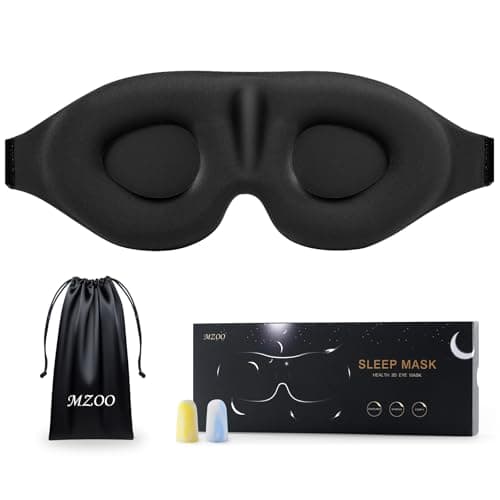
The MZOO is the pick under $25, and it is for anyone who actually intends to sleep rather than just dim the cabin — it is the one mask in this band with contoured eye cavities, so the fabric does not sit on the eyelids and you can open your eyes inside it. The budget pick is the MAVOGEL cotton mask, the cheapest thing here and the right answer for a bag that needs a spare or a stocking that needs filling. Every price below is read live from our price layer and stamped with an as-of date in the table — the $25 band describes those prices on that date.
Why $25 is a real line in this category
Price-band pages are usually arbitrary: the band is a round number and the products fall where they fall. Sleep masks are the exception, because twenty-five dollars happens to land almost exactly on the category’s one meaningful engineering divide.
Masks come in two shapes. A flat mask is a panel of fabric with a strap: it lies against the face, it presses lightly on the eyelids, and it packs down to nothing. A contoured mask has moulded cavities over the eye sockets, so the mask contacts the brow and cheekbone and leaves a pocket of air in front of each eye. You can blink inside one. There is no pressure on the eyeball, which matters more than it sounds for anyone who wears contacts, has had eye surgery, or simply finds the sensation unpleasant.
The contoured design costs more to make, which is why the engineered blackout masks — the ones with replaceable eye cups and deep adjustability — live at the top of the market. Almost everything under twenty-five dollars is flat. Almost. One contoured mask sits comfortably inside this band, and because the shape difference is the only one that genuinely changes how a mask performs, that single exception is the reason this page exists rather than being a cheaper version of our main sleep mask roundup.
So the question in this band is not “which is the best mask.” It is: do they need the cavity, or do they need the mask to disappear into a pocket? Both are legitimate, and the answer is about the person, not the budget.
What you give up under $25, honestly
Three things, and it is worth being specific because the answer is not “everything.”
- Light leakage at the nose. This is where every cheap mask fails and it is the single thing the expensive ones solve best. A moulded or wired nose bridge closes the triangular gap beside the nose; a plain hem does not. On a daytime flight with a window shade up two rows ahead, that gap is the difference between dark and dark-enough.
- Strap engineering. Top-tier masks use wide, split or modular straps that spread pressure and survive hundreds of adjustments. Under $25 you get an elastic band with a buckle, and the buckle is the part that eventually goes. It is also the part that digs in if the sleeper lies on their side — which is why strap width and buckle placement are ranked here rather than treated as a detail.
- Replaceable parts. Premium masks sell spare eye cups and straps. Nothing in this band is repairable; these are masks you replace, and at these prices that is a reasonable trade.
What you do not give up: usable darkness, washability, and a packed size small enough that there is no excuse for leaving it behind. All three picks here are machine washable, which matters for something worn against the face on every flight.
How we built the band
Three rules, so the page stays honest as prices move.
- A pick only appears if our live price layer shows it under $25. No product record on this site has a price field — the numbers in the comparison table are read at request time from the price layer and carry the date they were collected. If something crosses the line, the displayed number tells you instead of the page pretending otherwise.
- Three qualifying picks minimum, or no page. Three qualify, which is the floor, and each of the three is here for a different reason rather than to pad a list. We did not build a $50 band: at fifty dollars almost every mask in our registry qualifies, so that page would just be the parent roundup with a price in the title, which helps nobody.
- Masks over the line are named in prose, never ranked as picks. Two are worth naming because plenty of buyers should spend the extra. The Manta is the modular blackout mask with adjustable eye cups — the one to buy for somebody who sleeps on red-eyes regularly and has already decided masks matter. The Ostrichpillow Eye Mask 3D is the one to buy when the gift has to look like a gift. Both are on the main roundup and neither is a pick here, because neither is under $25.
Beyond price we rank on shape, nose-bridge sealing, strap comfort, fabric behaviour in a warm cabin, and whether it washes. We compile published listing specifications and manufacturer descriptions and score each pick against our published rubric. We have not run a light-meter test on any of these and we publish no blackout percentage, because a number like that from a gift site would be invented.
Which mask for which sleeper
Anyone who genuinely sleeps on planes — and the default recommendation. The MZOO. Contoured eye cavities, a soft foam edge that follows the brow and cheekbone, and an adjustable buckle strap. It is the only pick in this band that does the thing the expensive masks are bought for: it keeps fabric off the eyelids. If you take one thing from this page, it is that for the price of a cheap airport paperback you can have the shape that actually matters, and it is the reason this mask outranks two perfectly good flat masks that cost less.
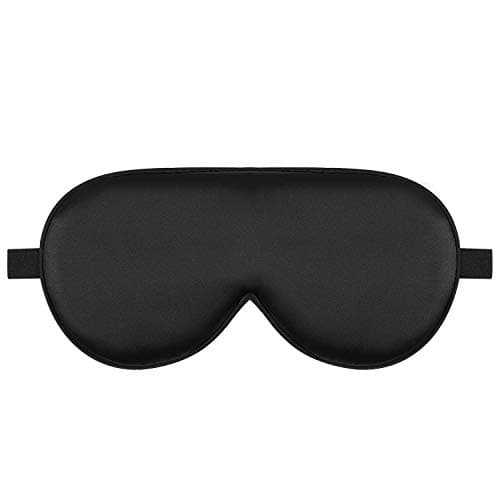
A warm cabin, a hot sleeper, or a bag with no room. The Alaska Bear silk mask. Mulberry silk, a shaped nose pad, machine washable, and it packs to roughly nothing. Silk is the honest reason to choose this over the MZOO rather than price: foam and synthetic padding trap heat against the face, and on a full cabin at 24 degrees that is the complaint people actually have. It is also the mask to buy for somebody with sensitive skin, and the shaped nose pad means it seals better than its price suggests.
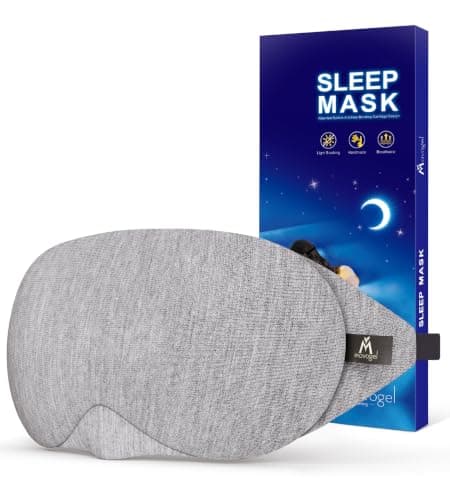
A spare, a stocking filler, or a first mask. The MAVOGEL cotton mask — our budget pick and the cheapest thing on the page. Soft cotton, adjustable strap, light, and it blocks light well for what it is. We are straightforward about its place: it is a flat mask with no engineered nose bridge, so on a bright daytime flight you will see a little light at the nose. For a dark cabin, a hotel room with decent curtains, or a bag that just needs something in the pocket, that is entirely fine — and it is the right thing to put in a bundle rather than give alone.
The thing nobody tells you about mask fit
A mask fails in one of three places, and only one of them is about the mask.
The nose. Covered above — the gap beside the nose is where light gets in, and a shaped pad or a moulded bridge is what closes it. If the recipient has a high or narrow nose bridge, lean toward a contoured or shaped-pad design rather than a plain hem.
The strap, against a pillow. A side sleeper has a buckle pressed between their head and the headrest for six hours. Wide elastic with the buckle set off-centre is the cheap version of a fix; the premium version is a split strap. If the person you are buying for sleeps on their side, this matters as much as the blackout does — and our travel pillow guide for side sleepers makes the same point about the other half of that setup.
The head it is on. No listing publishes head circumference ranges, so an adjustable strap is not a luxury, it is the only protection against a mask that is either loose or a headache. All three picks here adjust; we would not rank one that did not.
What a mask fixes, and what it does not
Light is, for most travelers, the cheapest sleep problem to solve and the one with the best return per dollar — which is the honest case for this whole band. A ten-dollar mask does more for plane sleep than a lot of considerably more expensive gear.
It does not fix the other two problems. Noise needs either masking or cancellation: a sound machine under $50 for a hotel room, or noise-canceling headphones for a cabin. Supportneeds a pillow matched to the way the sleeper’s head falls, which we set out in the best travel pillows under $50. A mask on its own in a bright, loud cabin with the head unsupported is one third of a solution, and the reason we keep saying so is that the three problems are usually bought for separately when they should be bought for together.
As a gift at this price
A sleep mask is one of the most reliably useful small travel gifts there is, and almost nobody owns a good one — most people have a free airline mask in a drawer, which is a flat panel of polyester with a thin elastic and is the thing that convinced them masks do not work.
Two notes for buying one for somebody else. Buy the contoured one if you can: it is the version that changes their mind about the category, and in this band it costs about as much as lunch. And bundle it rather than giving it alone — a mask plus earplugs, or a mask plus a pillow, reads as a travel sleep kit instead of a stocking filler. More ideas at this money in travel gifts under $25 and stocking stuffers for travelers.
Contoured if they sleep, flat if they pack light
Contoured cavities keep fabric off the eyelids so the wearer can blink, which is the single feature that makes a mask comfortable for hours. Flat masks win on packed size, heat and price. Both are correct answers for different people.
The nose is where the light gets in
A shaped nose pad or a moulded bridge closes the gap beside the nose. A plain hem does not. On a dark cabin it is irrelevant; on a daytime flight it is the whole difference between dark and dark-enough.
Check the strap if they sleep on their side
A buckle pressed between a head and a headrest for six hours is the most common reason a mask gets taken off at hour two. Look for wide elastic with the buckle set off the centre line.
Silk for heat, foam for darkness
Foam and synthetic padding seal better and trap heat. Silk breathes and packs smaller but seals less. Warm cabins and hot sleepers want silk; red-eyes and light sleepers want the padded, contoured version.
Insist on machine washable
It is worn against the face on every flight. All three picks here wash, and we would not rank one that did not — at these prices there is no reason to accept a mask you cannot clean.
Buy two if they travel as a pair
At this price the second mask costs less than a coffee at the airport, and the most common failure of a travel mask is that it is in the other person's bag.