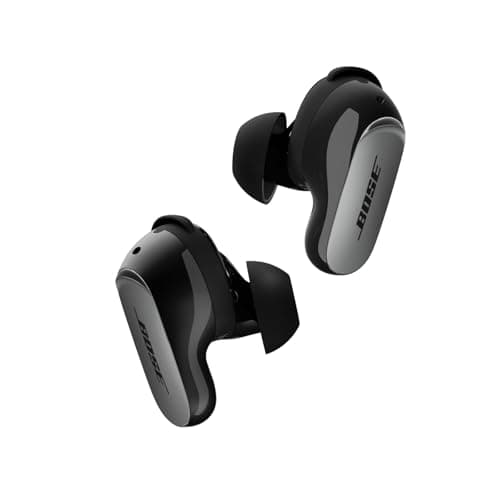
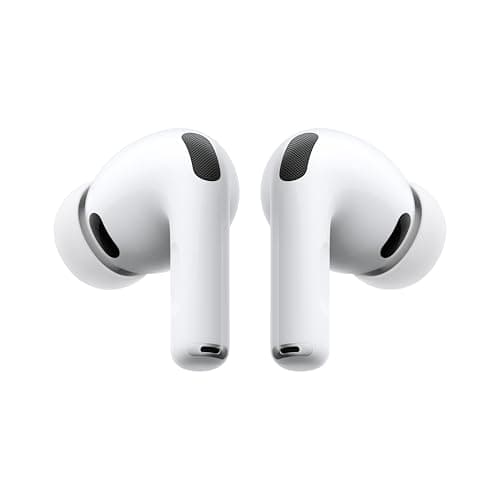
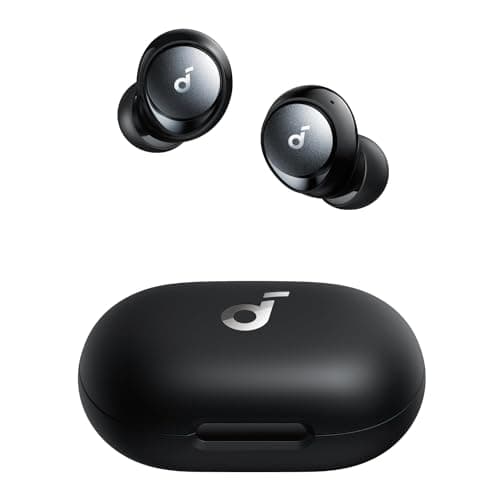
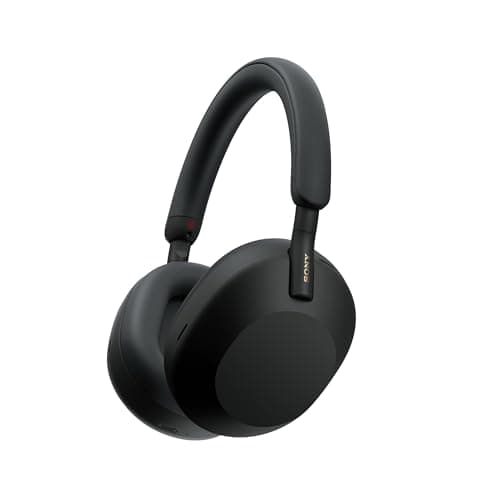
If they sleep on planes, buy earbuds. If they don't, buy over-ears. That single question resolves this argument more reliably than any spec comparison. Over-ear headphones cancel low-frequency cabin noise more completely; earbuds are the only form factor you can lean a head against a window with. Most people already know which of those they need — they just haven't framed the decision that way.
Why over-ears cancel engine noise better
Cabin noise is dominated by low-frequency drone — engines, airflow, vibration through the airframe. Active noise cancellation works by generating an inverted waveform, and it works best on exactly this kind of constant, low-frequency sound.
Over-ear headphones have two structural advantages here. The ear cup physically blocks sound before any electronics get involved, which is passive isolation the cancellation then builds on top of. And the larger enclosure gives the driver more room to produce the canceling waveform accurately at low frequencies.
The result is a felt difference rather than a spec-sheet one: a good over-ear headphone on a long-haul flight doesn't just reduce the drone, it removes the sensation of pressure that comes with it. People routinely report arriving less tired, and that's the real argument for spending flagship money. Our noise-canceling headphones roundup ranks the field, the Sony vs Bose comparison covers the two flagships against each other, and the Bose QuietComfort Headphones review makes the case for the comfort-first pair specifically - including the one sleeping position it is wrong for.
Why earbuds win anyway, for a lot of people
Sleeping. The decisive one. An over-ear headphone pressed between a head and a window or headrest is uncomfortable within an hour and painful within three. Anyone whose plan for a fourteen-hour flight involves sleeping is going to take them off, at which point the best cancellation in the world is doing nothing. Earbuds — particularly the flatter in-ear designs — survive a head leaning sideways.
Bulk. Over-ears take up meaningful space in a personal item, and a case is a case. Earbuds live in a pocket. For a carry-on-only traveler that's a real cost, and it's the same calculation we run in gifts for minimalist travelers.
Heat. Ear cups are warm. On a long flight in a warm cabin that becomes noticeable, and it's a complaint that rarely appears in reviews because reviews aren't fourteen hours long.
Everything else. Earbuds work for the walk to the gate, the run for the connection, the gym at the destination and the call from the hotel. Over-ears work for the flight. If the gift is meant to be the traveler's only pair, earbuds do more jobs.
The gap has narrowed, but it hasn't closed
Flagship earbuds have improved substantially, and the best of them now cancel low-frequency noise well enough that the difference on a plane is a matter of degree rather than kind. Anyone who last compared them several years ago is working from out-of-date information.
That said, over-ears still lead at the top end, and the reason is physical rather than technological — the ear cup's passive isolation and the larger driver enclosure are structural advantages that firmware doesn't overcome. Expect the gap to keep narrowing and not to disappear.
The practical consequence for a gift buyer: at the budget end, over-ears are clearly better value for flying, because cheap earbuds cancel poorly and cheap over-ears at least isolate passively. At the flagship end the choice is genuinely about form factor rather than performance.
Fit is what decides earbud cancellation
The most under-explained thing in this category, and the reason two people can own the same earbuds and disagree completely about how good they are.
In-ear cancellation is built on a seal. The eartip has to close the ear canal, because passive isolation from that seal is the foundation the active cancellation works on top of — and a leak lets low-frequency noise straight past both. A poor seal doesn't degrade the performance slightly; it removes most of it.
Two practical consequences. First, the eartips in the box are a starting point rather than an answer: nearly all flagship earbuds ship with three or four sizes, most people never change from the fitted medium, and ears are frequently different sizes left and right. Second, the good models include a fit test in their app that plays a tone and measures the seal, which takes thirty seconds and is the single highest-value thing a new owner can do.
Pass that on with the gift. An earbud gift that's judged on a bad seal gets written off as underwhelming, and the fault is a rubber tip.
Over-ears have a fit question too
Less discussed and still real. The ear cup has to enclose the ear rather than press on it — on-ear designs sit against the cartilage and become uncomfortable on a long flight in a way over-ear designs don't. If the gift is meant for a fourteen-hour leg, over-ear is the specification word to look for, and "on-ear" is the one to avoid.
Glasses are the other factor. The arm of a pair of glasses breaks the seal where it passes under the cup, which reduces cancellation slightly and creates a pressure point over hours. Softer, deeper earpads handle it better. For someone who wears glasses on every flight, that's worth more than a few decibels on a spec sheet.
Three things people forget
Battery for the return leg. A twelve-hour outbound flight, a week at a destination, and a twelve-hour return. Over-ears generally have far more battery than earbuds, and earbud cases need charging too. Worth checking against the actual trip.
The in-flight entertainment jack. Most modern headphones are Bluetooth-only, and most seatback systems are wired. Bluetooth transmitters that plug into the seat jack exist and solve it; many premium over-ears also include a wired cable, which earbuds don't. If they watch seatback films, this matters.
Announcements. Good cancellation removes them entirely. Transparency modes exist on all the flagships and are worth knowing about before a missed boarding call teaches the lesson.
What to buy for whom
Sleeps on planes, travels light: flagship noise-canceling earbuds. This is the largest group and the one most often given the wrong gift.
Works or watches films on planes: over-ears. Better cancellation, longer battery, more comfortable for hours awake, and often a wired option for the seatback system.
Wants one pair for everything: earbuds, because they do the gym, the commute and the call as well as the flight.
On a budget: over-ears. Below the flagship tier they deliver noticeably more useful quiet per dollar, and there are genuinely good options well under $100 — see our travel gifts under $100 list.