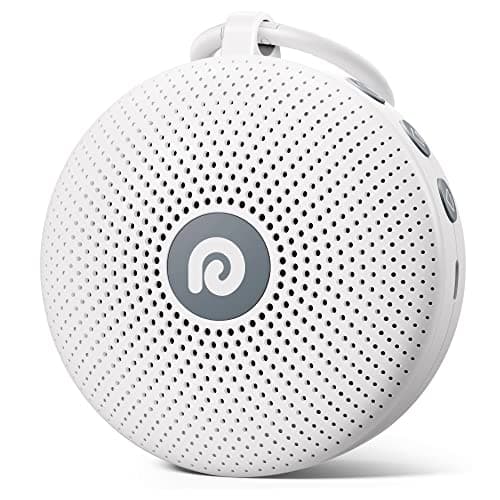
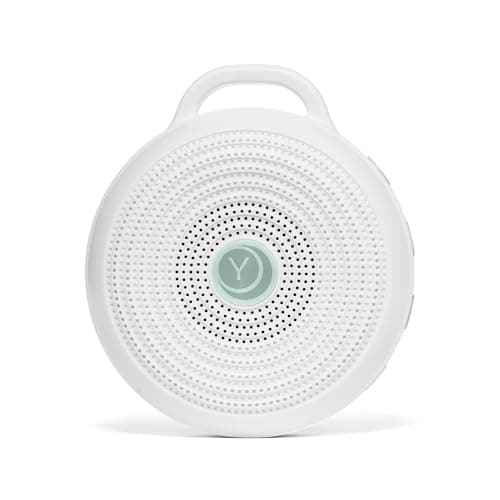
Buy for the room they cannot control, not for the sound they like. A white noise machine at home is a luxury — it smooths the edges off a quiet bedroom somebody already sleeps well in. A white noise machine on a trip is a tool, and it is fighting specific, loud, unpredictable things: a corridor door on a sprung hinge, a housekeeping cart at seven, a neighbor’s television through plasterboard, an air conditioner that cycles, a cruise cabin’s thrum, somebody else’s child. That difference is why the best bedroom machine is frequently the wrong travel machine, and it is the axis this page is ranked on.
Everything below follows from it. The machine has to be small enough to be packed a second time, loud enough to cover a wall, able to run on a battery when there is no outlet beside the bed, and chargeable from a cable the traveler is already carrying. Sound variety — the thing the listings compete on — is close to last.
What a travel machine is actually fighting
Masking works by raising the noise floor until an intruding sound stops standing out from it. At home that is easy, because the intruding sounds are small and the room is yours. On a trip almost none of that holds.
A hotel room has a corridor on one side, and corridors are the loudest part of a hotel — doors, wheels, conversation at 1 a.m. from people who have just landed. The sound arrives in bursts, not as a drone, and bursts are what masking is worst at. This is the room that needs volume and low frequencies.
A shared room — a rental with friends, a family in one suite, a hostel — adds a second constraint that has nothing to do with acoustics: somebody else has a vote. A machine that one person needs at full volume is a machine the other person is lying awake next to. The fix is placement and a machine that can be aimed or hung near one head rather than filling the room.
A plane is the one place a sound machine is mostly the wrong answer. The cabin is already 80-plus decibels of broadband noise; adding more from a speaker in your lap does nothing except annoy the person next to you. In the air, the right tools are the ones on our noise-canceling headphones page and an eye mask — see how to sleep on a plane for the order those problems should be solved in. A sound machine earns its space in the bag for what happens after you land.
A cruise cabin, a sleeper train, a campervan are the best case for this category and the reason it exists: a constant mechanical drone, a thin partition, and no way to move. A machine that adds a steady broadband layer genuinely works here.
Looping is the spec that separates fifteen dollars from fifty
This is the one thing that reliably predicts price in the category, and it is almost never explained.
Cheap machines store a short recording — a few seconds of rain, a few seconds of fan — and play it on repeat. There is a seam where the clip restarts, and the seam has a character: a click, a swell, a particular bird. Most people never consciously hear it. The people who do hear it cannot stop hearing it, and for them a looping machine is worse than nothing, because the brain has a pattern to lock onto instead of a wash to disappear into.
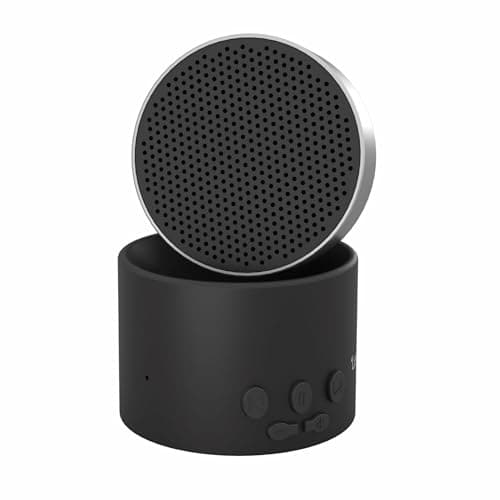
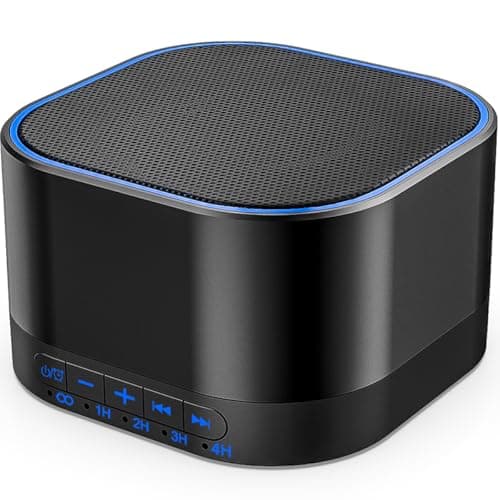
The expensive fix is to generate the sound mathematically rather than play a file. The LectroFan Micro 2 does this across all eleven of its sounds, which is most of what you are paying for; the Magicteam does it across twenty, which is why a basic plastic box with no battery is on this page at all. If the person you are buying for has ever said a sleep app “started getting annoying”, buy non-looping and stop reading.
If they have not, a looping machine is fine and you should save the money. This is a genuine fork, not an upsell.
The spec that matters most is the one nobody publishes
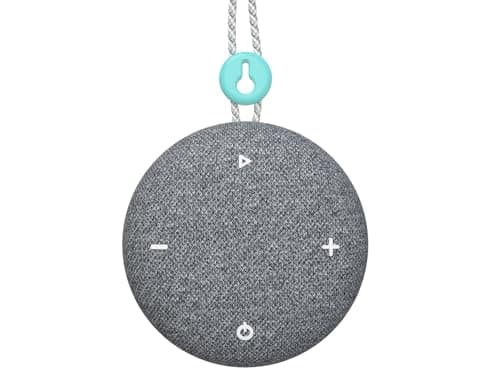
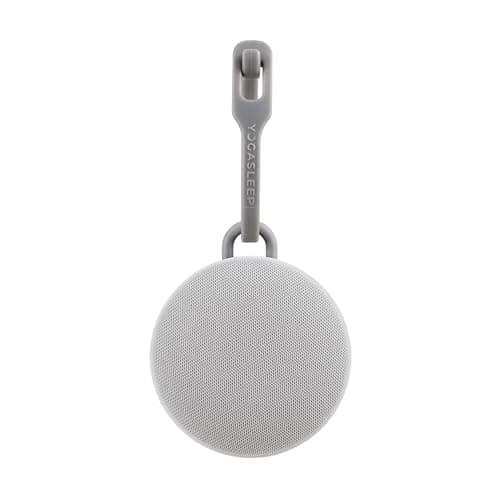
How loud does it actually get? Almost no manufacturer in this category answers that in a comparable way. Yogasleep describes the Rohm’s range as “whisper-quiet to impressively robust”, which is a sentence, not a number. SNOOZ’s retail spec sheets do put a figure on the Go 2 — 36 to 85 dBA measured at the device across 15 volume steps — and that is unusually transparent for the category rather than typical of it.
Two things follow. First, you cannot shop this category on published output, so do not try; buy on size, battery and looping, which are knowable. Second, when a number does appear, read it carefully: 85 dBA at the device is not 85 dBA at a pillow three feet away, and every one of these machines is far quieter at the ear than at the grille.
The practical consequence is about placement, not purchase. A small machine close to the sleeper’s head beats a large one across the room, every time, which is why the lanyards and clips on these units are not accessories — they are the feature that lets a palm-sized machine out-perform its size.
White, pink and brown are real, and they are not magic
The color names describe how energy is distributed across frequencies. White noise has equal energy per frequency and sounds like a hiss or an untuned radio. Pink has less energy as frequency rises and sounds like steady rain. Brown falls away faster still and sounds like a waterfall, a jet cabin or a low rumble.
That is the whole of it. None of the three is clinically better than another, and anyone marketing one as a sleep breakthrough is selling. But the distribution does matter for what you are masking, and that is a practical point for travel: muffled voices and footsteps through a wall are mostly low-frequency, because walls absorb treble and pass bass. A brown-heavy machine sits in the same range as the problem. A thin white hiss sits above it and leaves the thumping audible.
So: hotel corridor and noisy neighbors, look for brown — the SNOOZ Go 2 and the Magicteam both have it, the Rohm does not. Air conditioning hum, tinnitus, a snoring partner at closer range: white or a fan sound is fine and usually preferred. If the recipient already knows which one they sleep to, that single fact decides the purchase faster than anything else on this page.
Battery, port, and the plug problem abroad
A bedroom machine plugs in. A travel machine frequently cannot: the only outlet in a hotel room is behind the desk, the sleeper berth has none, the campsite has none, and the rental has one on the wrong side of the bed. Battery is not a nice-to-have in this category — it is most of what makes a machine a travel machine.
Runtimes here are quoted by the manufacturers and they vary by a factor of five: up to 8 hours for the Rohm, around 10 for the Dreamegg shape, up to 24 for the SNOOZ Go 2, up to 34 for the Hushh 2, and up to 40 for the LectroFan Micro 2. Count nights, not hours. Eight hours is one night and a daily charge; 24 to 40 hours is a long weekend you can stop thinking about.
The port matters more than it looks. The SNOOZ Go 2 and the Hushh 2 take USB-C, which is the same cable as a modern phone, a laptop and a travel power bank — one cable in the bag. The LectroFan Micro 2 draws 5 V 1 A over the older USB-A standard, so it needs its own lead. That is a small thing at home and a genuinely annoying one in a hotel room at midnight.
Abroad, the mains-only machine is the trap. The Magicteam has no internal battery, so in Europe or Asia it needs a plug adapter before it does anything at all — add a universal travel adapter to the gift or pick a battery model instead. And if anyone is tempted by a bedside machine with a chunky wall wart, read travel adapter vs voltage converter first: an adapter changes the plug shape, not the voltage.
Be honest about what this replaces
For one adult sleeping alone, a phone and a pair of earbuds do most of this for free. Any sleep app will play brown noise all night, and a phone is already in the bag. A machine has to beat that to earn its place, and there are exactly four situations where it does.
Two people, one room. Earbuds solve the problem for the person wearing them. A machine solves it for both, and it is the only option when one of the two is a child.
Nothing in the ears. Plenty of people cannot sleep with anything in their ear canal, side sleepers most of all — the same constraint that drives the picks on our travel sleep mask page.
The phone has another job. A phone running audio all night is a phone that is flat at 6 a.m. and is not your alarm, your boarding pass or your map. A separate machine keeps the phone free.
A room has to be filled, not an ear.Covering a conversation in the next room for a whole family needs a speaker in the room, not a driver in one person’s ear.
If none of those four apply, this is a nice gift rather than a necessary one — which is fine, as long as you know which you are buying.
Babies and children: the one place the numbers matter
We are not a medical site and we do not give medical advice. But this is the one corner of the category where a published figure should change what you do, so it belongs here.
A 2014 study in Pediatricsfrom the Hospital for Sick Children measured 14 infant sleep machines at maximum volume at three distances — 30 cm (in the crib or on the rail), 100 cm (beside the crib) and 200 cm (across the room). Measured against a recommended 50 dB hourly limit, every machine exceeded it at maximum, and 93 percent still exceeded it from two meters away. The authors’ recommendation was to place the machine as far from the infant as possible, at low volume, for a short period — and they asked manufacturers for output caps, warning labels and mandatory auto-off timers.
Practically, for a travel machine: never clip it to a crib or a travel cot rail, never run it at maximum, use the timer if it has one, and put it across the room rather than beside the head. That advice is inconvenient on a trip, because a hotel room is small and the whole point of a clip is proximity — but it is the advice. Anything about a specific child, a premature baby or a hearing concern is a conversation with a pediatrician, not with a shopping page.
Buying one as a gift
This category has an unusually good gift profile: it is cheap, it is something very few people buy for themselves, and the person who needs it most is often the one who has decided they are “just a bad sleeper”. A twenty-dollar object that fixes one specific bad room is a disproportionately good present.
Two cautions. First, it is a shared-space purchase — if the recipient sleeps next to somebody who hates white noise, you have bought an argument, so the small, aimable machines are the safer gift. Second, it is a slightly clinical object, and it reads much better as part of a sleep kit than alone: a machine, a proper sleep mask and something soft is a present, where a plastic puck on its own is a hint.
For a family trip it is one of the highest-value things on this site, because it solves the parents’ problem and the child’s at once — the same reasoning that runs through gifts for families who travel. And for somebody who dreads flying, a machine is part of a wider kit rather than the answer on its own; we work through that in gifts for nervous flyers.
1. Does it run on a battery, and for how many nights?
This is the first question, because it is what separates a travel machine from a bedroom one. Convert the quoted hours into nights at eight hours each: the Rohm is one, the Dreamegg about one, the SNOOZ Go 2 three, the Hushh 2 four, the LectroFan Micro 2 five. A machine with no battery at all is a rental-apartment machine, not a travel machine.
2. Does it loop?
Generated, non-looping audio is the single feature that costs money in this category. It is worth paying for only if the recipient is the kind of listener who notices repeats — and if they are, nothing else on the spec sheet will rescue a looping machine.
3. Which noise color does it have?
Brown for voices and footsteps through a wall; white or fan for hum, tinnitus and snoring. If the recipient already knows what they sleep to, buy that and ignore the rest of the sound menu.
4. What port does it charge from?
USB-C means it shares a cable with the phone, the laptop and the power bank. USB-A or micro-USB means a dedicated lead that will eventually be forgotten in a hotel drawer.
5. Can it be hung or clipped near the sleeper?
A lanyard or a clip lets a small machine sit a foot from one head instead of six feet from two, which is worth more than any amount of claimed output. For a child, the same clip is also the thing you must not use on a cot rail.
6. How many buttons does it have in the dark?
This is a device operated half-asleep with the lights off. Backlit buttons and a memory function that restores the last setting are worth more on a trip than five extra sounds; a Bluetooth mode you can enter by accident at 2 a.m. is worth less than nothing.
7. Is there a timer?
A timer saves battery and, where a child is involved, is the specific thing pediatric researchers have asked manufacturers to include. Not every machine here has one.
What you should spend
This is a cheap category and the bottom of it is genuinely usable. The entry band buys a palm-sized rechargeable machine with a clip and a wide sound menu, and it is a perfectly good stocking stuffer. The middle band — around the price of a paperback and a coffee — buys the default recommendation here: small, loud enough, eight hours, three sounds, no decisions. The top of the page roughly doubles that and spends the difference on non-looping audio, multi-night battery and a second job as a Bluetooth speaker. Nothing in this category needs to cost more than that. We publish a live price on every pick rather than a number that goes stale — the buttons above show what each one costs today.